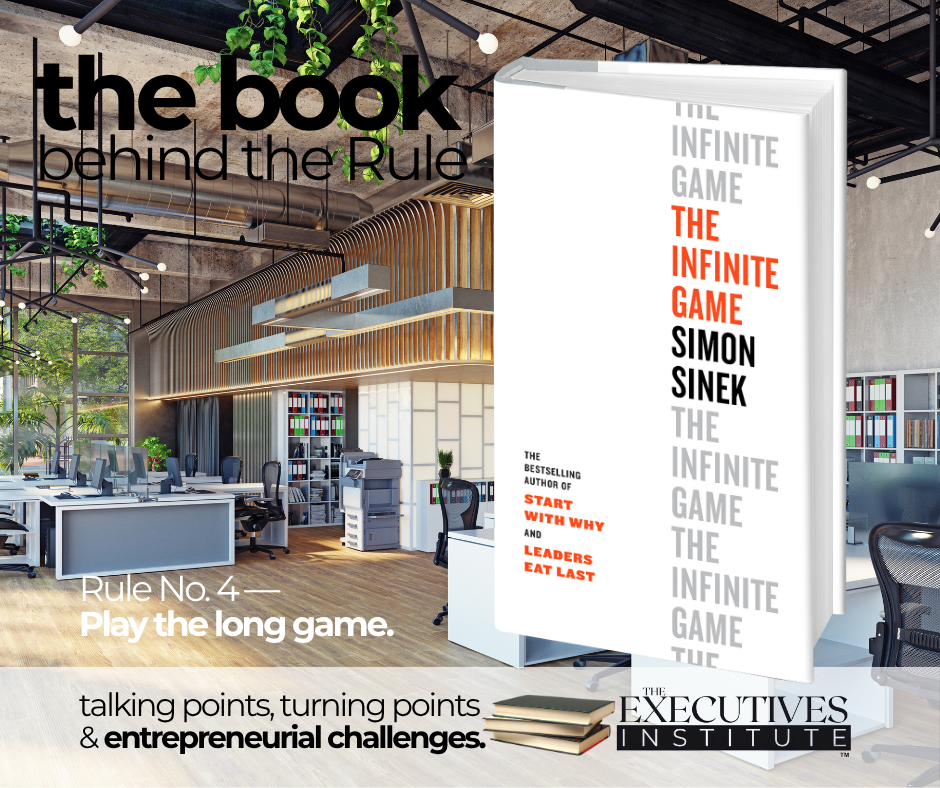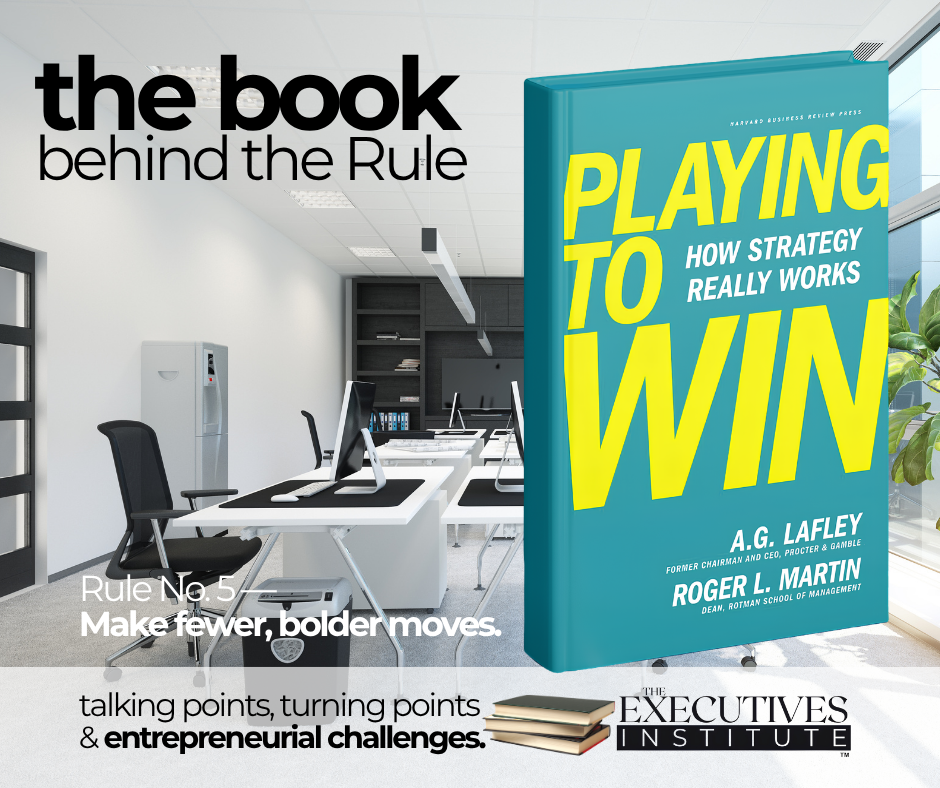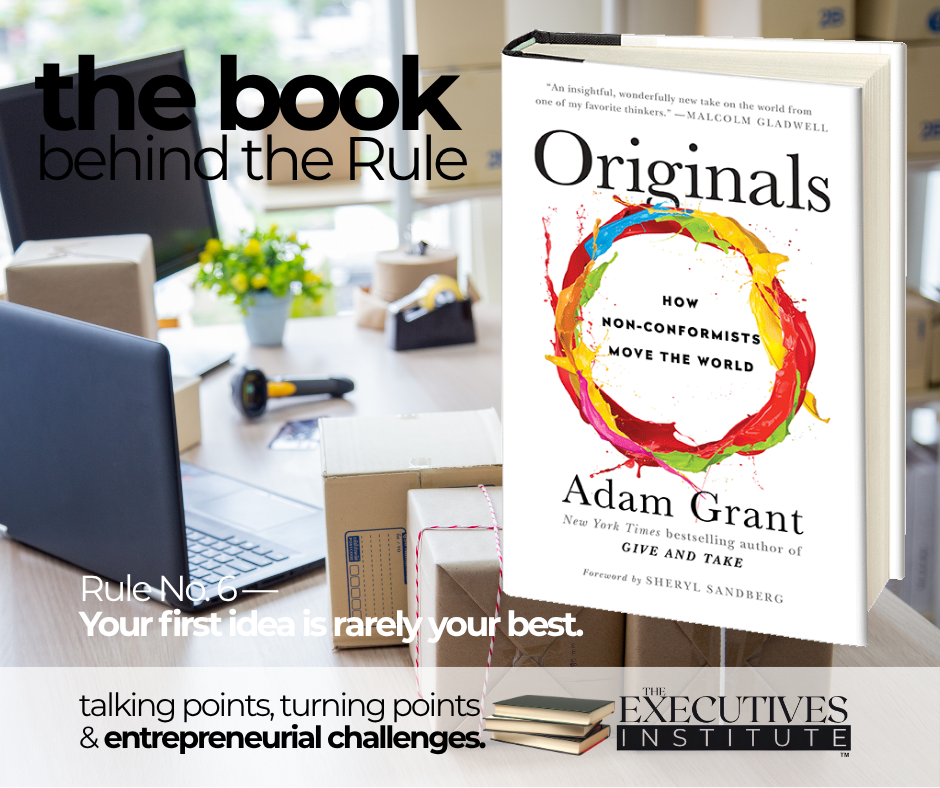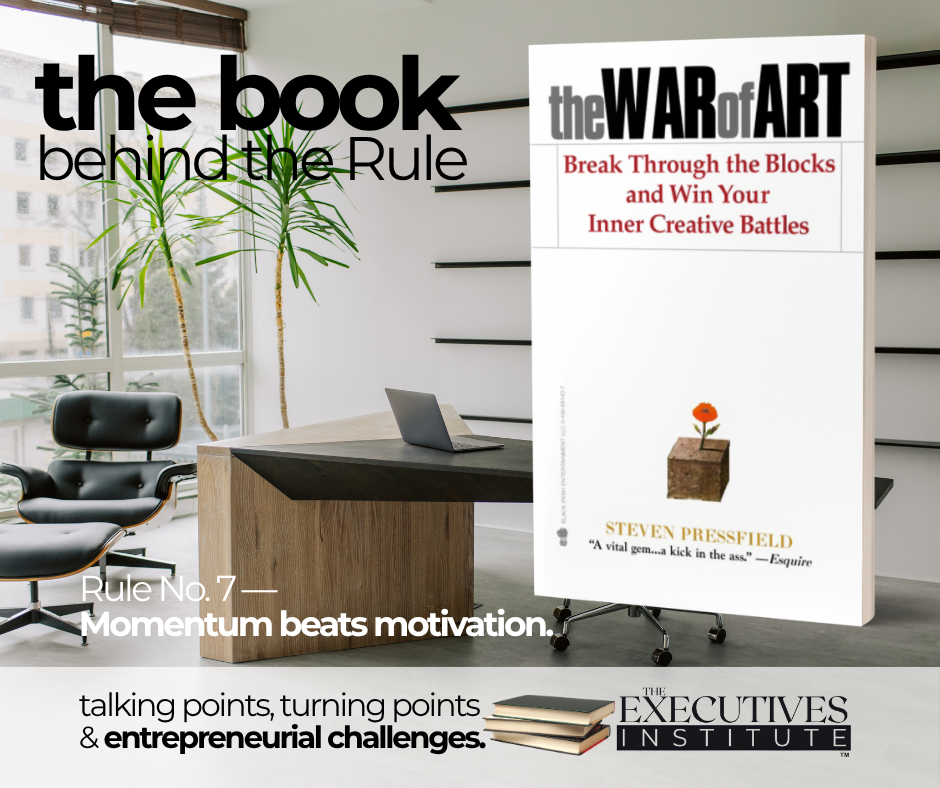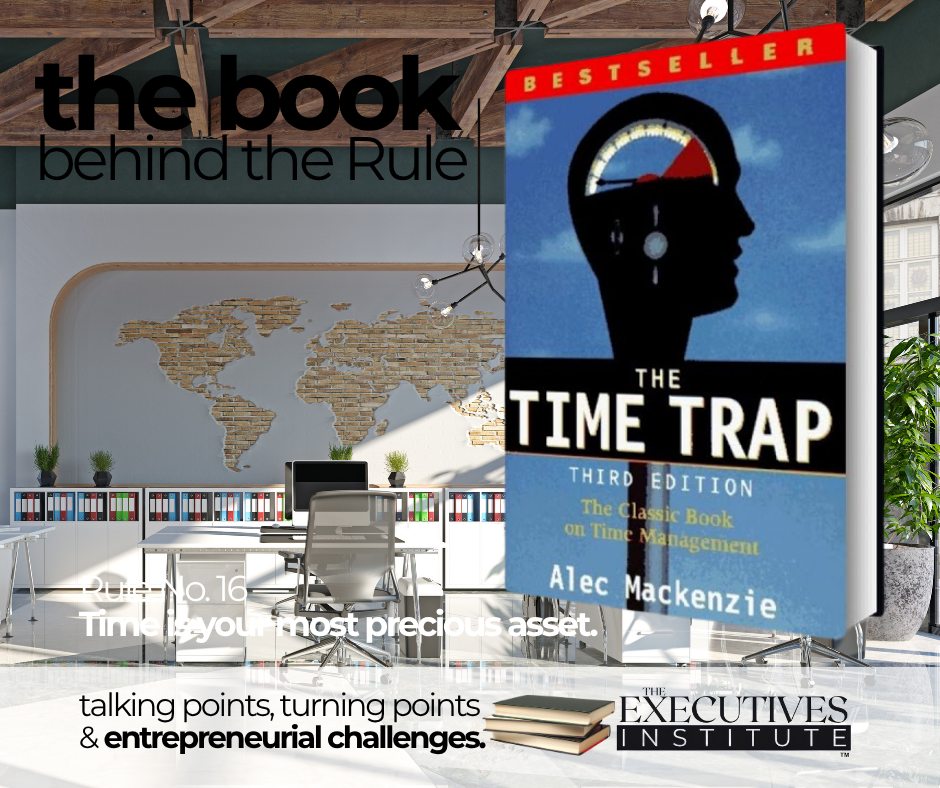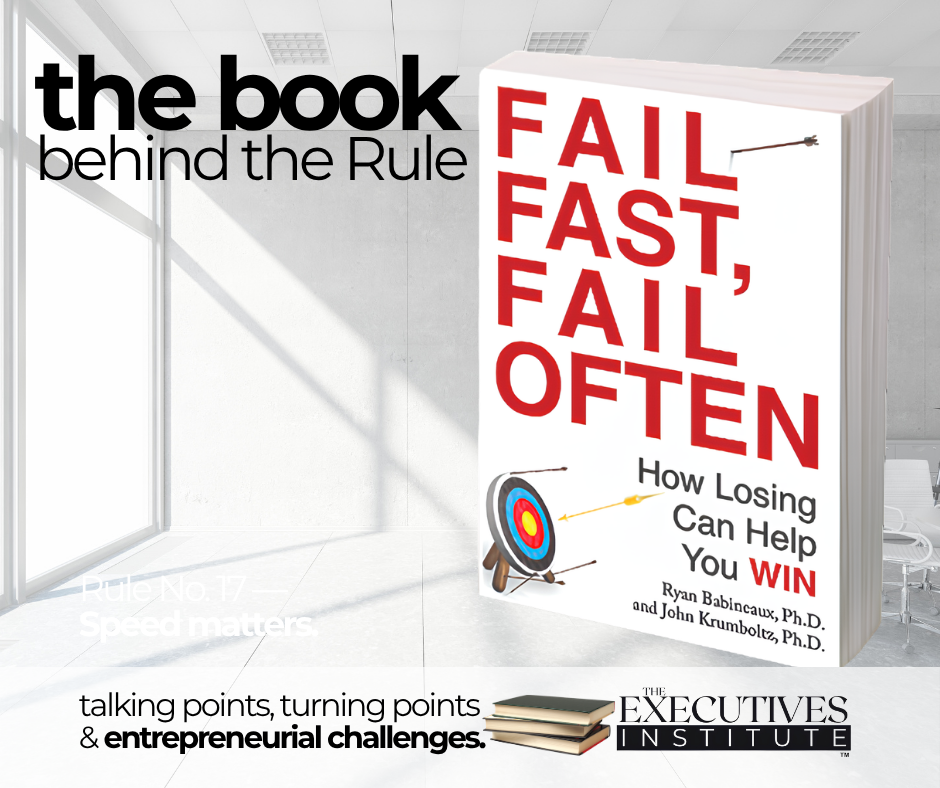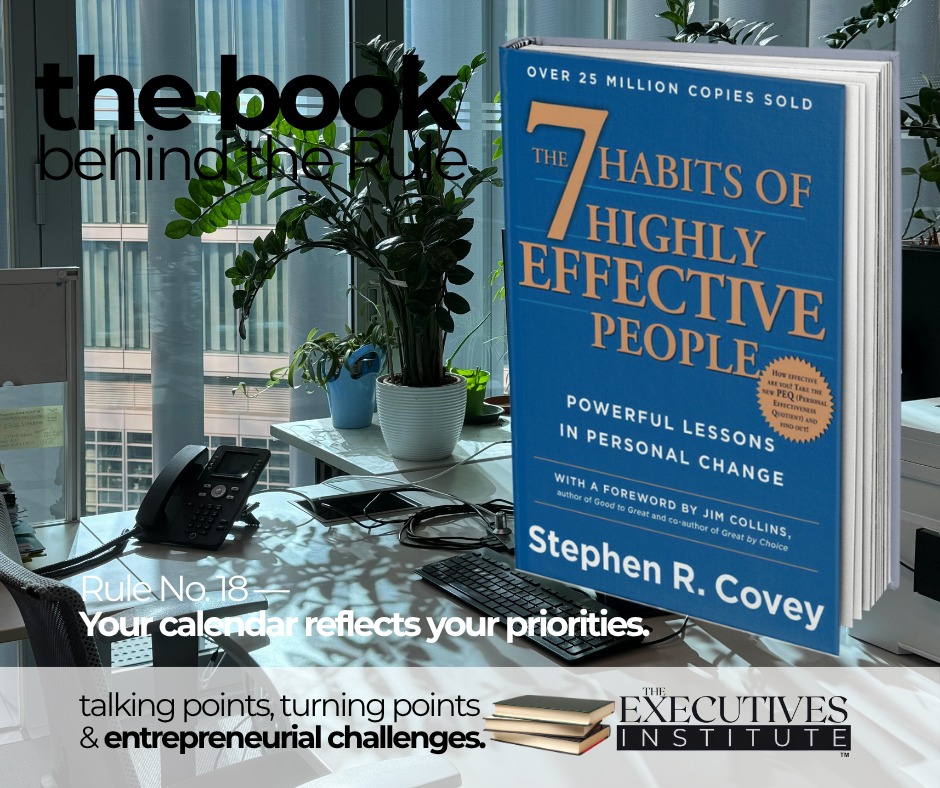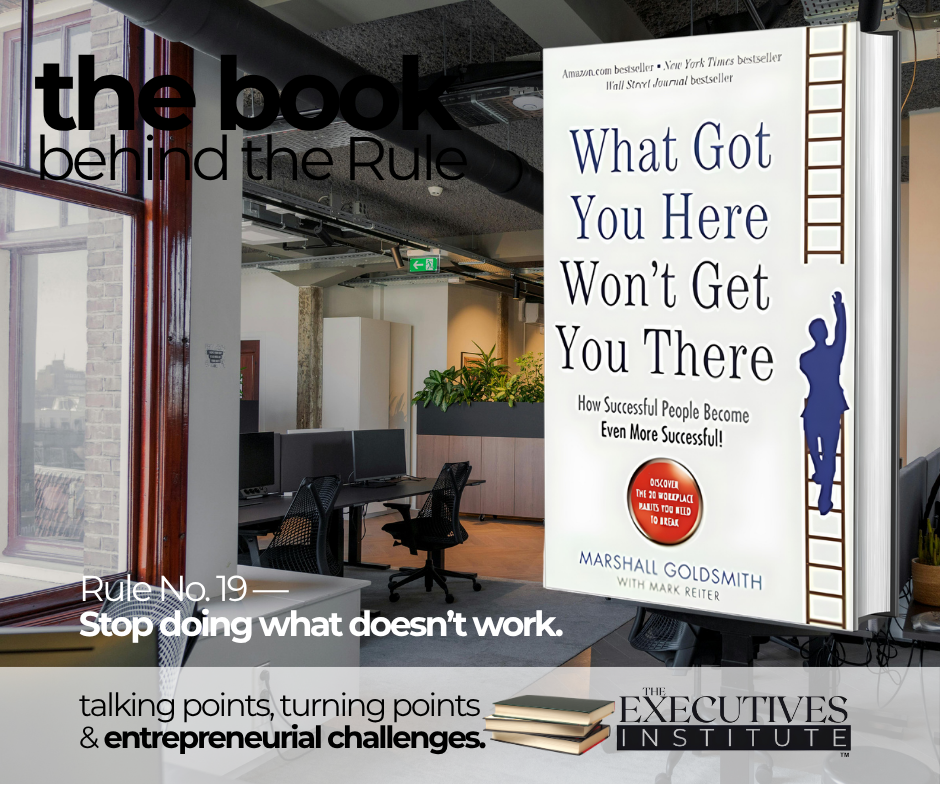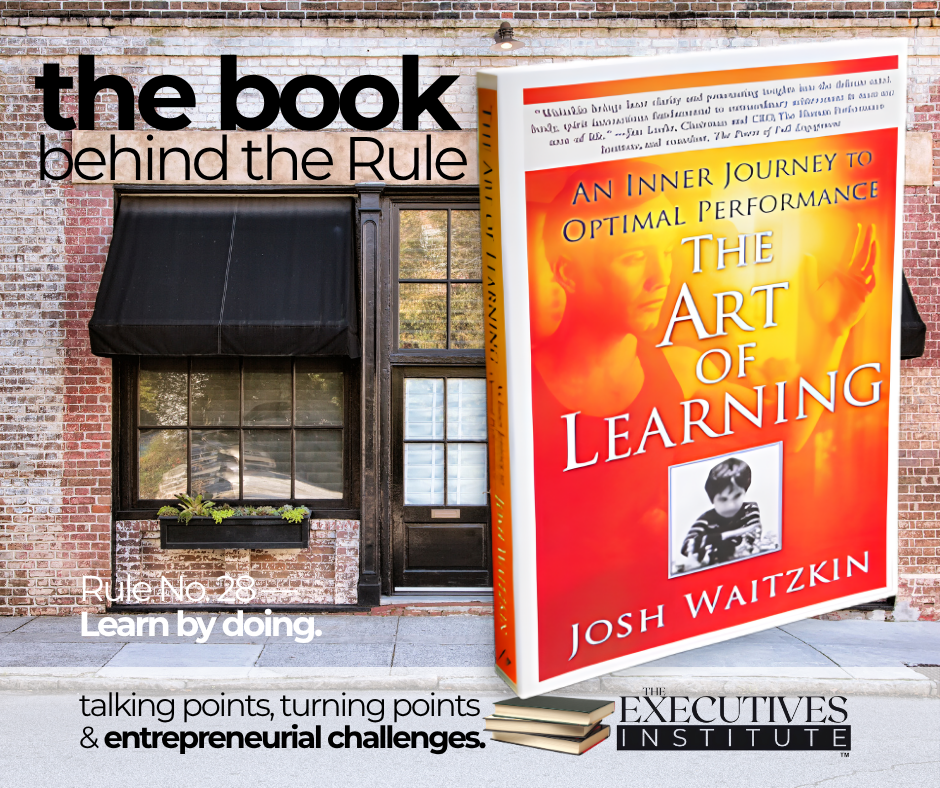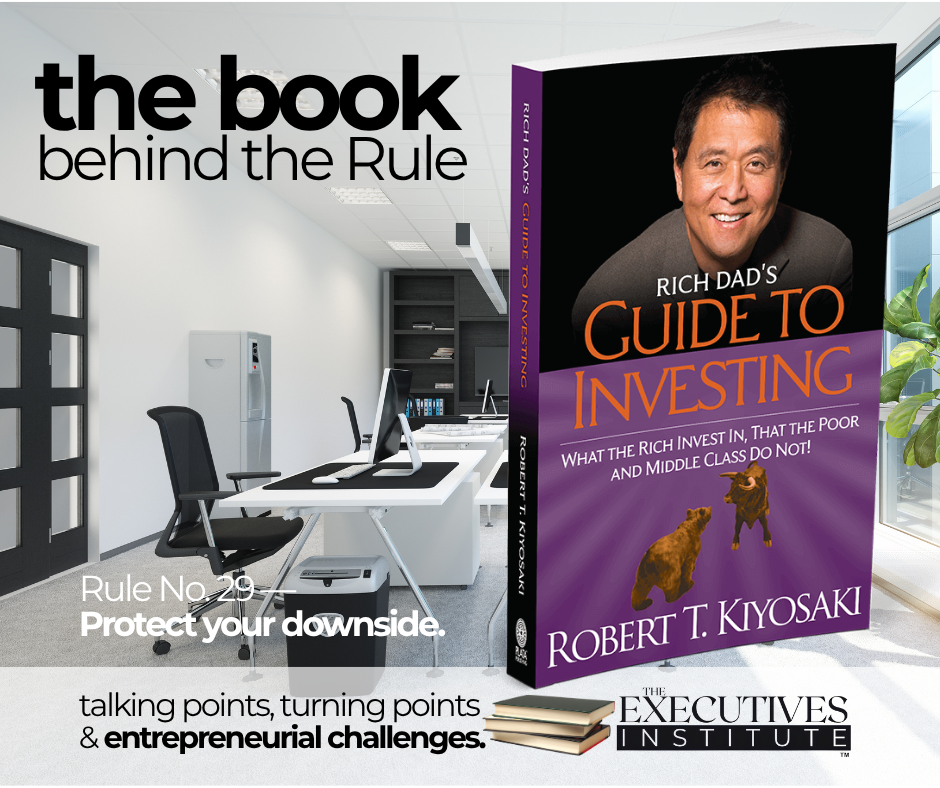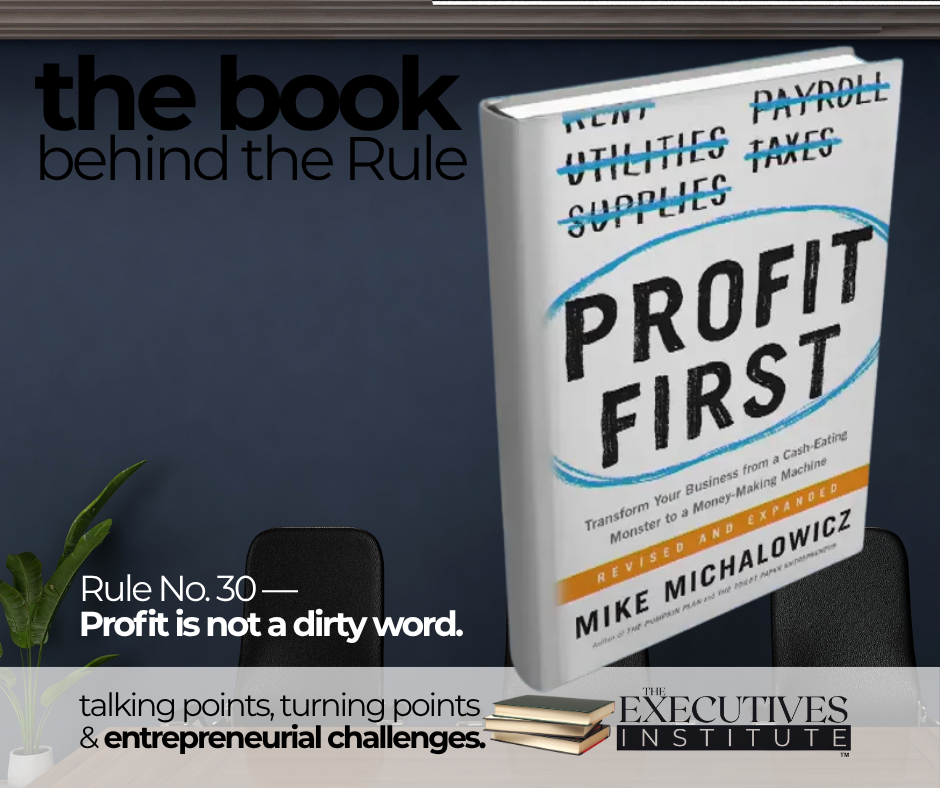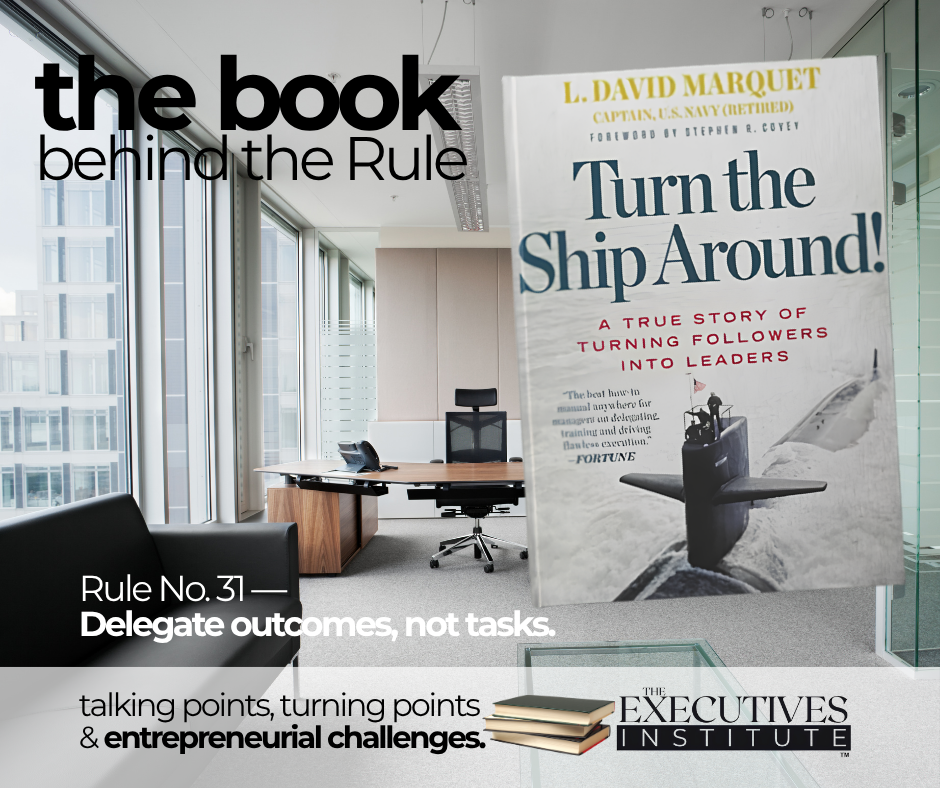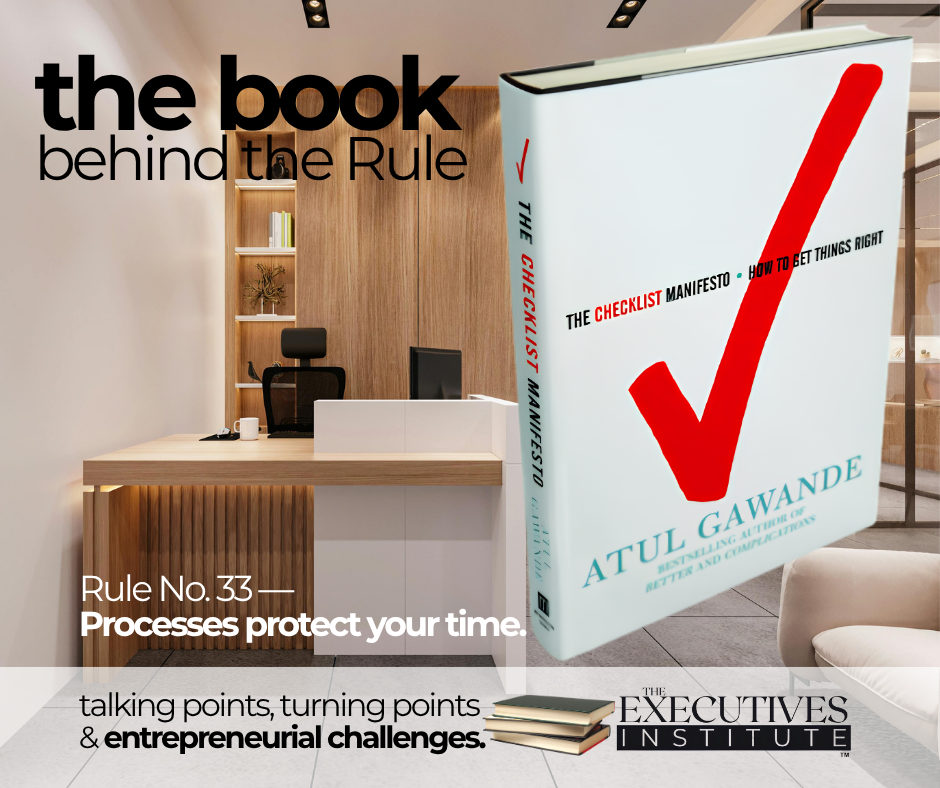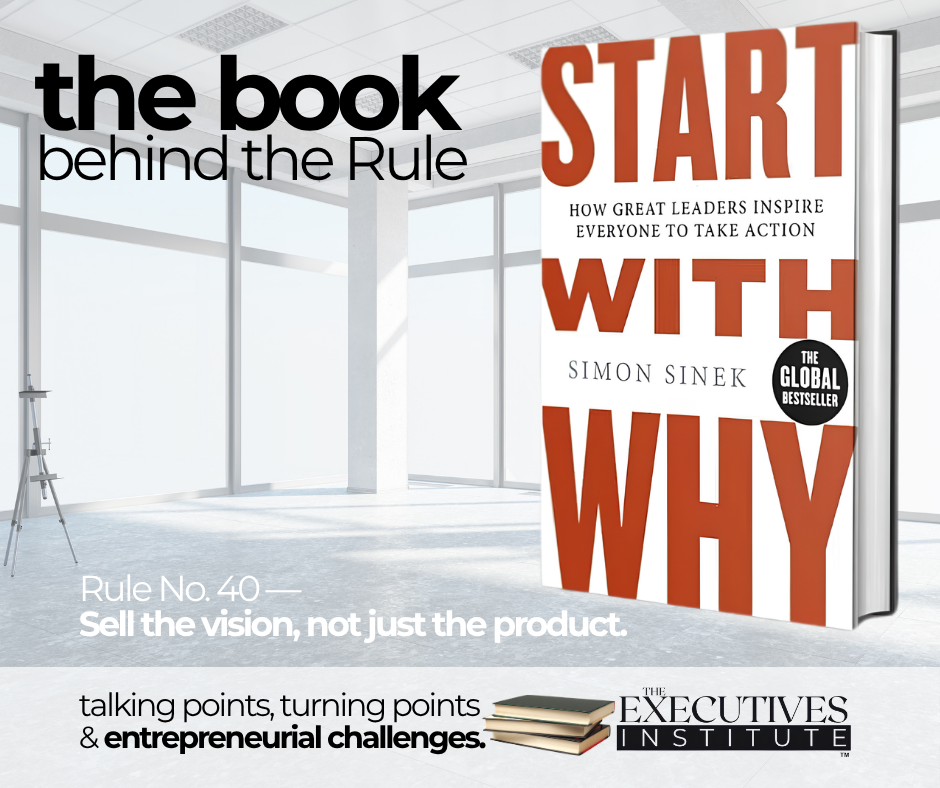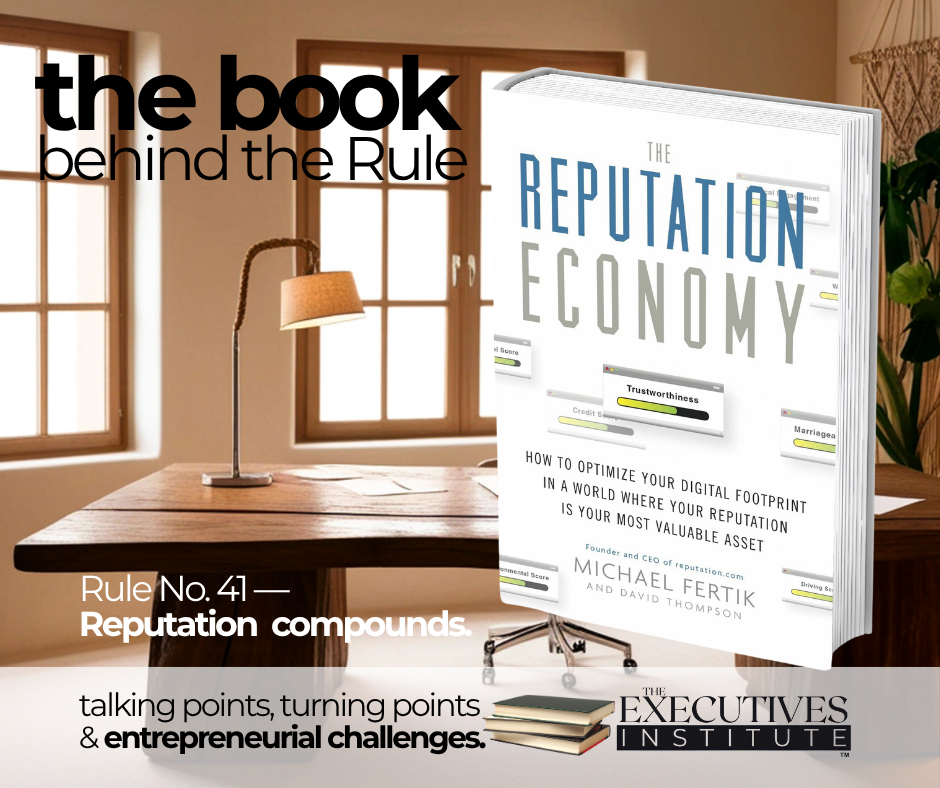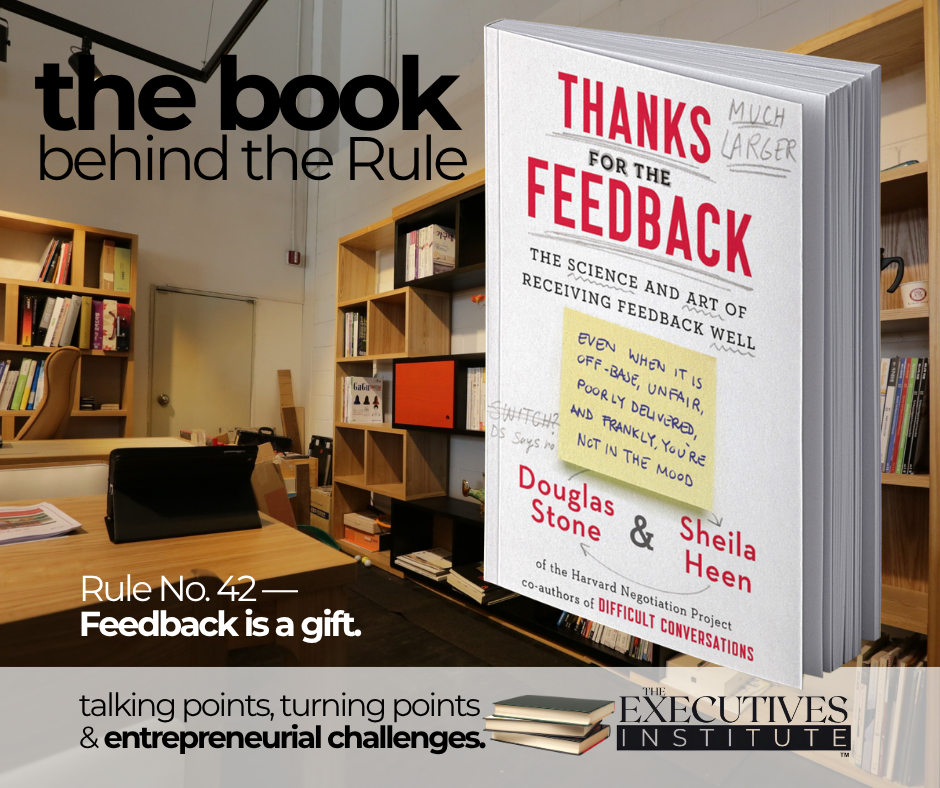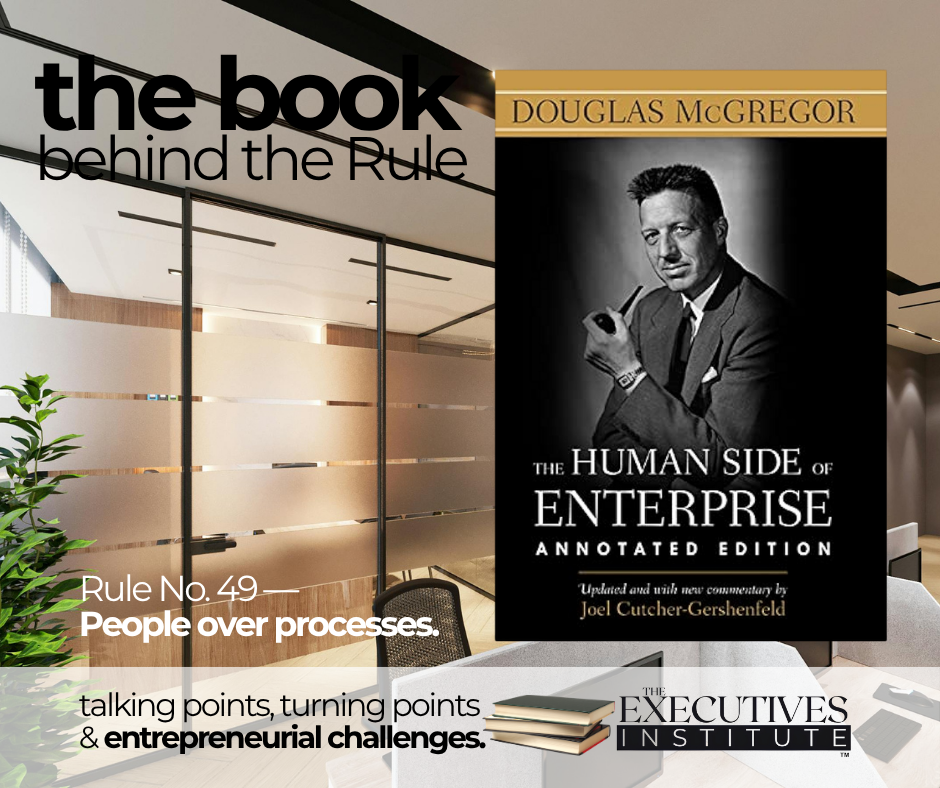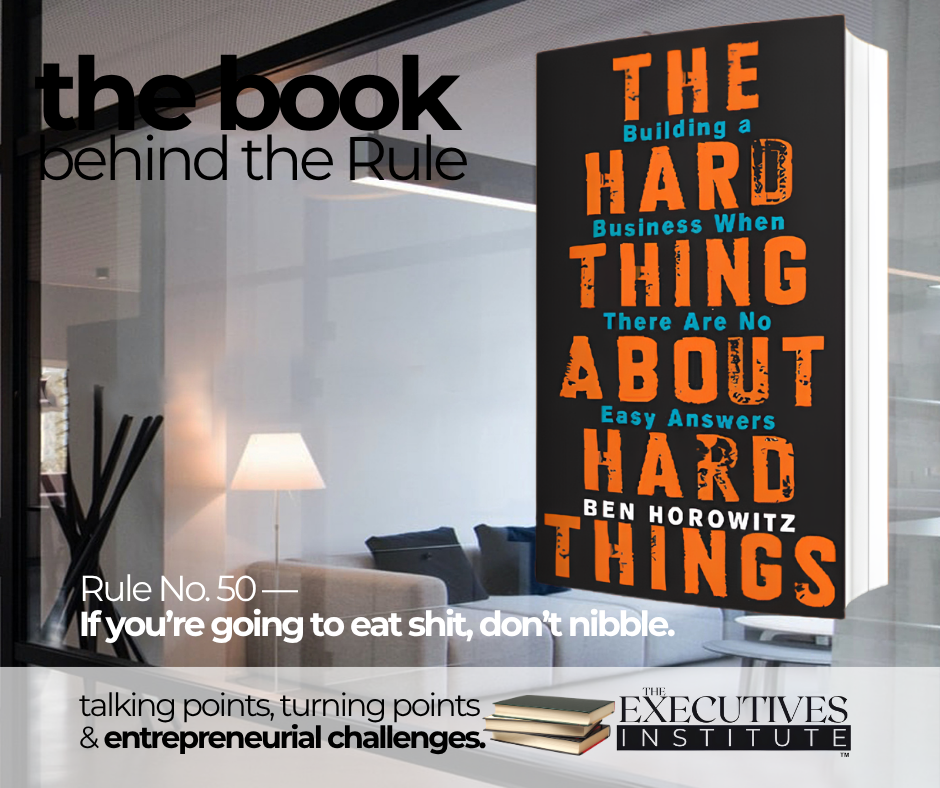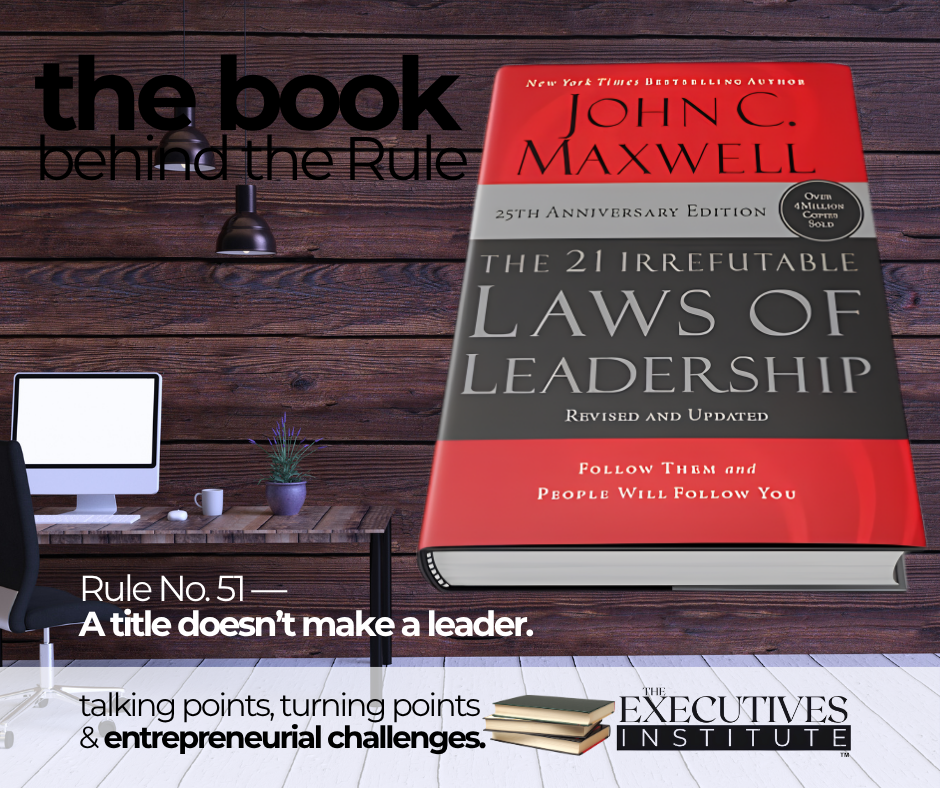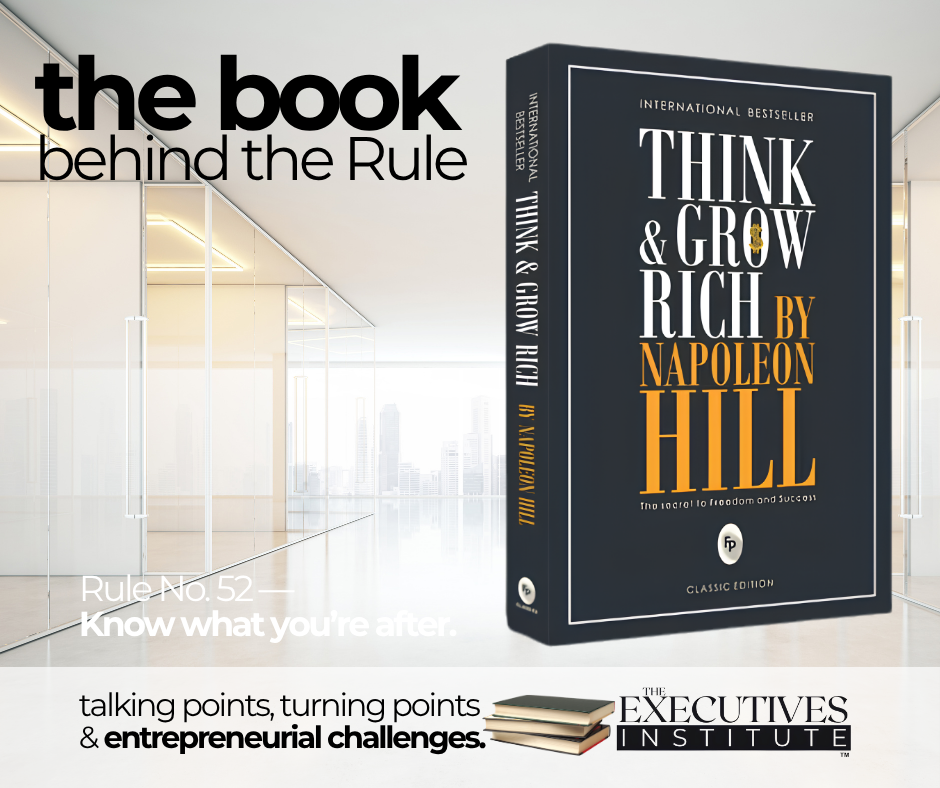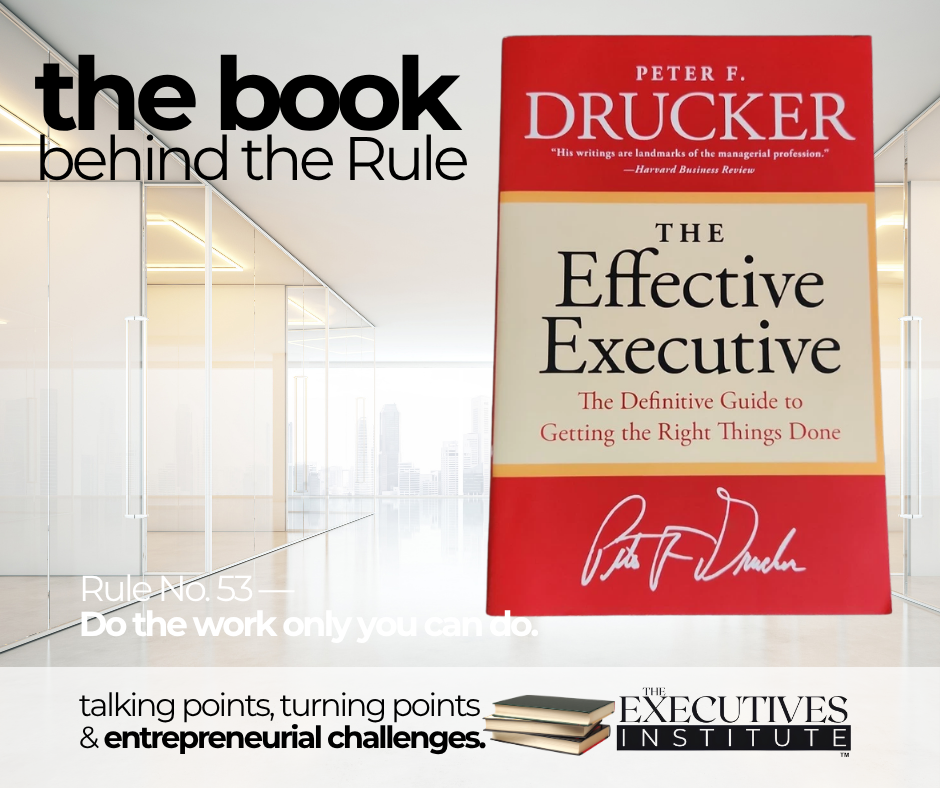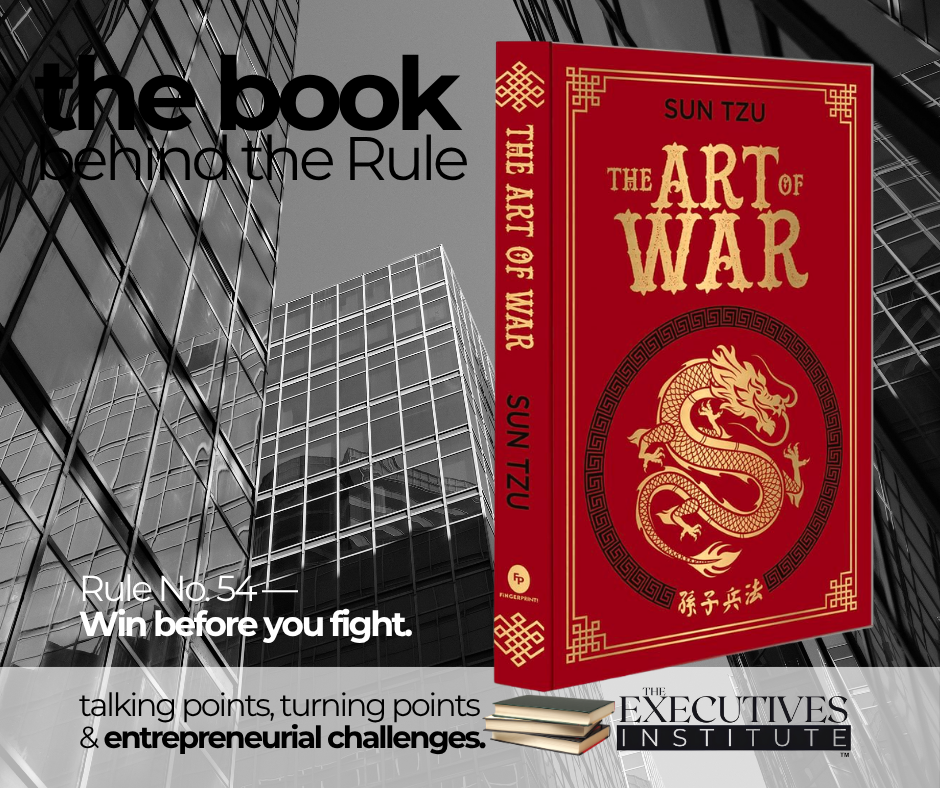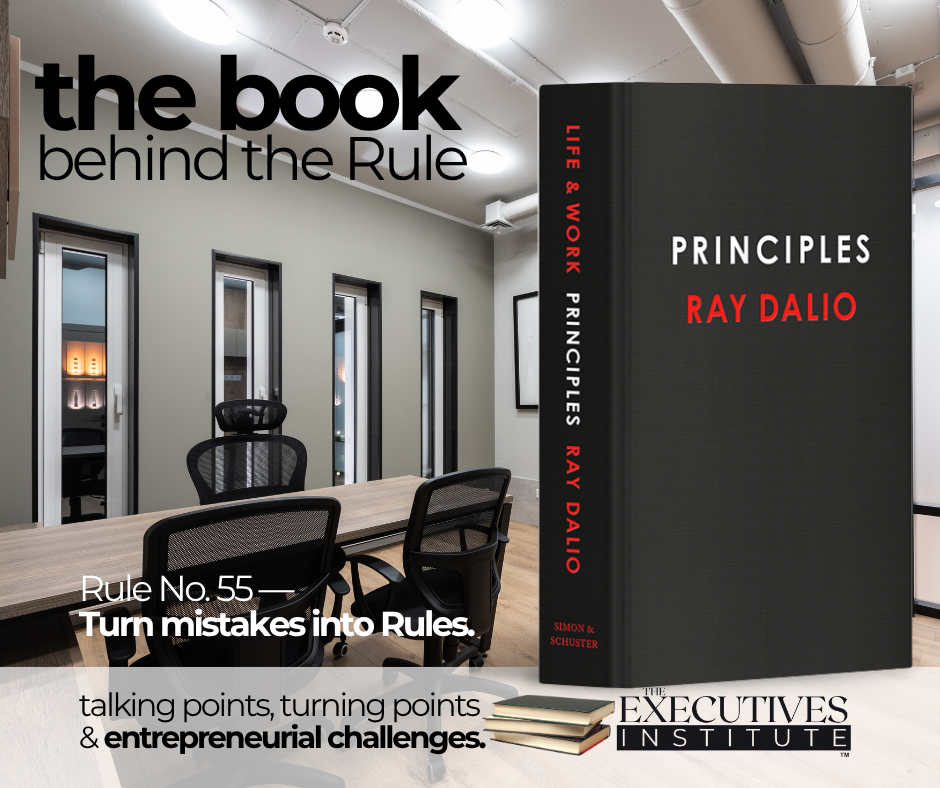
If you’ve been in business long enough, you know these titles.
You’ve heard them referenced in boardrooms, seen them dog-eared on a mentor’s desk, or had someone push a copy toward you and say “you have to read this.”
Some you’ve read twice.
Some are still on the nightstand.
A few you bought, moved three times, but still haven’t opened.
These are the books that decision-makers keep on their shelves
—not for decoration, but direction.
These are the books behind the Rules.
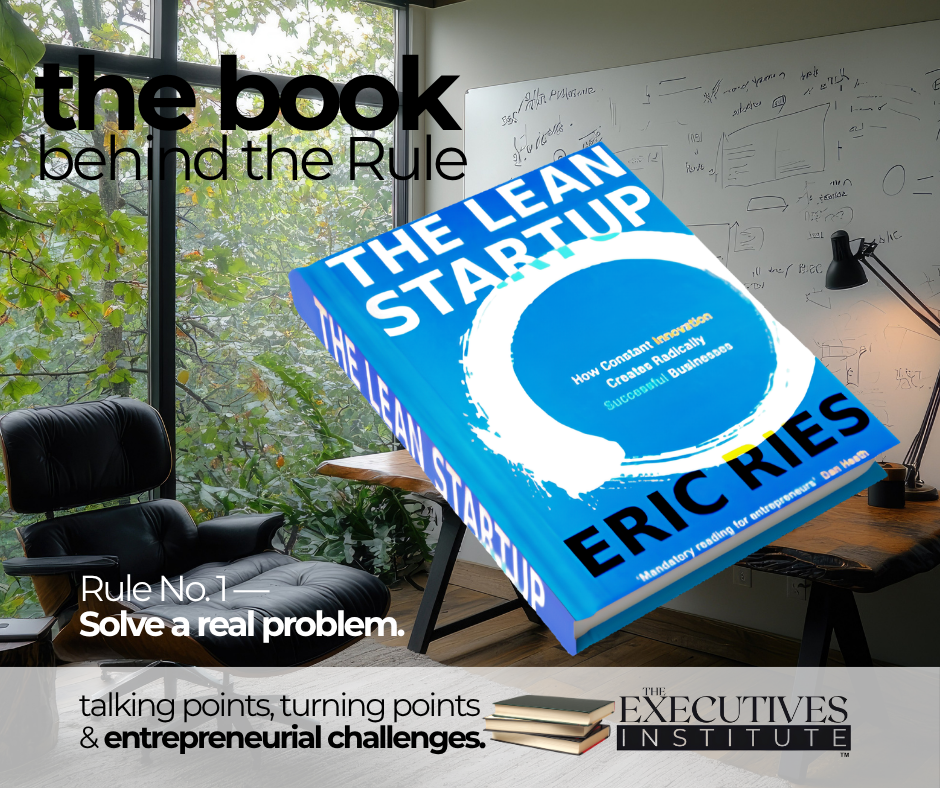
This is America’s Business Library.
Each of The Institute’s fundamental Rules of Business has roots. Those roots are planted in one of these books —by someone with the discipline to put the lesson down on paper so the next builder didn’t have to start from zero.
The order of books below follows The Weekly Edge. But start anywhere. Return often. And if there’s a title you’d stake your reputation on that isn’t here yet — tell us. Each Monday throughout 2026, one Rule is released at our LinkedIn page, join the conversation.

“The only way to win is to learn faster than anyone else.”

“If you’re talking about your idea, you’re probably asking the wrong questions.”

“The greatest originals are the ones who fail the most.”

“Becoming is better than being.”

“Most small businesses fail because the owner is working in the business rather than on it.”

“A brand is a promise made and kept.”

“The customer is the only boss.”

“The key is not to prioritize what’s on your schedule, but to schedule your priorities.”

“Simplicity is the ultimate sophistication of ideas.”

“The single biggest problem in business is the wrong people in the wrong seats.”

“Leaders must own everything in their world.”

“Don’t move information to authority. Move authority to information.”

“Management is about people, not just processes.”

“The only way to beat the competition is to stop trying to beat the competition.”

“The true prize is not winning. The true prize is staying in the game.”

“Strategy is a coordinated set of actions designed to win.”

“The ability to ask the right question is a superpower.”

“Ideas are easy. Execution is everything.”

“The most important thing about art is to work.”

“If you don’t prioritize your life, someone else will.”

“Success is built sequentially. It’s one thing at a time.”

“If the first thing you do each morning is eat a live frog, the rest of the day will be easy.”

“Growth comes at the edge of discomfort.”

“Sometimes the most strategic move is letting go.”

“Feedback is data. What you do with it determines your growth.”

“The habits that helped you succeed early can quietly become the habits that hold you back.”

“There are no shortcuts to knowledge, especially knowledge gained from personal experience.”

“Simple rules can outperform complex strategy.”

“Scaling a company requires disciplined execution.”

“A business that depends on you is not a business — it’s a job.”

“Simple checklists save lives and businesses.”

“Numbers tell a story. Leaders need to understand it.”

“Revenue is vanity. Profit is sanity. Cash is reality.”

“The best business model is the one that repeats.”

“People don’t buy what you do. They buy why you do it.”

“Clock building, not time telling.”

“Good is the enemy of great.”

“Organizational health will one day surpass all other disciplines in business.”

“Time management is really self-management.”

“Failure isn’t the opposite of success. It’s part of it.”

“The rich don’t work for money. They make money work for them.”

“Your network is your most valuable asset.”

“Profit is not an event. Profit is a habit.”

“Trust is the foundation of real teamwork.”

“Reputation is the currency of the digital age.”

“Safe is risky.”

“Trust always affects speed and cost.”

“Most people only use about 40% of their capability.”

“Clarity about what matters provides clarity about what does not.”

“Your true worth is determined by how much more you give in value than you take in payment.”
One quick thing.
Every business owner has a favorite book they swear belongs on every shelf. Chances are, a few of those aren’t here yet.
That’s fine.
This library is still growing. New books — and the Rules behind them — will continue to be added over time. And if there’s a title that genuinely belongs in America’s Business Library, you’re welcome to suggest it through the Add Your Insight page.
After all, the best libraries are built the same way great companies are — one good addition at a time.
The definitive reading list for leaders who build systems,
not just companies. Organized by discipline, from foundational
operating systems to the tools that run every function.
100 BOOKS · 8 CATEGORIES · CURATED FOR OPERATORS
True OS (8 books) — 8 anchor titles plus Balanced Scorecard, Execution (Bossidy/Charan), Effective Executive, and Principles (Dalio), which all operate as genuine company-wide management systems.
Operational Systems (14) — The Goal (Theory of Constraints), The Checklist Manifesto, Reengineering the Corporation, Six Sigma, Gemba Kaizen, and Simple Rules.
Modern/Adaptive (10) — Lean Startup, Sprint, Blitzscaling, High Growth Handbook, Amp It Up, Phoenix Project, Team Topologies, and Continuous Discovery Habits.
People/Culture (14), Finance (3), Strategy (12), Sales (10), Mindset/Execution (10) — round out the 100 with the operational how-to books that executives reach for when building the functions inside the OS.
Curated from a poll of business leaders across the U.S.
Autobiographies, founder narratives, and American Dream stories that capture the real texture of building something from nothing. These are not theory books —they are the lived experiences of the men and women who dared to build.
The 100 books are organized into 11 thematic categories:
The Founding Fathers (1–10) — Carnegie, Kroc, Walton, Iacocca — the original American Dream canon that every executive should have read decades ago.
Silicon Valley & Tech Titans (11–20) — Jobs, Musk, Bezos, Nadella, Hsieh — the modern era’s founding stories.
Retail, Consumer & Brand Builders (21–30) — Dell, Branson, Hilfiger, Vaynerchuk — builders who made brand into identity.
Food & Hospitality (31–35) — Bourdain, Danny Meyer, Will Guidara, Chouinard — the culture of craft as business strategy.
Sports, Entertainment & Culture (36–40) — Jesse Cole’s Fans First anchors this section, alongside Agassi and Tim Grover.
Finance & Wall Street (41–50) — Buffett, Cuban, Liar’s Poker, Barbarians at the Gate — the money stories.
Startup Wars (51–60) — Bad Blood, Super Pumped, Netflix, Uber — the modern founding myths, warts and all.
Manufacturing & Main Street (61–70) — Home Depot, IBM, Nordstrom, Intel — the less glamorous but equally essential builders.
Modern Founder Stories (71–80) — Pixar, Netflix, Randolph’s That Will Never Work, and more.
Grit & Against-the-Odds (81–90) — Mandela, Schwarzenegger, Indra Nooyi, Gates’ Source Code — the hardest climbs.
Executives Institute Essentials (91–100) —
Contributor suggestions for the next 50 Rules…
We will vote on every one!
As Members of The Executives Institute continue to contribute, refine, and challenge these ideas, the list becomes more valuable—not because it’s complete, but because it never will be.
The Rule: Run on a clear operating system.
The Book: Traction by Gino Wickman
The Rule: Wealth hides in unglamorous businesses.
The Book: Main Street Millionaire by Codie Sanchez
Codify your principles.
Principles by Ray Dalio
Think from first principles, not popular opinions.
Economic Facts and Fallacies by Thomas Sowell
Power is a game—learn the rules.
The 48 Laws of Power by Robert Greene
Start small, prove demand.
The $100 Startup by Chris Guillebeau
Desire backed by belief drives achievement.
Think and Grow Rich by Napoleon Hill
Listen to understand — not to reply.
How to Win Friends and Influence People by Dale Carnegie
This one will make the list for sure. This is one of those fundamentals leaders think they do well…until reality proves otherwise.
Despite the dated title, it’s a masterclass in:
• authentic interest
• making people feel heard
• learning from every interaction
It’s endured nearly a century for a reason.
One habit that never goes out of style: taking genuine interest in people.
Every conversation is a chance to learn something — about the business, the customer, the challenge, or the person across from you.
Leaders who listen to understand (not to reply) compound wisdom daily.
Build the habit of authentic curiosity.
Walk into every interaction expecting to learn — not impress.
The best leaders I know treat people as teachers, not transactions.
Real leadership starts with real interest in others.
If you’re not intentionally learning from every conversation, you’re leaving growth on the table — for you and your business.
Focus on leverage points that ignite momentum.
The Tipping Point by Malcolm Gladwell
Clarity and swift feedback accelerate growth.
The One Minute Manager by Ken Blanchard
Chase Mastery, Not Success
Mastery – Robert Greene
Momentum Creates Magic
The Compound Effect – Darren Hardy
Solve Before You Scale
Nail It Then Scale It – Nathan Furr & Paul Ahlstrom
Innovate Constantly or Stagnate
The Innovator’s Dilemma – Clayton Christensen
Be Obsessed with Quality
Zen and the Art of Motorcycle Maintenance – Robert M. Pirsig
Buy Cash Flow, Not a Job
Main Street Millionaire – Codie Sanchez
Culture Eats Strategy for Breakfast
Leaders Eat Last – Simon Sinek
Be the Thermostat, Not the Thermometer
Dare to Lead – Brené Brown
The Customer Isn’t Always Right, But They Always Matter
Raving Fans – Ken Blanchard & Sheldon Bowles
Marketing is Storytelling
Building a StoryBrand – Donald Miller
Focus on Strengths, Not Fixing Weaknesses
StrengthsFinder 2.0 – Tom Rath
Business Is Personal
People Over Profit – Dale Partridge
Serve First, Lead Second
Leaders Eat Last – Simon Sinek
Empathy Wins
Emotional Intelligence 2.0 – Bradberry & Greaves
Legacy Is the Real ROI
Leaders Eat Last – Simon Sinek
Start before you’re ready
The $100 Startup by Chris Guillebeau
Be customer-obsessed
The Everything Store: Jeff Bezos and the Age of Amazon by Brad Stone
Stop trying to be everything to everyone
The 22 Immutable Laws of Marketing by Al Ries & Jack Trout
Chase mastery, not success
Mastery by Robert Greene
Everything is figureoutable
Everything Is Figureoutable by Marie Forleo
Time kills deals
Pitch Anything by Oren Klaff
Think in bets
Thinking in Bets by Annie Duke
Fire yourself from as many jobs as possible
Clockwork: Design Your Business to Run Itself by Mike Michalowicz
If you have a lesson, a turning point, or a hard-won principle that shaped how you lead or build — we invite you to share it.
The real-world insight of experienced operators is the most valuable contribution this Institute can receive.