

Rule No. 27 summary:
The tasks we avoid are often the ones that matter most.
“Do the Hard Things First” is a call to discipline—tackle your toughest, highest-impact priorities before everything else.
It’s not about doing more, it’s about doing what matters when your mind is sharp, your willpower is high, and your excuses haven’t shown up yet. In leadership and business, procrastination on the hard stuff is procrastination on progress.
Most people don’t fail for lack of talent—they fail for lack of priority. The truth is, the hard things—the uncomfortable calls, the strategic decisions, the deep work—are the very things that move a business forward. But they rarely scream for attention. They sit quietly on your to-do list while easier, lower-stakes tasks hijack your day. This rule cuts through the noise: stop reacting, start leading. Do the hard things first, when it matters most.
If you’ve fought battles that became lessons — this is where we collect them.
The insight you share might be the turning point someone else is waiting for.
 Write this down…
The task you keep avoiding is usually the one that matters most.
📚 Recommended Reading
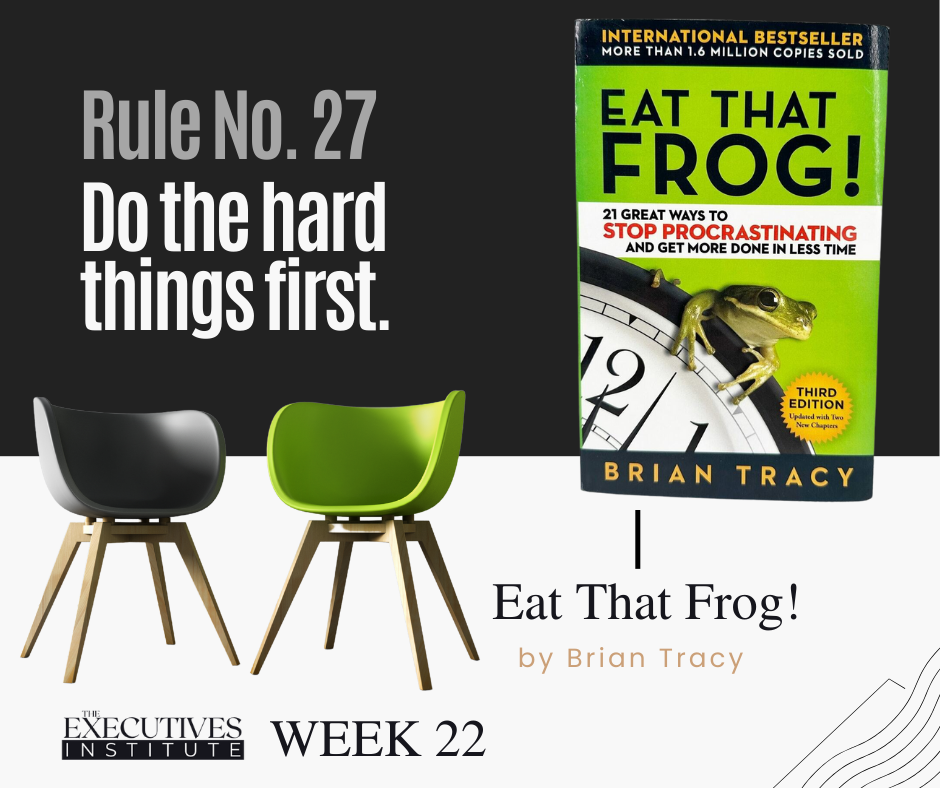
Eat That Frog!
by Brian Tracy
“One of the very worst uses of time is to do something very well that need not be done at all.”— Brian Tracy
📘 Book Summary
Brian Tracy delivers a blunt message: procrastination is the silent killer of progress. The book centers on a simple principle—identify your most important, most difficult task (“the frog”) and do it first. Tracy strips away the illusion of multitasking and challenges leaders to focus on high-value priorities, eliminate time-wasters, and build the discipline to act before excuses take over. It’s a practical guide rooted in timeless fundamentals: clarity, focus, and execution.
🔑 Key Executive Takeaway
Your effectiveness is defined by what you choose to start with. When you consistently attack the hardest, highest-impact work first, everything else in your day—and your business—falls into place.
🛠️WE ARE STILL BUILDING THIS RULE. CHECK BACK
Rule No. 27 helps you with:
- Prioritizing what truly moves the needle – You stop mistaking activity for accomplishment.
- Beating procrastination before it beats you – No more hiding behind easy, low-leverage tasks.
- Maximizing your energy and focus – You tackle strategic work when you’re strongest.
- Building credibility – You become the person who faces the fire, not the one who delays decisions.
- Momentum and confidence – One hard thing done early changes how you attack the rest of the day.


Progress starts with asking better questions. Use this section and these prompts throughout The Institute to challenge assumptions, surface blind spots, and drive clearer thinking.
 What task or decision am I avoiding because it’s uncomfortable—but would unlock significant progress if tackled now?
Example: Are you delaying a tough personnel decision that, once made, would free your team to move forward with clarity?
If I only accomplished one thing today, which task would have the greatest long-term impact on my business?
Example: Instead of responding to every email, should you be refining the pitch to your largest prospect?
Do I let urgent, easy tasks steal time from what’s most important—and am I willing to break that pattern?
Example: Are you spending your peak hours in back-to-back meetings, while your strategic roadmap sits untouched?
💬Executive Discussion

Most leaders know what needs to be done—but few consistently do it first. We rationalize, reprioritize, and push the hard things until energy is low or circumstances force our hand. Yet high performers share one trait: they eat the frog before breakfast.
Discusss with your leadership team:
What is our “frog” right now—the tough, high-leverage task we’ve been putting off?
What would it take to tackle it first thing tomorrow?
What’s the cost of continuing to delay it—for you, our team, or our organization?
 This Rule isn’t finished—and it never will be. Business changes, leaders learn, and our Members keep sharpening the edges with real stories and hard-won lessons. What you see here is today’s version. Tomorrow’s will be better, clearer, and backed by more lived experience.
Thank you for being here and bringing your perspective—add your insight, share a story, or challenge what’s written. Together, we keep these Rules alive and relevant.