
Rule No. 8 summary:
It’s easy to confuse being busy with being effective. But motion without direction isn’t progress—it’s distraction in disguise.
This rule reminds us that true advancement comes not from activity, but from purposeful, disciplined action.
Because doing more is not the goal—doing what matters is.
Essentialism challenges us to eliminate the nonessential so we can focus our energy on what really matters.
We live in a culture that rewards hustle, glorifies busyness, and often confuses motion with momentum. But constant activity isn’t the same as meaningful progress. This rule invites you to slow down, get clear, and focus your effort where it actually counts.
If you’ve fought battles that became lessons — this is where we collect them.
The insight you share might be the turning point someone else is waiting for.
 Write this down…
Busy people feel productive. Focused people actually are.
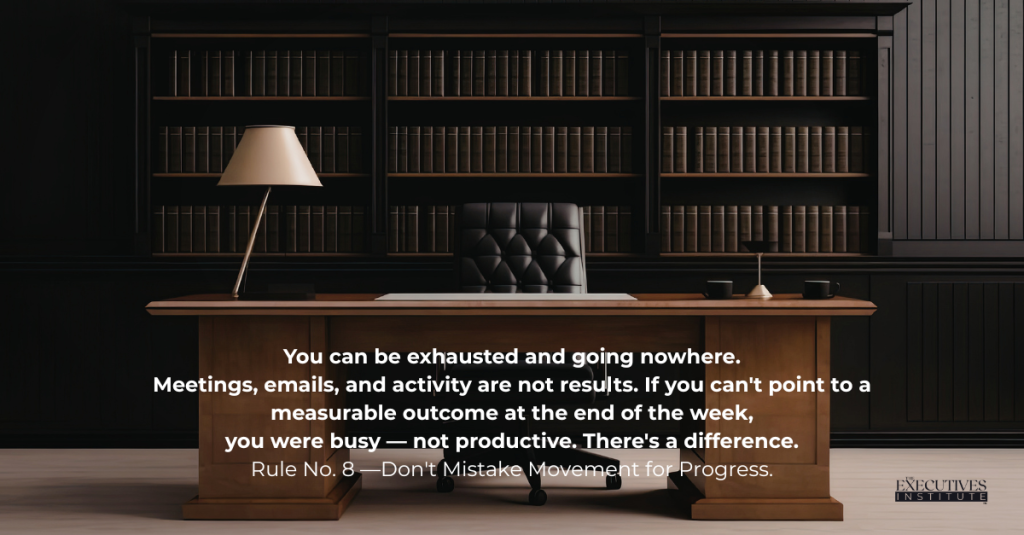
STUDY 📌 Rule No. 8 —Don’t Mistake Movement for Progress.
April 12, 2026🛠️WE ARE STILL BUILDING THIS RULE. CHECK BACK
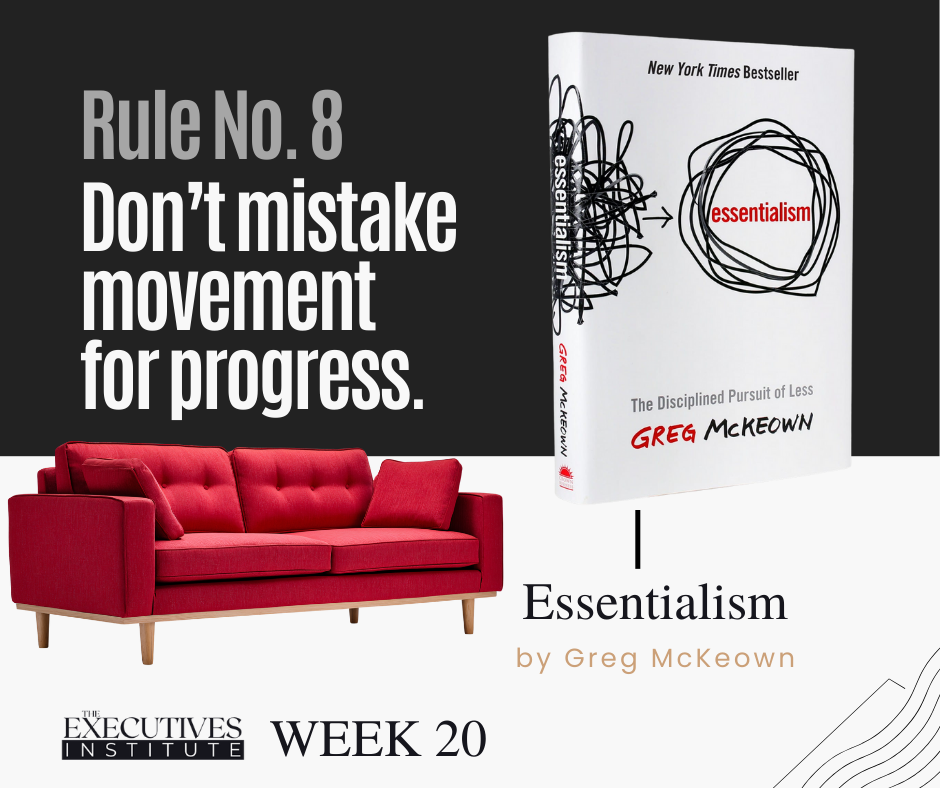
📚 Recommended Reading
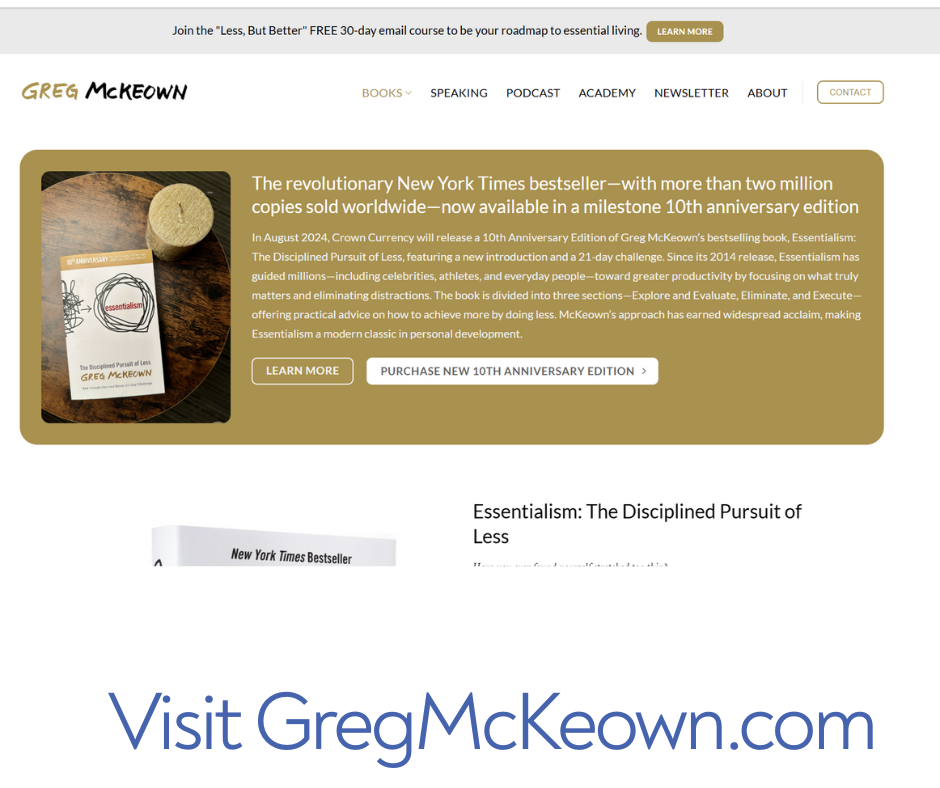
Essentialism: The Disciplined Pursuit of Less
by Greg McKeown
“What if we stopped celebrating being busy as a measure of importance? What if instead we celebrated how much time we had spent listening, pondering, meditating, and enjoying time with the most important people in our lives?”— Greg McKeown
📘 Book Summary
Essentialism is not about doing more in less time—it’s about doing only the right things. Greg McKeown makes a compelling case for cutting through the noise of modern work and life by embracing clarity, boundaries, and purpose. He challenges the belief that we can do it all, arguing instead for disciplined focus on the essential few over the trivial many.
Through stories, research, and practical tools, McKeown helps readers identify what truly matters and eliminate what doesn’t. The result is a mindset shift—from reactive busyness to intentional living. This book is a powerful guide for leaders and teams who want to achieve more by doing less—but doing it better.
🔑 Key Executive Takeaway
Focus drives results. Leaders who ruthlessly prioritize the essential few over the trivial many not only free their own time and energy—they enable their teams to achieve more with less distraction. Progress isn’t measured by activity; it’s measured by impact.

The word “priority” came into the English language in the 1400s. It was singular. It meant the very first or prior thing. It stayed singular for the next five hundred years. Only in the 1900s did we pluralize the term and start talking about “priorities.” Illogically, we reasoned that by changing the word we could bend reality. Somehow we would now be able to have multiple “first” things. One leader told me of his experience in a company that talked of “Pri-1, Pri-2, Pri-3, Pri-4, and Pri-5.” This gave the impression of many things being the priority, but actually meant nothing was. An Australian nurse named Bronnie Ware, who cared for people in the last twelve weeks of their lives, recorded their most often discussed regrets. At the top of the list: “I wish I’d had the courage to live a life true to myself, not the life others expected of me.” A Nonessentialist thinks almost everything is essential. An Essentialist thinks almost everything is nonessential. Many capable people are kept from getting to the next level of contribution because they can’t let go of the belief that everything is important. But once we fully accept that a few things are so much more valuable than the rest, we start scanning our environment for those vital few — and eagerly eliminate the trivial many. Only then can we say no to good opportunities and say yes to truly great ones. Essentialism, pg 21
Greg McKeown, LinkedIn post March 25, 2026
This Rule helps business leaders with:

- Focusing teams on what actually moves the needle
- Escaping the trap of performative busyness
- Aligning effort with impact
- Reducing decision fatigue and burnout
- Eliminating unnecessary tasks and distractions
- Leading with clarity instead of chaos

Progress starts with asking better questions. Use this section and these prompts throughout The Institute to challenge assumptions, surface blind spots, and drive clearer thinking.

 When was the last time I paused to think deeply instead of react quickly? What changed as a result?
If I could only focus on one initiative this quarter, what would have the highest impact?
What meetings, habits, or tasks could I eliminate without losing real value?
 This Rule isn’t finished—and it never will be. Business changes, leaders learn, and our Members keep sharpening the edges with real stories and hard-won lessons. What you see here is today’s version. Tomorrow’s will be better, clearer, and backed by more lived experience.
Thank you for being here and bringing your perspective—add your insight, share a story, or challenge what’s written. Together, we keep these Rules alive and relevant.