

Rule No. 47 summary:
If your team is stuck, underperforming, or spinning its wheels, stop looking around for excuses—start looking up.
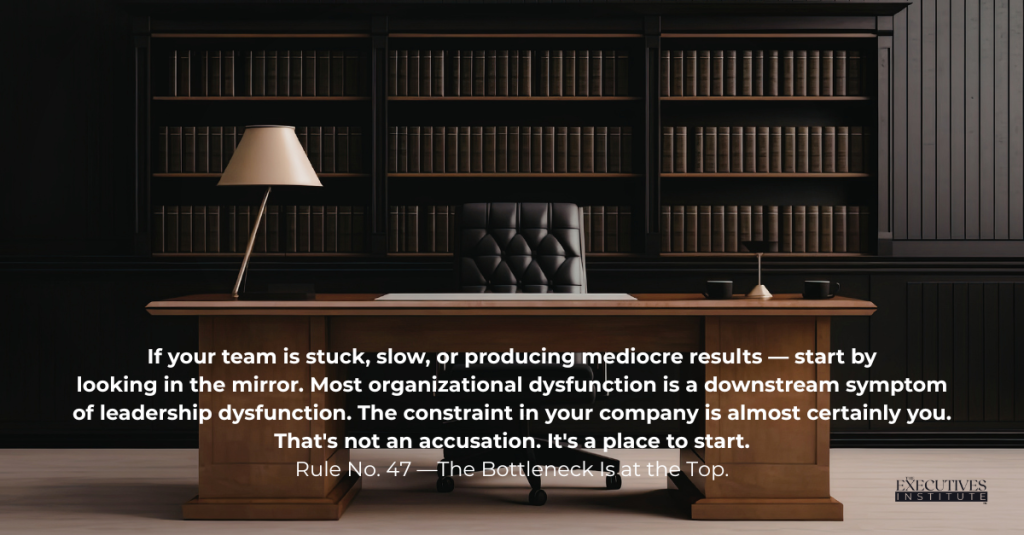
When a team is underperforming, the root cause usually isn’t “down there.” It’s at the top. Culture, clarity, accountability—these flow from leadership. If something’s stuck, stalled, or sideways, odds are high that the real issue starts with the leader. Not the team. Not the market. You.
Strong leadership fixes dysfunction. Weak leadership fuels it.
⚠️ This Rule is currently under development and will be fully available on our official launch day, January 4, 2027. After launch, it will continue to evolve through real-world experience, member contributions, and timeless business principles—because great leaders never stop learning.
The real choke point is almost always at the top. Leadership isn’t just a title; it’s the engine that drives—or grinds to a halt—the entire organization. You want accountability? Start by holding yourself accountable. You want alignment? Stop tolerating dysfunction and model clarity. The bottleneck isn’t in the middle or the trenches. It’s right where the buck stops: with you. This rule pulls no punches because leadership demands brutal honesty, starting with yourself.
If you’ve fought battles that became lessons — this is where we collect them.
The insight you share might be the turning point someone else is waiting for.
 Write this down…
When the organization slows down, the first place to look is the leader.
📚 Recommended Reading
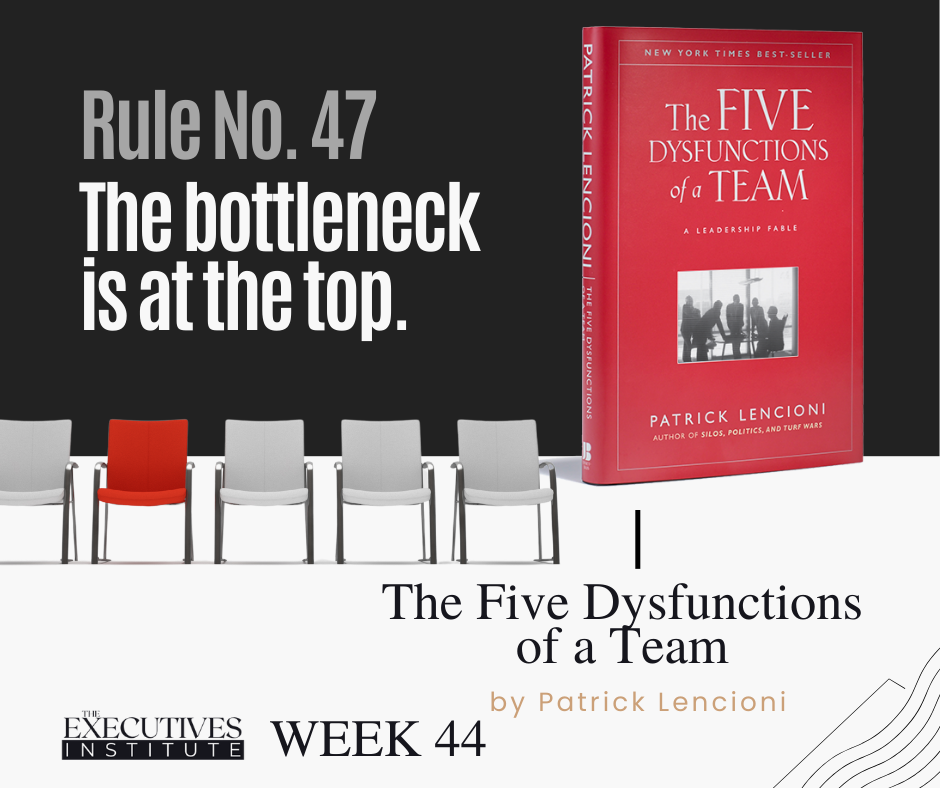
The Five Dysfunctions of a Team
by Patrick Lencioni
“The leader must confront the dysfunction, or it will never be resolved.”— Patrick Lencioni
🛠️ WE ARE STILL BUILDING THIS RULE. CHECK BACK
🧭 THIS RULE HELPS US WITH
- Identifying the real source of organizational gridlock
- Owning leadership’s role in team underperformance
- Removing blame culture from the middle and bottom
- Restoring alignment, clarity, and accountability
- Building healthier teams through example, not edict
🔍 ASK THE RIGHT QUESTIONS: Use this section and these prompts throughout The Institute to challenge assumptions, surface blind spots, and drive clearer thinking.
Before you fix the team, look in the mirror. Leadership drives dysfunction—or cures it.
 What culture am I really modeling—one of responsibility or excuse-making?
Example: When mistakes happen, do you take ownership publicly? Or subtly point fingers down the ladder?
Where have I tolerated dysfunction because confronting it felt uncomfortable?
Example: You’ve watched two team members avoid collaboration for months, but haven’t intervened. That’s not on them—it’s on you.
Do my people lack clarity because I’ve failed to set it?
Example: If you’re frustrated by a lack of accountability, ask whether your expectations were vague or inconsistent.
🖋️EXECUTIVE DISCUSSION PROMPT: Use the prompt below to spark reflection, challenge assumptions, and bring to light the shifts your leadership team or peer group might need to make next.
The truth is harsh, but necessary: leadership behavior is contagious—for better or worse.
In your next leadership team meeting, ask:

What recurring issue keeps showing up across departments, and how might we be the ones enabling it—intentionally or not?
Push past surface blame. Get to the habits, blind spots, or avoidance patterns in the leadership team that might be holding everyone else back.
“If you could get all the people in an organization rowing in the same direction, you could dominate any industry… but you won’t—unless the leader confronts the dysfunction.” — Patrick Lencioni, The Five Dysfunctions of a Team
 This Rule isn’t finished—and it never will be. Business changes, leaders learn, and our Members keep sharpening the edges with real stories and hard-won lessons. What you see here is today’s version. Tomorrow’s will be better, clearer, and backed by more lived experience.
Thank you for being here and bringing your perspective—add your insight, share a story, or challenge what’s written. Together, we keep these Rules alive and relevant.