

Rule No. 28 summary:
Real mastery doesn’t come from theory alone—it’s forged in action.
Learn by Doing means getting your hands dirty, embracing failure as part of the process, and internalizing knowledge through lived experience.
The most transformative growth comes when you stop preparing and start practicing under real conditions. This rule is a call to engage directly, iterate quickly, and let action teach you what thinking never could.
There’s a moment in every leader’s journey when theory runs out—and reality begins. You can’t think your way to mastery, and you can’t strategize your way around experience. Learn by Doing is about trading perfection for progress and stepping into the arena where real growth happens. Whether you’re launching a new initiative or developing a next-generation leader, the fastest way forward is almost always hands-on. Action isn’t the enemy of learning—it’s the engine.
If you’ve fought battles that became lessons — this is where we collect them.
The insight you share might be the turning point someone else is waiting for.
 Write this down…
Experience teaches faster than theory ever will.
📚 Recommended Reading
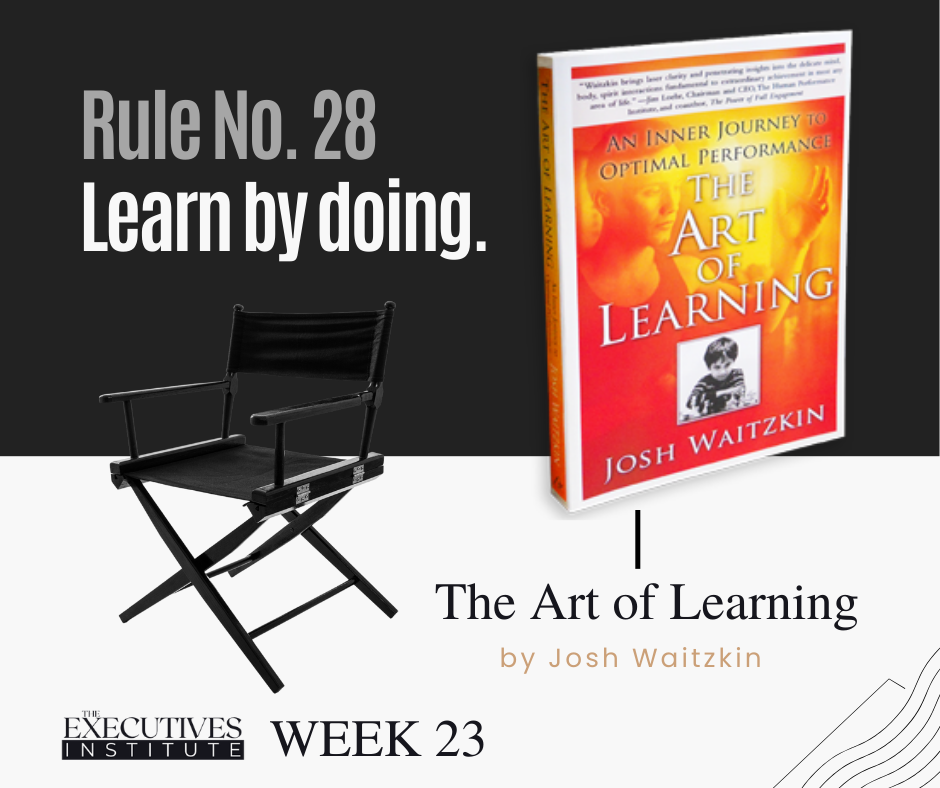
The Art of Learning
by Josh Waitzkin
“We have to be able to do something slowly before we can have any hope of doing it correctly with speed.” — Josh Waitzkin
📘 Book Summary
Josh Waitzkin—child chess prodigy turned world-class martial artist—breaks down how high performance is built through deliberate practice, deep focus, and a willingness to learn through pressure. The book isn’t about talent; it’s about the process. Waitzkin shows how mastery comes from incremental growth, embracing adversity, and refining skills through real-world application rather than academic theory. He emphasizes learning slowly and correctly before adding speed, turning setbacks into data, and building instincts through repetition under genuine stress. His central message is simple: you don’t rise to the occasion—you rise to your level of training, and your training is shaped by how you learn.
🔑 Key Executive Takeaway
If you want your organization to perform at a higher level, stop chasing hacks and start building capability through consistent, real-world reps. Mastery comes from showing up, applying pressure, and letting experience sharpen your instincts—not from more slides, more studies, or more meetings. Executives who build a culture of “learning by doing” move faster, adapt quicker, and outperform leaders who stay stuck in theory.
WE ARE STILL BUILDING THIS RULE. CHECK BACK
This Rule helps you with:
- Turning Knowledge into Skill: Reading and discussing strategy are important, but execution is where it crystallizes. Doing the work builds instinct, muscle memory, and confidence.
- Overcoming Perfection Paralysis: You don’t need every answer to start. In fact, starting is often how you get the answers that matter. Action over analysis.
- Building Resilience Through Feedback: Mistakes made in real effort offer sharper, more permanent lessons than theoretical failure ever could. Each rep teaches you something a classroom can’t.
- Accelerating Decision-Making: When you learn through action, your response time tightens. You don’t just know—you react. Fast, fluid execution becomes second nature.
- Staying Humble and Hungry: By staying in the arena, you’re constantly reminded that learning is never done. Doing keeps you grounded and growth-focused.

Progress starts with asking better questions. Use this section and these prompts throughout The Institute to challenge assumptions, surface blind spots, and drive clearer thinking.
 Where am I over-preparing instead of executing?
Example: Are you endlessly refining a pitch deck or strategy while the market window is closing? What could you test today, even if it’s imperfect?
What feedback loops do I have in place from real-world activity?
Example: Do your team’s product iterations rely on real user feedback, or just internal brainstorming? Are you learning from the market or echoing assumptions?
Am I using learning as an excuse to avoid risk?
Example: Have you delayed launching a new service under the guise of “doing more research”? Is it time to get it into customers’ hands and learn from their response?
Do I reward action and experimentation in my organization—or just planning?
Example: Are your team meetings dominated by “analysis paralysis”? When’s the last time you publicly recognized someone for testing a bold idea—even if it didn’t work?
💬Executive Discussion

Many executives pride themselves on being strategic thinkers, but strategy without execution is just speculation. Real learning—and real edge—comes from doing. As Josh Waitzkin writes, depth is built through incremental pressure under real conditions. Your instincts sharpen not in the lab, but in the live fire of decision and action.
Discuss with your leadership team:
Think of a time when your biggest breakthrough came not from more research, but from taking action. What did you learn that no book or plan could have taught you?
Follow up:
Where in our organization today are we “learning” instead of “doing”?
What small step could we take to convert theory into traction—starting this week?
 This Rule isn’t finished—and it never will be. Business changes, leaders learn, and our Members keep sharpening the edges with real stories and hard-won lessons. What you see here is today’s version. Tomorrow’s will be better, clearer, and backed by more lived experience.
Thank you for being here and bringing your perspective—add your insight, share a story, or challenge what’s written. Together, we keep these Rules alive and relevant.