

Your brand is the unspoken contract you sign with the world —break it, and you’re just another company people stop trusting. Your brand isn’t your logo or slogan —it’s the consistent promise you make and keep to your customers, shaping what they expect from every experience with your business. This rule is a reminder: your brand is your bond. Honor it.
Ask yourself: Does every customer interaction in our organization, strengthen or weaken trust in that promise?
⚠️This Rule is currently under development and will be fully available on our official launch day, January 4, 2027. After launch, it will continue to evolve through real-world experience, member contributions, and timeless business principles—because great leaders never stop learning.
👥 Executive Insights | “Let me tell you how that played out in my company.“
- Your Name, Title, Organization + Insights
- Your Name, Title, Organization + Insights
- Your Name, Title, Organization + Insights
Looking back, what is one hard lesson your organization learned about trust, reputation, or brand consistency? The insight you share might be the turning point someone else is waiting for.
STUDY 📌 Rule No. 11 —Your brand is your promise.
📓 the LEDGER
the LEDGER is the recommended companion to your weekly study through The Weekly Edge. Each week includes a printable PDF designed to help you plan with intention, apply the Rule in real time, and record the decisions, priorities, and lessons that shape your leadership. You can print one week at a time and begin anytime throughout the year, or choose the full professionally printed spiral-bound hardcover LEDGER for a complete year of disciplined growth and reflection.
— the LEDGER Volume 1 will be available this Summer 2026 through this site
This rule helps business leaders…
Define and reinforce your company’s core identity
Build long-term customer trust and loyalty
Align internal culture with external perception
Stand out in crowded or commoditized markets
Prevent brand erosion through careless actions or inconsistency
 Write this down…
Your brand isn’t what you say. It’s what customers repeat about you.

Leadership Team Discussion
If we secretly recorded ten recent customer interactions across our company, would what we see and hear fully align with the promise we claim to stand for—and if not, where exactly are we falling short?
That question removes spin. It forces honesty. And it exposes whether your brand is a statement… or a standard.
Here are 5 Red Flags that signal a business may be ignoring Rule No.11:
Silence in the Face of Broken Promises – Mistakes happen, but if they’re brushed aside or ignored instead of owned and addressed, the brand promise erodes quietly.
Inconsistent Customer Experience – Service varies depending on the day, location, or employee, leaving customers unsure of what to expect.
Marketing Says One Thing, Operations Do Another – Ads promise “fast, personal service,” but customers encounter delays and indifference.
High Customer Churn Despite New Sales – You can attract people with promotions, but they don’t stay—trust in the promise isn’t being built.
Employees Can’t Articulate the Brand Promise – If your own team can’t clearly state what the company stands for, customers won’t feel it either.
Why this Rule is so important: Because, trust compounds over time.
Every business makes promises—through its words, its actions, and the expectations it sets. But only the best businesses keep them. Your brand is the trust you build over time by delivering the same values, the same quality, and the same experience—over and over again. The moment that promise is broken, customers don’t complain—they quietly leave.
Ask Yourself —
Does every customer interaction in our organization, strengthen or weaken trust in that promise?
If someone stripped away our logo and name, would our customers still recognize us by how we operate?
Where in our business are we unintentionally overpromising—or underdelivering—on what our brand stands for?
How do we ensure our team understands—and lives—the promise our brand makes every day?

WEEK 6 | Action Step —
Review your website, sales material and social media to ensure they all clearly reflect your core promise.
Actionable Strategies that actually protect and strengthen the promise you’re making:
1. Define Your Promise in One Clear Sentence
If it takes a paragraph to explain, it’s not clear enough. Nail the core expectation customers should have every time they deal with you.
2. Audit Every Customer Touchpoint
From first phone call to final invoice—identify where experience doesn’t match your stated values and fix it fast.
3. Train Your Team on the Promise, Not Just Procedures
People don’t uphold what they don’t understand. Make your brand promise part of onboarding, meetings, and daily language.
4. Kill Anything That Undermines Trust
Shortcuts, hidden fees, sloppy follow-ups, overpromising—these quietly destroy brands more than competitors ever will.
5. Measure Consistency, Not Just Sales
Track repeat business, referrals, complaints, and experience quality. Revenue without trust is temporary.
6. Lead by Example Relentlessly
The brand promise starts at the top. If leadership cuts corners, the culture will too—guaranteed.

Real Life Scenario
A regional bank known for personal, relationship-based service was acquired by a national chain. Within months, customers noticed longer wait times, automated service, and staff turnover. The name on the building stayed the same, but the brand promise—local trust and personal care—was quietly broken. Longtime clients began moving their accounts to smaller community banks, not because of one major failure, but because the unspoken promise had been violated over time.
Real Life Scenario (Promise Kept):
During a major supply chain disruption, a high-end furniture company known for craftsmanship and honesty faced six-month delays. Rather than spin, they communicated early, offered behind-the-scenes updates from their workshop, and even posted videos from the craftspeople building orders by hand. Most customers stayed loyal—not because the wait was easy, but because the company’s brand promise of transparency, care, and quality was lived out in full view.
If your brand promises something bold, your product and execution better prove it every day—because in the long run, reality always catches up with marketing.
It takes years to build a reputation and five minutes to destroy it. Protect your brand the same way you protect your capital—patiently, carefully, and without shortcuts.
Your name is your brand. If people associate it with winning, quality, and results, they’ll keep coming back. If they don’t, they won’t. It’s that simple.
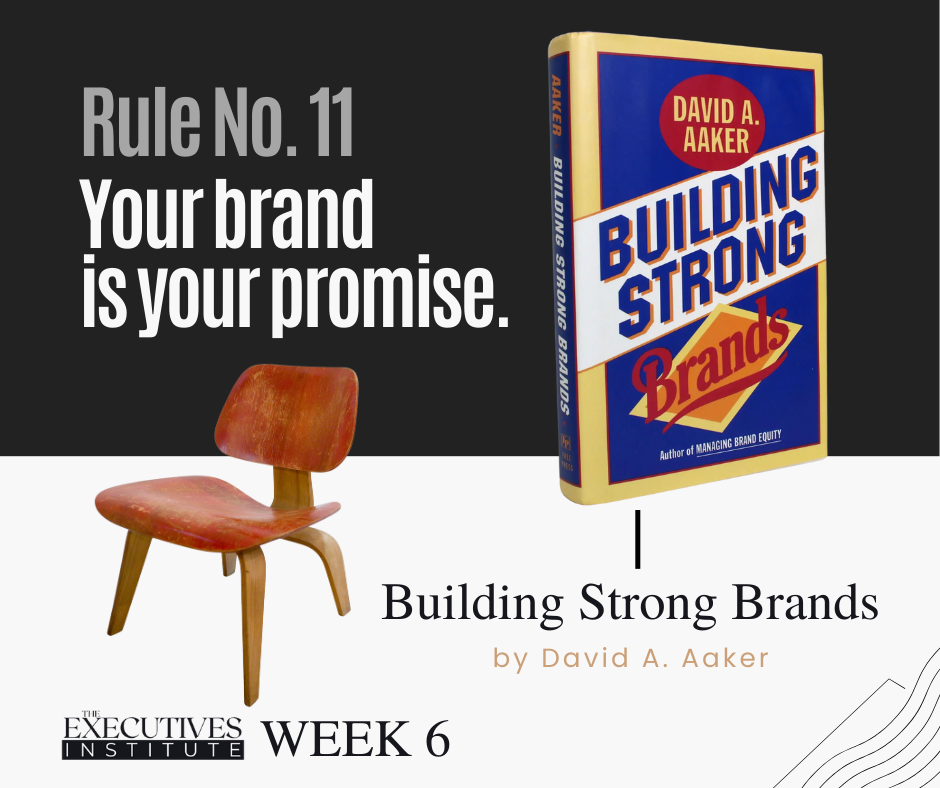
WEEK 6 | Recommended Reading —
Building Strong Brands by David A. Aaker
“A brand is a promise to the customer to deliver a specific set of features, benefits, and services consistently.” — David Aaker
Key Executive Takeaway
A brand is a strategic asset that must be actively managed—every decision, interaction, and product experience either strengthens or erodes the promise you’ve made to your customers. Leaders who treat their brand as a living commitment—not just marketing—create trust, loyalty, and long-term competitive advantage.
📘Book Summary
Building Strong Brands explores how companies can create, manage, and leverage brands to drive long-term success. Aaker emphasizes that a brand is more than a logo or slogan—it is a promise to customers that shapes perceptions, builds trust, and drives loyalty. The book outlines strategies for developing a clear brand identity, maintaining consistency across touchpoints, and differentiating from competitors. Through practical frameworks and real-world examples, Aaker shows how strong brands deliver lasting value, both for customers and the business itself.
Key Executive Takeaway
A brand is a strategic asset that must be actively managed—every decision, interaction, and product experience either strengthens or erodes the promise you’ve made to your customers. Leaders who treat their brand as a living commitment—not just marketing—create trust, loyalty, and long-term competitive advantage.
Quotes from Building Strong Brands
- A brand is a perception of value, a relationship, and a promise that sets expectations.”
- “Without a clear and consistent identity, a brand becomes vulnerable to confusion and erosion.”
- “The most enduring brands are built not on product features, but on trust and credibility earned over time.”
This Rule isn’t finished—and it never will be. Business changes, leaders learn, and our Members keep sharpening the edges with real stories and hard-won lessons. What you see here is today’s version. Tomorrow’s will be better, clearer, and backed by more lived experience.
Thank you for being here and bringing your perspective—add your insight, share a story, or challenge what’s written. Together, we keep these Rules alive and relevant.