

Rule No. 42 summary:
Most people say they want feedback—until they actually get it.
The truth is, most leaders aren’t wired to receive feedback well, even when they desperately need it. But feedback, when accepted without defensiveness and viewed as fuel—not fire—is a shortcut to growth, clarity, and leadership maturity.
The best leaders do the opposite. They treat feedback like a mirror—not a threat. They don’t wait for perfect timing or sugarcoating. They seek it out, absorb it, and use it to get sharper.
Because if no one’s telling you the truth, you’re probably not leading—you’re just coasting.
⚠️ This Rule is currently under development and will be fully available on our official launch day, January 4, 2027. After launch, it will continue to evolve through real-world experience, member contributions, and timeless business principles—because great leaders never stop learning.
Most leaders say, “I’m open to feedback.” But their behavior says otherwise. They flinch, defend, explain, or quietly dismiss what doesn’t fit their self-image.
If you’ve fought battles that became lessons — this is where we collect them.
The insight you share might be the turning point someone else is waiting for.
 Write this down…
The feedback you resist the most is often the feedback you need the most.
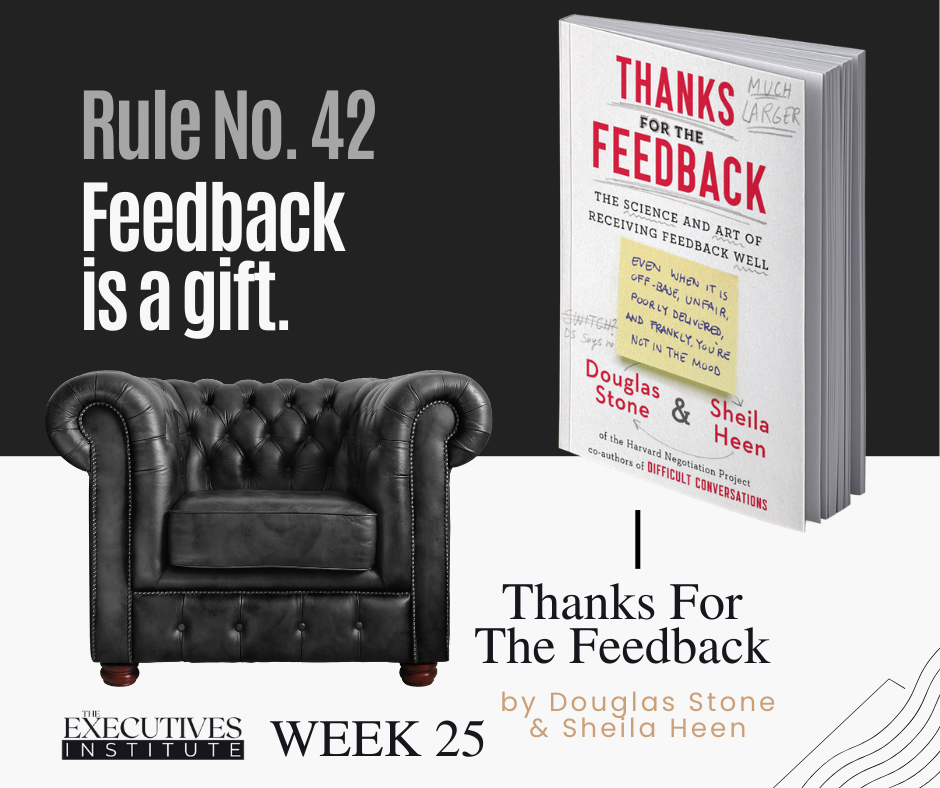
📚 Recommended Reading
Thanks For The Feedback
by Douglas Stone and Sheila Heen
“Receiving feedback sits at the intersection of two needs: our drive to learn and our longing to be accepted. That’s why it’s so hard—and so important.”— Douglas Stone
📚Book Summary
This book cuts through the fantasy that feedback is easy—or that the real problem is everyone else. Stone makes it clear: the hardest part of feedback isn’t giving it, it’s receiving it without letting your ego, emotions, or instincts hijack the process. The authors unpack why even well-intended feedback can feel threatening and why our natural reactions often block growth. More importantly, they show how to separate the actual message from the emotional noise, how to dig for the actionable insight inside any critique, and how to stay grounded when your first instinct is to push back. It’s a manual for leaders who want to stop getting in their own way.
 Key Executive Takeaway
Strong leaders don’t filter feedback through their pride—they filter it for clarity. If you can learn to hear the real message behind the discomfort, you unlock growth that most leaders never reach.
April 9, 2026 🛠️ WE ARE STILL BUILDING THIS RULE. CHECK BACK
🧭 THIS RULE HELPS US WITH
- Getting better instead of just getting older
- Identifying blind spots before they become breakdowns
- Building a culture of honesty and performance
- Turning awkward conversations into real progress
- Separating helpful truth from emotional sting
🔍 ASK THE RIGHT QUESTIONS
“Progress starts with asking better questions. Use this section and these prompts throughout The Institute to challenge assumptions, surface blind spots, and drive clearer thinking.”
Most people avoid feedback because they’re afraid of what they’ll hear. Great leaders lean in—and ask better questions to get what they need.
 What’s one thing I’m doing that I don’t see—but others do?
Example: You might think your intensity is motivating, but your team might see it as micromanagement.
What’s something I used to do well, but have let slip?
Example: You used to show up to team meetings fully present. Lately, you’ve been checking email instead.
Where am I unknowingly creating confusion or bottlenecks?
Example: You may think your open-door policy helps, but it could be leading to constant interruptions and unclear priorities.
🖋️ Executive Discussion Prompt
Feedback can either bruise your ego or sharpen your edge. That choice belongs to you.

When was the last time you invited real, unfiltered feedback—and didn’t explain it away?
What kind of message does your response to feedback send to those around you?
If your team stopped giving you feedback tomorrow, would it be because you’ve earned their trust—or because you’ve shut them down too many times?
“Receiving feedback sits at the intersection of two needs: our drive to learn and our longing to be accepted. That’s why it’s so hard—and so important.” — Douglas Stone, Thanks for the Feedback
 This Rule isn’t finished—and it never will be. Business changes, leaders learn, and our Members keep sharpening the edges with real stories and hard-won lessons. What you see here is today’s version. Tomorrow’s will be better, clearer, and backed by more lived experience.
Thank you for being here and bringing your perspective—add your insight, share a story, or challenge what’s written. Together, we keep these Rules alive and relevant.