
Rule No. 49 summary:
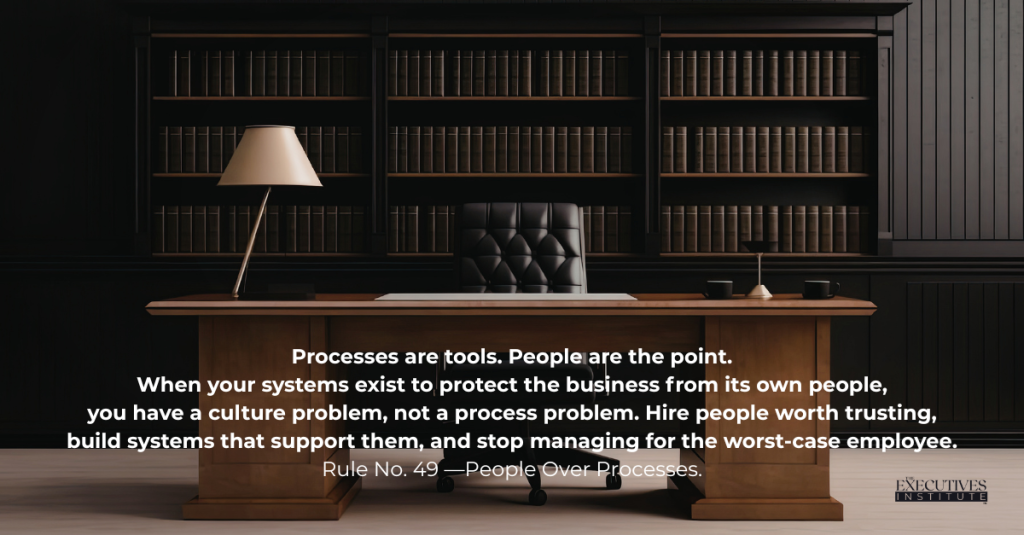
Processes are important. But people drive results.
Too many companies hide behind processes. When something breaks, they add another form, another system, another rule. But no amount of process can make up for poor leadership—or compensate for a lack of trust in people.
The truth is, great organizations are built by humans, not handbooks. When you invest in capable people and give them the freedom to think, decide, and act—you outperform the rigid, over-engineered machines every time.
Bureaucracy is easy. Leadership is hard. But leadership wins. Every time.
⚠️ This Rule is currently under development and will be fully available on our official launch day, January 4, 2027. After launch, it will continue to evolve through real-world experience, member contributions, and timeless business principles—because great leaders never stop learning.
Over-relying on systems, procedures, and checklists at the expense of human judgment, initiative, and ownership is a slow march to mediocrity. Organizations thrive when they trust and invest in people—not just when they refine processes. Processes should serve people, not control them.
If you’ve fought battles that became lessons — this is where we collect them.
The insight you share might be the turning point someone else is waiting for.
 Write this down…
Processes guide people, but people ultimately build the business.
📌 STUDY Rule No. 49 —People Over Processes
pdf worksheet in design
This Rule Helps You With:
- Retaining and motivating top talent
- Avoiding bureaucracy and fostering autonomy
- Balancing systems with human insight
- Creating a culture of trust and responsibility
- Leading with principles, not procedures

💬Leadership Team Discussion
The best companies don’t sacrifice human potential on the altar of process. They build processes that enable better people decisions—and they remove them when they don’t.
Where have we allowed process to become the substitute for leadership? Are there systems, policies, or procedures we’ve clung to out of habit that are now doing more harm than good?
Follow-up:
If we hired great people, why aren’t we trusting them more?
📚 Recommended Reading
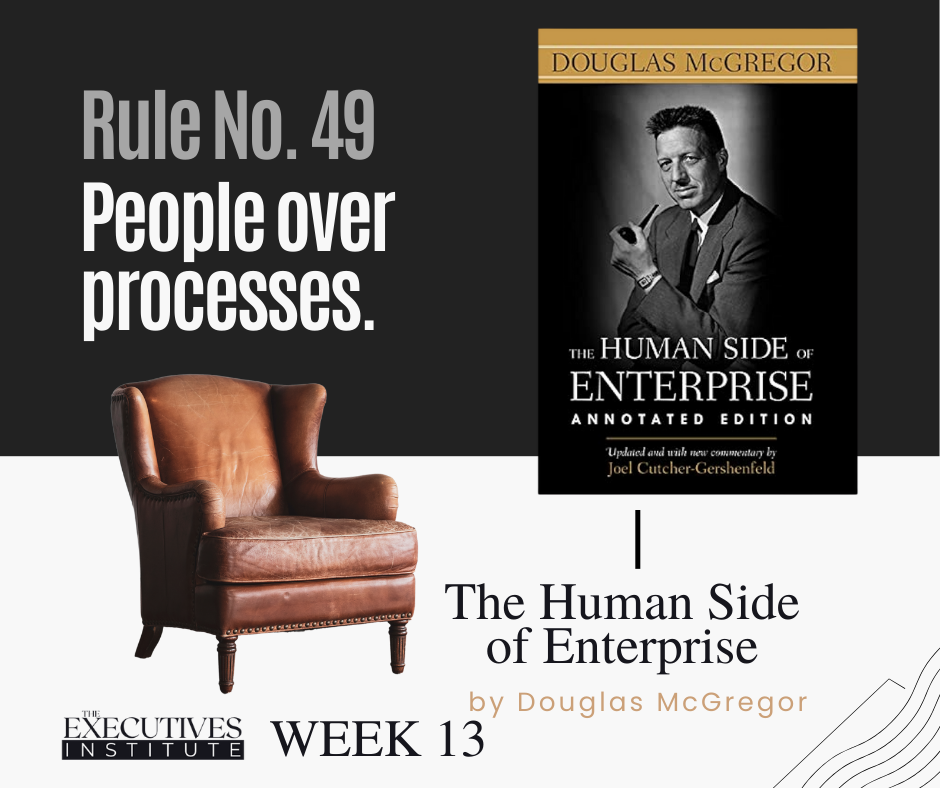
The Human Side of Enterprise by Douglas McGregor
“The ingenuity of people is far more reliable than the ingenuity of systems. Trust in people is not naïve—it’s essential.” — Douglas McGregor
📘 Book Summary
Douglas McGregor’s The Human Side of Enterprise reshaped modern management thinking by challenging the assumption that workers must be controlled, coerced, or constantly monitored. He introduced Theory X and Theory Y—two opposing views of human motivation.
- Theory X assumes people dislike work, avoid responsibility, and need strict supervision.
- Theory Y assumes people are self-motivated, seek meaning, and perform best when trusted and empowered.
McGregor argued that most organizations were built on Theory X assumptions, stifling potential and innovation. He made a compelling case that leadership grounded in trust, autonomy, and belief in human potential produces stronger results and healthier cultures.
🔑 Key Executive Takeaway
Your management philosophy shapes your company’s reality. If you treat people like problems to be managed, they’ll act like it. Treat them like partners in the mission—and they’ll deliver beyond any process you could ever design.
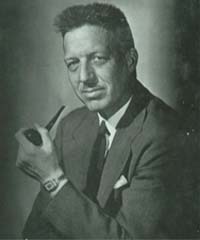
Professor Douglas McGregor (1906-1964)
Douglas McGregor, MIT professor and author of the highly influential book “The Human Side of Enterprise,” was born in Detroit, Michigan in 1906. While in high school, McGregor worked as night clerk at the McGregor Institute, a family affair originally established by his grandfather, but managed by his father and his uncle to provide temporary accommodation for around 100 transient workers at a time. McGregor played piano there at its regular services. At 17, McGregor briefly considered becoming a lay preacher.
He chose instead to pursue a psychology degree at what is now Wayne State University in Detroit. After two years, he married, dropped out of college, and worked as a gas station attendant in Buffalo, New York. By 1930 he had risen to the rank of regional gas station manager. Read more at mitsloan.mit.edu
Are we building processes to protect against incompetence, or to amplify talent?
Example: Do your checklists exist because you don’t trust your people to think?
Where are we defaulting to policy instead of judgment?
Example: Are your managers hiding behind procedure to avoid making real decisions?
Do our top performers feel empowered—or micromanaged?
Example: If your best people constantly have to “work around” the system, that’s a red flag.
This Rule isn’t finished—and it never will be. Business changes, leaders learn, and our Members keep sharpening the edges with real stories and hard-won lessons. What you see here is today’s version. Tomorrow’s will be better, clearer, and backed by more lived experience.
Thank you for being here and bringing your perspective—add your insight, share a story, or challenge what’s written. Together, we keep these Rules alive and relevant.