

Rule No. 14 summary:
Knowing when to let go of a person, product, process, or plan is a mark of maturity and strategic clarity. Holding on too long stifles progress. Letting go at the right time creates room for growth, health, and innovation.
Endings aren’t failures — they’re often the first step toward something better. Good leaders don’t just build — they prune.
Every business carries dead weight at some point — a product line that’s lost relevance, a hire who never quite fit, a strategy that once worked but no longer does. But the real risk isn’t in what’s no longer working. It’s in the leader who refuses to let go. Holding on too long is one of the most expensive mistakes an executive can make. This rule — grounded in Necessary Endings by Dr. Henry Cloud — challenges leaders to stop avoiding the hard cuts and start making the necessary ones. Because growth doesn’t just require starting things — it requires ending them too.
If you’ve fought battles that became lessons — this is where we collect them.
The insight you share might be the turning point someone else is waiting for.
 Write this down…
What once made the business successful can quietly become what holds it back.

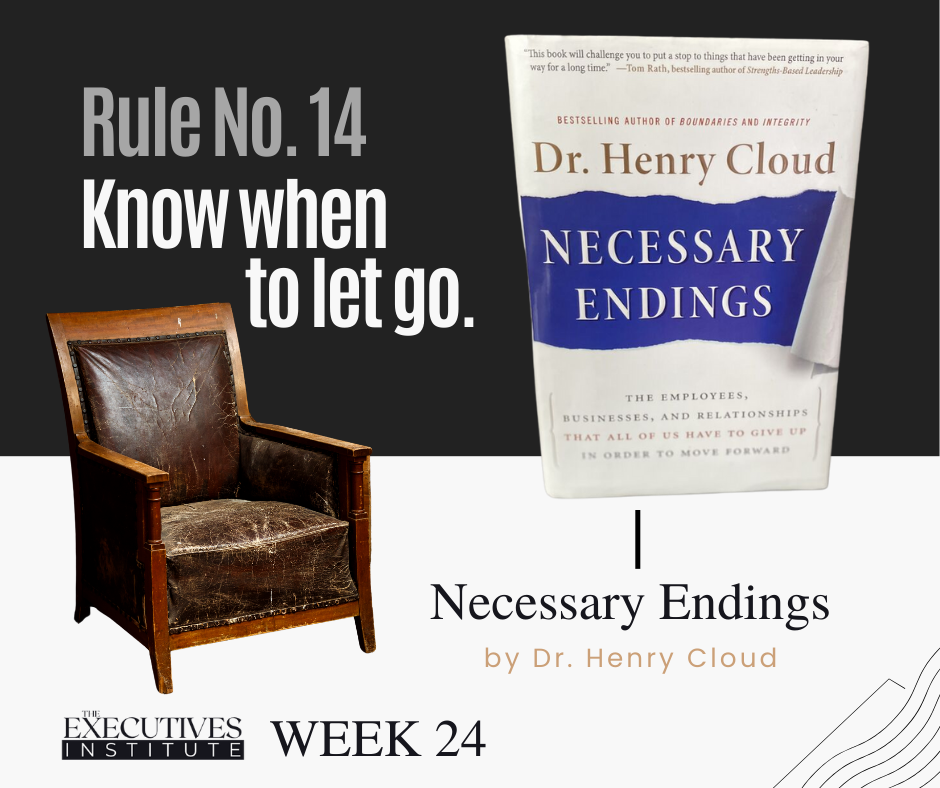
📚 Recommended Reading
Necessary Endings
by Dr. Henry Cloud
“If you don’t end what needs to be ended, nothing new and better can begin.” – Dr. Henry Cloud
📘 Book Summary
Dr. Henry Cloud argues that success in business and life requires the ability to recognize when something’s time is over and to end it decisively. Using examples from business, relationships, and personal growth, he outlines practical frameworks for identifying what’s no longer serving your goals, confronting the emotional resistance to change, and executing endings with clarity and purpose. The central message: pruning isn’t failure — it’s a strategic necessity for long-term health and growth.
🔑 Key Executive Takeaway
Great leaders aren’t just visionaries; they’re finishers. The courage to end a product, process, or relationship at the right time preserves resources, sharpens focus, and accelerates growth. Delay only deepens the cost — decisive endings create the space for your next breakthrough.
April 6, 2026 🛠️ WE ARE STILL BUILDING THIS RULE. CHECK BACK
This rule helps leaders with:
- Ending business relationships, roles, or initiatives that are no longer serving the mission.
- Recognizing when sunk costs are clouding judgment.
- Making timely decisions that prevent prolonged dysfunction or decline.
- Freeing up resources — time, capital, and talent — to reinvest in what actually works.
- Leading with clarity and conviction through necessary, but often uncomfortable, transitions.
- Creating a culture where pruning is seen as progress, not personal failure.


Progress starts with asking better questions. Use this section and these prompts throughout The Institute to challenge assumptions, surface blind spots, and drive clearer thinking.

 What am I holding onto out of comfort, fear, or obligation — rather than value or vision?
Example: A long-time vendor relationship that’s no longer competitive, but feels too personal to end.
If I were starting fresh today, would I still choose to keep this person/project/product?
Example: A product line that once performed well but has steadily declined — would you invest in it again if it didn’t already exist?
What is this costing us — not just in dollars, but in momentum, morale, and missed opportunity?
Example: A struggling team leader whose indecision is delaying multiple departments.
What signs of decline or deadweight have I normalized instead of addressed?
Example: Repeated excuses for underperformance that have become part of the culture.
Here’s a scenario…
A regional CEO of a legacy manufacturing company had invested years into expanding a product line that once represented the company’s future. But over time, the market shifted. Competitors innovated, customer demand waned, and internal enthusiasm faded. Yet the product line remained, draining resources and muddying the brand.
After a difficult but honest review, he decided to phase it out — not with fanfare, but with clarity. This choice freed up capital for a smaller, more promising division that better aligned with customer needs and long-term strategy. Within a year, not only did profitability improve, but internal morale surged — people felt they were building again, not bailing water.
The lesson?
Sometimes, the bravest move isn’t to push harder.
It’s to stop pushing altogether — and walk away with purpose.
 This Rule isn’t finished—and it never will be. Business changes, leaders learn, and our Members keep sharpening the edges with real stories and hard-won lessons. What you see here is today’s version. Tomorrow’s will be better, clearer, and backed by more lived experience.
Thank you for being here and bringing your perspective—add your insight, share a story, or challenge what’s written. Together, we keep these Rules alive and relevant.