
“Gentlemen, this is a football.” — Vince Lombardi | The fundamentals are what win. Do the work.

Master these Rules and you will strengthen the foundation of every business you ever build.
Ignore them, and the cracks will show.
They always do.
Every company gets off track. Here is the list of fundamental Rules, that America’s most-trusted leaders have turned to for decades, to get their teams refocused and their companies realigned.
Follow. Succeed. Ignore. Repeat.
Every great leader is also a student.
Table of Contents
PART I
- Rule No. 1 — Solve a Real Problem
- Rule No. 2 — Fall in Love with the Problem, Not the Solution
- Rule No. 3 — Differentiate or Die
- Rule No. 4 — Play the Long Game
- Rule No. 5 — Make Fewer, Bolder Moves
- Rule No. 6 — Your First Idea Is Rarely Your Best
- Rule No. 7 — Momentum Beats Motivation
- Rule No. 8 — Don’t Mistake Movement for Progress
- Rule No. 9 — Focus Beats Multitasking
- Rule No. 10 — Never Stop Learning
PART II
- Rule No. 11 — Your Brand Is Your Promise
- Rule No. 12 — Know Your Customer Deeply
- Rule No. 13 — Know Your Numbers
- Rule No. 14 — Know When To Let Go
- Rule No. 15 — Work on Your Business, Not Just in It
- Rule No. 16 — Time Is Your Most Precious Asset
- Rule No. 17 — Speed Matters
- Rule No. 18 — Your Calendar Reflects Your Priorities
- Rule No. 19 — Stop Doing What Doesn’t Work
- Rule No. 20 — Cash Flow Is King
PART III
- Rule No. 21 — Clarity Creates Confidence
- Rule No. 22 — Hire Slow, Fire Fast
- Rule No. 23 — Simplicity Scales
- Rule No. 24 — Own Your Mistakes
- Rule No. 25 — Ask Better Questions
- Rule No. 26 — Define It. Measure It. Achieve It.
- Rule No. 27 — Do The Hard Things First
- Rule No. 28 — Learn By Doing
- Rule No. 29 — Protect Your Downside
- Rule No. 30 — Profit Is Not a Dirty Word
PART IV
- Rule No. 31 — Delegate Outcomes, Not Tasks
- Rule No. 32 — Don’t Scale Chaos
- Rule No. 33 — Processes Protect Your Time
- Rule No. 34 — Great Businesses Outlive Great Products
- Rule No. 35 — Raise the Bar, Then Raise It Again
- Rule No. 36 — Build a Business That Runs Without You
- Rule No. 37 — Build Trust Before Selling
- Rule No. 38 — Build Once, Sell Forever
- Rule No. 39 — Your Network Is Your Net Worth
- Rule No. 40 — Sell the Vision, Not Just the Product
PART V
- Rule No. 41 — Reputation Compounds
- Rule No. 42 — Feedback Is a Gift
- Rule No. 43 — Run Your Race
- Rule No. 44 — Own Your Edge
- Rule No. 45 — Protect Your Mental Bandwidth
- Rule No. 46 — Don’t Outgrow Your Values
- Rule No. 47 — The Bottleneck Is at the Top
- Rule No. 48 — Give More Than You Take
- Rule No. 49 — People Over Processes
- Rule No. 50 — If You’re Going To Eat Shit, Don’t Nibble
📌 Rule No. 1 —Solve a Real Problem.
⚠️ The Hard Truth —A great idea means nothing if nobody needs it. Too many business owners get excited about what they can make, sell, or build before asking the most important question: What real problem am I solving? If the problem isn’t real, people won’t pay you to fix it. Nobody cares about your solution. They care about their problem. If your product isn’t solving a real problem, it’s what’s called a ‘vanity project’, not a business. Start with your customer’s pain, because painkillers outperform vitamins every day.
Rule Summary: The best businesses solve problems people already have. Find something that costs people time, money, frustration, or opportunity, and figure out how to make it better. Don’t start with what you want to sell —start with what people need fixed. Rule No. 1 is where every enduring business begins: Identify the problem your customers can’t ignore, and prove that your solution matters. If you can’t do that, nothing else you build will matter either.
Ask yourself: What real problem are we solving? Does this problem cost people time, money, stress, risk, or reputation?

“Success is not delivering a feature; success is learning how to solve the customer’s problem.”
– Eric Ries
Here’s My Question: Would anyone actually miss your business if it disappeared tomorrow?


📌 Rule No. 2 —Fall in love with the problem, not the solution.
⚠️ The Hard Truth —Your product isn’t special. The problem is. This Rule is closely tied to Rule No. 1 —Solve a Real Problem. It’s easy to fall in love with your idea and spend years trying to make it work. But if nobody really needs it, all that work is for nothing. Stay focused on the problem, listen to your customers, and be willing to change the solution until you find what works.
Rule Summary: Don’t get so attached to your idea that you stop listening to the people you’re trying to help. The problem comes first. When you understand it well, you’re more likely to build something people actually want and will pay for. Stay close to the problem, and don’t let your ego get in the way. Stay humble. Stay customer-centered.
Ask Yourself: Where might our attachment to a particular solution be keeping us from seeing the real problem?

“You’re not allowed to tell them what their problem is. They have to tell you.”
– Rob Fitzpatrick
Here’s My Question: Are you actually solving your customer’s problem, or just defending your own idea?
🎓 Master Rule No. 2 —Fall in love with the problem, not the solution.

📌 Rule No. 3 —Differentiate or die.
⚠️ The Hard Truth —Competition is expensive. Most businesses choose it anyway. If your pitch includes the words ‘we’re like [competitor] but better’ —that’s more of a prayer than a business model. Better is not a strategy. Different is. Tell me something your competitor cannot say, or get out of the lane you’re already losing in.
Rule Summary: In crowded markets, blending in is a slow death. If customers can’t see why you’re different, they don’t have much reason to choose you over the competition. You don’t have to be better at everything, but you need to stand for something that matters to your customers and do it in a way others can’t easily copy. Don’t fight for a bigger piece of the same pie. Find a way to make your own pie. If your business blends in, it’s already falling behind.
Ask yourself: If we stripped away our logo and our brand name, would our customers still recognize us?

“The only way to beat the competition is to stop trying to beat the competition.”
– Blue Ocean Strategy
Here’s My Question: Why should anyone choose you over the cheapest alternative?

📌 Rule No. 4 —Play the long game.
⚠️ The Hard Truth —Short-term thinking creates short-term companies. Many bad business decisions look like good decisions at the time. Chasing the next sale, the next quarter, or the next quick win can keep you busy while taking you further from where you want to go. You can’t build a company that lasts if you’re always thinking about the next 90 days.
Rule Summary: Building a great business takes time. Don’t sacrifice the future just to make today look good. Build trust, take care of your customers and people, and make decisions that will still make sense five or ten years from now. The goal isn’t just to win today. It’s to build something that lasts.
Ask yourself: Are we building for the next 5 to 10 years, or are we just reacting to what is happening this year?


“Short-term wins feel great… until they kill the company.”
– Simon Sinek
Here’s My Question: Are today’s decisions making tomorrow easier? or harder?

📌 Rule No. 5 —Make fewer, bolder moves.
⚠️ The Hard Truth —Busy isn’t strategic. It’s just loud. Most businesses dilute themselves into mediocrity by chasing ten directions at once. The leaders who win pick fewer bets and go all in. Stop spreading thin and start going deep.
Rule Summary: You can’t do everything well. Pick the things that matter most and do them well. Don’t chase every new idea, opportunity, or problem that comes along. Make fewer moves, but make them count. If you spread yourself too thin, you risk doing everything half-ass. Commit to fewer initiatives, but back them fully. Win where it matters.
Ask yourself: What are we doing that looks productive, but isn’t moving the needle?

“Strategy is about making specific choices to win in the marketplace. It requires making explicit choices, to do some things and not others, and building a business around those choices.”
– Playing To Win
Here’s My Question: Are you accomplishing a lot? or just attempting a lot?

📌 Rule No. 6 —Your first idea is rarely your best.
⚠️ The Hard Truth —Your first idea is usually the one everyone else already had. The first idea is usually the most obvious one. That’s exactly why you should question it. The businesses that break through are willing to ask, “What if we’re wrong?” and keep looking after everyone else has stopped.
Rule Summary: Don’t settle for the first answer that comes to mind. Ask questions. Try different approaches. Throw out ideas that don’t work and try again. The better answer is often (usually) the one you find after the obvious answer doesn’t work. And remember, every bad idea costs money when you put it into the real world.
Ask yourself: Where are we making decisions too quickly because the first idea sounds good enough?


“The greatest originals are the ones who fail the most, because they’re the ones who try the most.”
— Adam Grant
Here’s My Question: When was the last time you challenged your own best idea?

📌 Rule No. 7 —Momentum beats motivation.
⚠️ The Hard Truth —Motivation is unreliable. Momentum is not. Motivation comes and goes. Some days you feel like working, and some days you don’t. Don’t wait until you feel motivated. Show up and do the work anyway.
Rule Summary: You won’t always feel like doing what needs to be done. That’s normal. The key is to keep moving, even on the days when you don’t feel like it. Small steps taken every day add up, and once you get moving, it’s easier to keep moving.
Ask yourself: Where am I waiting to feel motivated when I could simply take the next step?

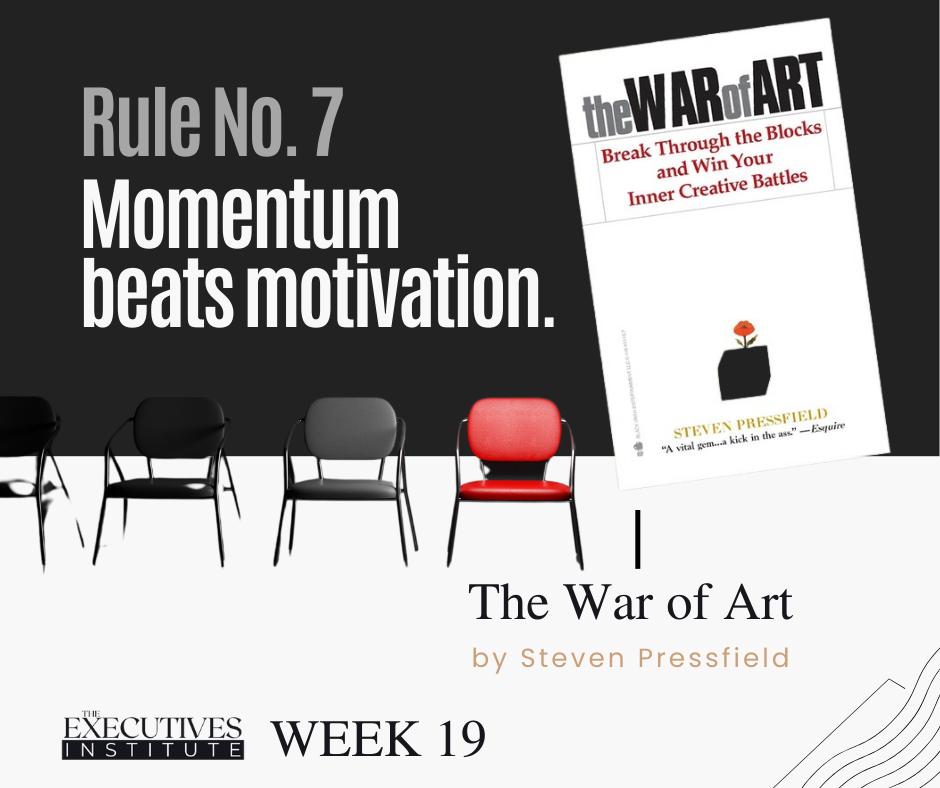
“The amateur believes he must first overcome his fear; then he can do his work. The professional knows that fear can never be overcome. He knows there is no such thing as a fearless warrior or a dread-free artist.”
— Steven Pressfield
Here’s My Question: What have you been waiting to “feel like” doing?

📌 Rule No. 8 —Don’t mistake movement for progress.
⚠️ The Hard Truth —Busy people feel productive. Focused people actually are. You can be exhausted and going nowhere. Meetings, emails, and activity are not results. If you can’t point to a measurable outcome at the end of the week, you were busy —not productive. There’s a difference.
Rule Summary: Being busy doesn’t mean you’re getting important things done. You don’t get extra credit for a full calendar or a long day. Figure out what matters most and put your time and energy there. Doing more isn’t the goal. Doing what matters is. Stop the grind. Slow down, get clear, and focus your effort where it actually counts.
Ask yourself: What is the one thing I could change this week that would move the business forward the most?

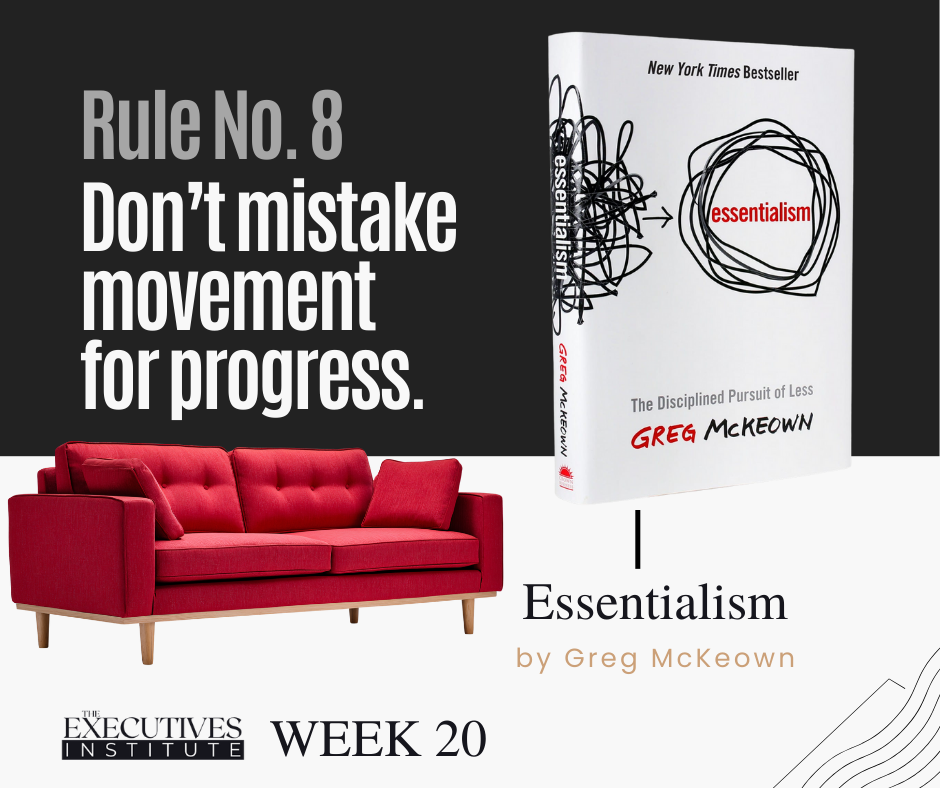
“What if we stopped celebrating being busy as a measure of importance?”
— Greg McKeown
Here’s My Question: If you stopped everything you’re doing today, what would actually matter?
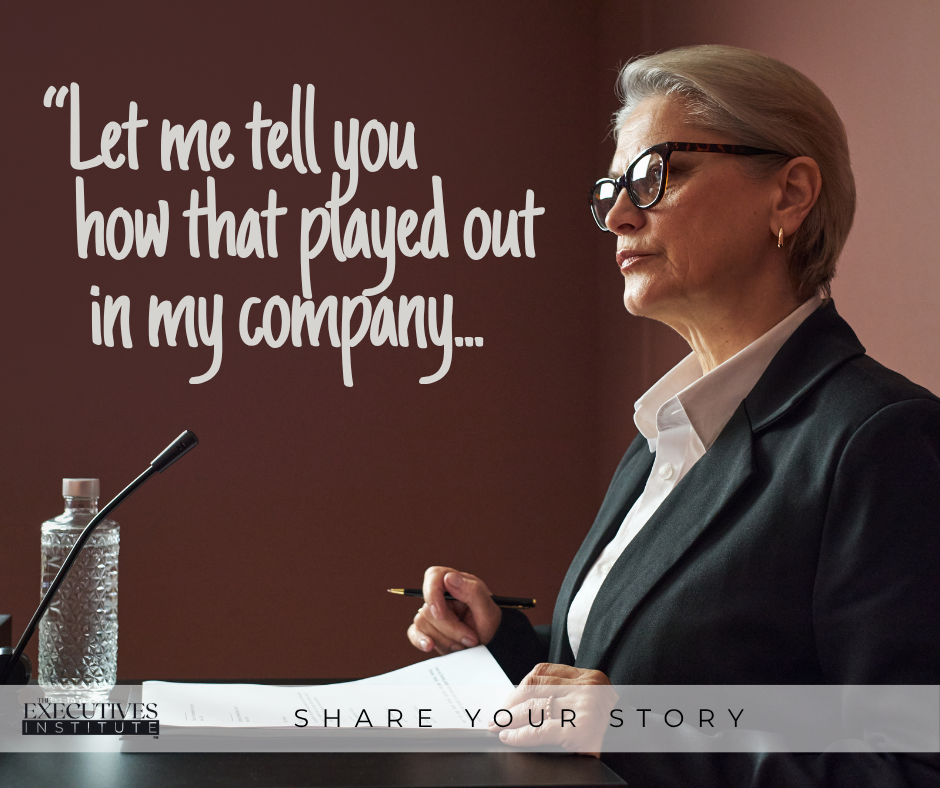
📌 Rule No. 9 —Focus beats multitasking.
⚠️ The Hard Truth —Multitasking is the most expensive myth in business. Doing five things at once doesn’t mean you’re getting five things done. It usually means you’re giving half your attention to each one and taking longer to finish any of them. The people who get the most done know what needs their attention and stay with it until the job is done.
Rule Summary: You can’t give your best attention to everything at the same time. Every time you jump from one task to another, you lose time and focus. Pick the thing that matters most, give it your full attention, and finish it before moving on. Focus gets things done. Multitasking is a myth.
Ask yourself: Am I focused on what matters most, or am I just keeping myself busy?

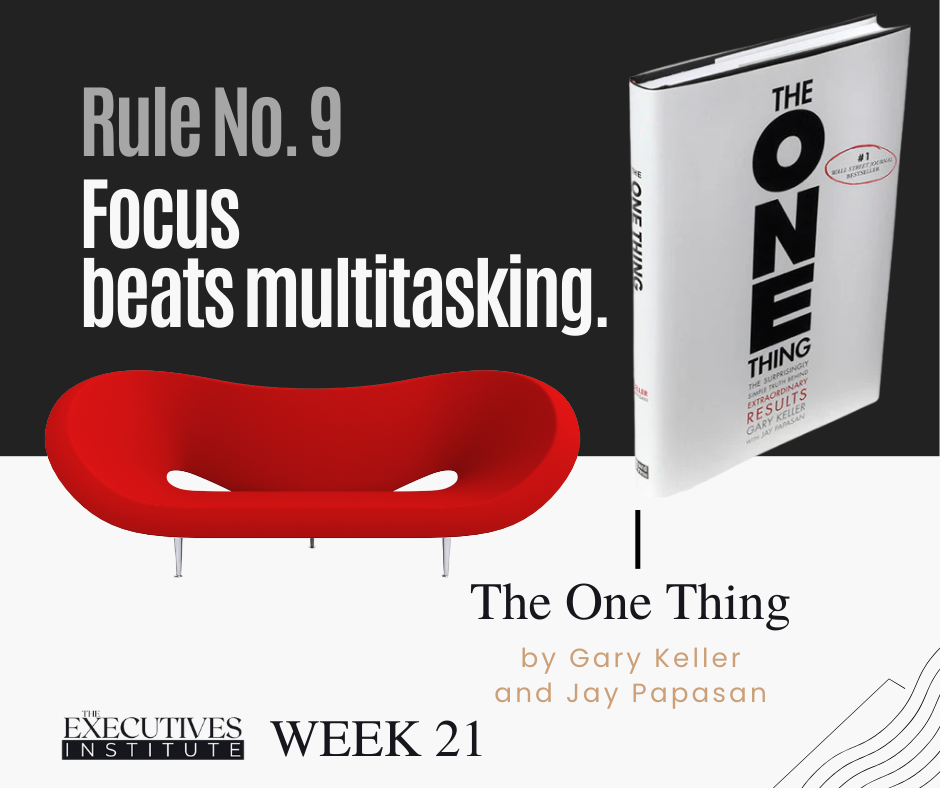
“Multitasking is merely the opportunity to screw up more than one thing at a time.”
– The One Thing
Here’s My Question: What is stealing your attention from your highest-value work?

📌 Rule No. 10 —Never stop learning.
⚠️ The Hard Truth —Success is one of the easiest ways to stop learning. Once things start going well, it’s easy to think you have it all figured out. But markets change, customers change, and business changes. The moment you think you know it all is the moment you start falling behind.
Rule Summary: You never outgrow the need to learn. Ask questions. Listen to people who know more than you do. Learn from your mistakes and stay open to better ways of doing things. Experience matters, but staying curious matters too. The leaders who last are the ones who never confused experience with expertise.
Ask yourself: Where am I relying on what I already know instead of learning what I need to know?

“Becoming is better than being.”
— Carol S. Dweck
Here’s My Question: When was the last time you changed your mind because you learned something new?

📌 Rule No. 11 —Your brand is your promise.
⚠️ The Hard Truth —Your brand isn’t what you say. It’s what your customers say about you. Your brand isn’t your logo, colors, or slogan. It’s the promise you make to your customers every time they deal with you —and whether you keep it. Broken promises don’t just lose sales. They lose trust. And trust doesn’t come back easily.
Rule Summary: Your brand is built one customer at a time. Every sale, phone call, delivery, and conversation tells people what they can expect from you. Make a promise you can keep, then keep it.
Ask yourself: Does every customer interaction strengthen or weaken the trust people have in our business?

“A brand is a promise to the customer to deliver a specific set of features, benefits, and services consistently.”
— David Aaker
Here’s My Question: Does your reputation match the promise you make?
📌 Rule No. 12 —Know your customer deeply.
⚠️ The Hard Truth —Shallow customer knowledge produces shallow results. Knowing your customer’s age, location, or income doesn’t mean you know your customer. You need to understand what they need, what frustrates them, what they care about, and what they’re willing to pay for. If you aren’t talking to your customers, you’re probably making too many guesses. The businesses that win, know their customers better than the customer knows themselves.
Rule Summary: The better you know your customers, the better you can serve them. Listen to what they say, watch what they do, and pay attention to the problems they deal with every day. Don’t just know who your customer is. Know what it’s like to be your customer.
Ask yourself: How well do we really understand what our customers deal with every day?

“The greatest mistake in business is assuming you already understand the customer. Real understanding comes not from data, but from dialogue.”
— Robert Woodruff
Here’s My Question: Do you know what keeps your customer awake at night?
📌 Rule No. 13 —Know your numbers.
⚠️ The Hard Truth —Revenue is vanity. Profit is sanity. Cash is reality. If you don’t understand your numbers, you don’t understand your business. It’s that simple. You don’t need to be an accountant, but you better know where the money comes from, where it goes, what you make, and what you owe. A business can have plenty of sales and still go broke.
Rule Summary: The numbers tell you what’s really happening in your business. Learn to read your income statement, balance sheet, and cash flow. Know your margins, expenses, debt, and cash. You don’t have to love numbers. You just can’t afford to ignore them.
Ask yourself: What number in my business do I not fully understand —and why don’t I know it?

“Numbers don’t lie. But people who don’t understand numbers do.”
– Karen Berman
Here’s My Question: Which number could destroy your business if you ignored it for six months?
📌 Rule No. 14 —Know when to let go.
⚠️ The Hard Truth —Endings are part of business. What helped you succeed yesterday can hurt you tomorrow. A bad hire, a losing product, an outdated process, or a strategy that isn’t working won’t fix itself because you refuse to let go. Holding on isn’t loyalty when you already know it’s not working. It’s avoidance.
What once made the business successful can quietly become what holds it back. Holding on to a dead product, a wrong hire, or a failing strategy isn’t loyalty, it’s avoidance. The cost of staying in something that isn’t working is every resource, every hour, and every opportunity you could have put somewhere that might.
Rule Summary: Good leaders know when to build and when to cut. Sometimes you have to fire the person, drop the product, kill the idea, or change the plan. The longer you keep something that isn’t working, the more time and money you waste —and the more you miss what could be working. Letting go isn’t always failure. Sometimes it’s the best business decision you can make.
Ask yourself: What are we holding on to that is costing us time, money, people, or opportunities?

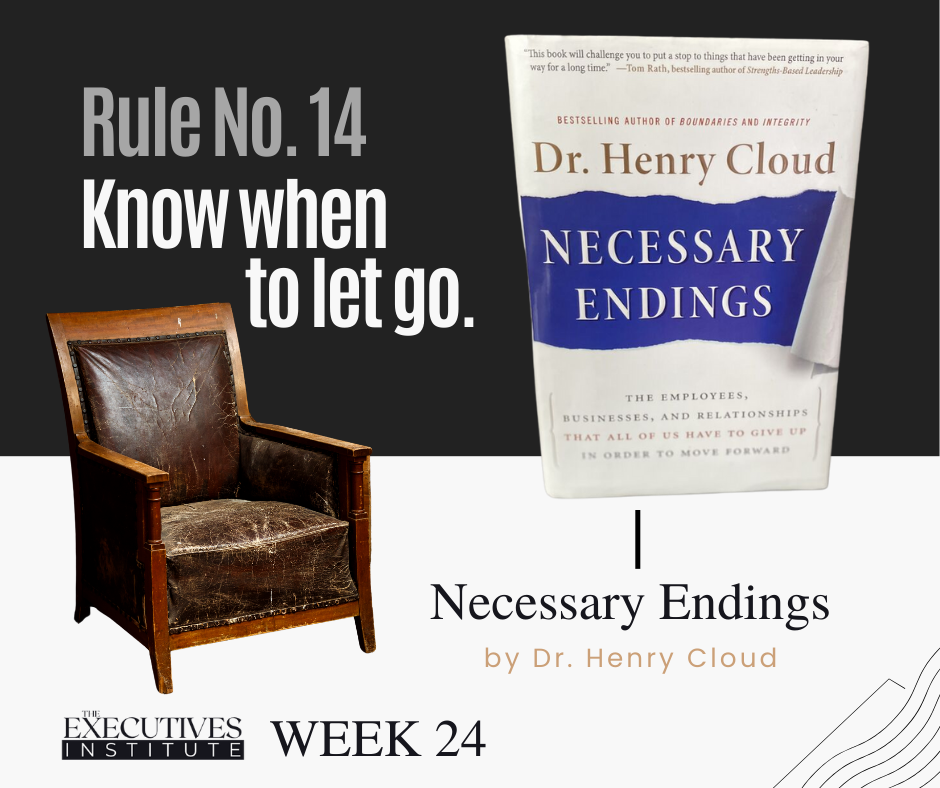
“If you don’t end what needs to be ended, nothing new and better can begin.”
– Dr. Henry Cloud
Here’s My Question: What are you holding onto simply because you’ve already invested too much?
📌 Rule No. 15 —Work on your business, not just in it.
⚠️ The Hard Truth —If everything still depends on you, you’ve built a bottleneck, not a business. At first, doing everything yourself is how a business gets up and rolling. But if you never grow past that stage, you become the person standing in the middle of every decision, every problem, and every customer. The business can’t grow any faster than you can work. The goal is to build something that runs smoothly without you, not just because of you.
Rule Summary: Your job as the owner is not to be the best person at every job in the company. Your job is to build a company that other people can run, improve, and grow. Create good systems. Hire good people. Teach them how you want things done, then get out of their way. If you have to be there for everything to work, you’re not building freedom. You’re building a cage.
Ask yourself: If I get hit by a bus tomorrow, what part of my business breaks first? What’s next?

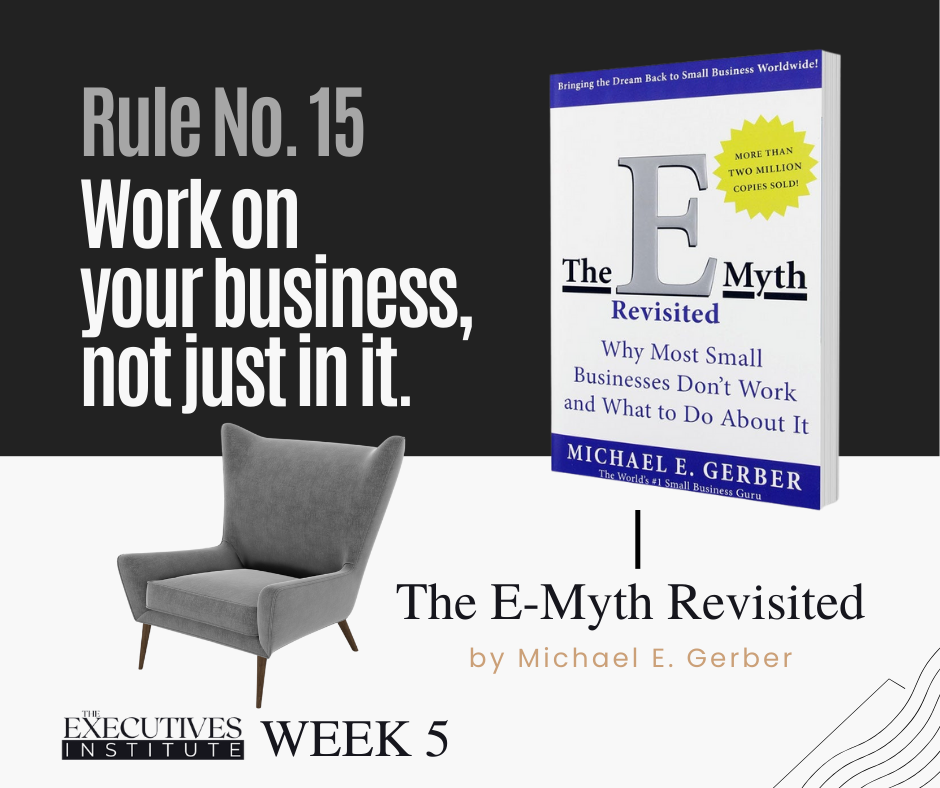
“The problem is not that people fail to work hard enough. The problem is that they work hard at the wrong things.”
— Michael Gerber
Here’s My Question: If you disappeared for 30 days, does your business improve, survive, or stall?
🎓 Master Rule No. 15 —Work on your business, not just in it.
📌 Rule No. 16 —Time is your most precious asset.
⚠️ The Hard Truth —Money comes back. People can be replaced. Time doesn’t. You can make more money. You can hire another person. You can recover from a bad decision. You cannot get back last Tuesday. Every hour you give to something is an hour you can never use again. Treat your time like the asset it is.
Rule Summary: Where you spend your time tells you what you really value. If your entire day is spent putting out fires, answering every question, and chasing other people’s priorities, you’re letting the business run you. Protect time for the work that matters most. Your calendar is a record of where your life is going. Spend it wisely.
Ask yourself: Am I protecting blocks of time for deep thinking and priority work, or letting urgency drive my day?

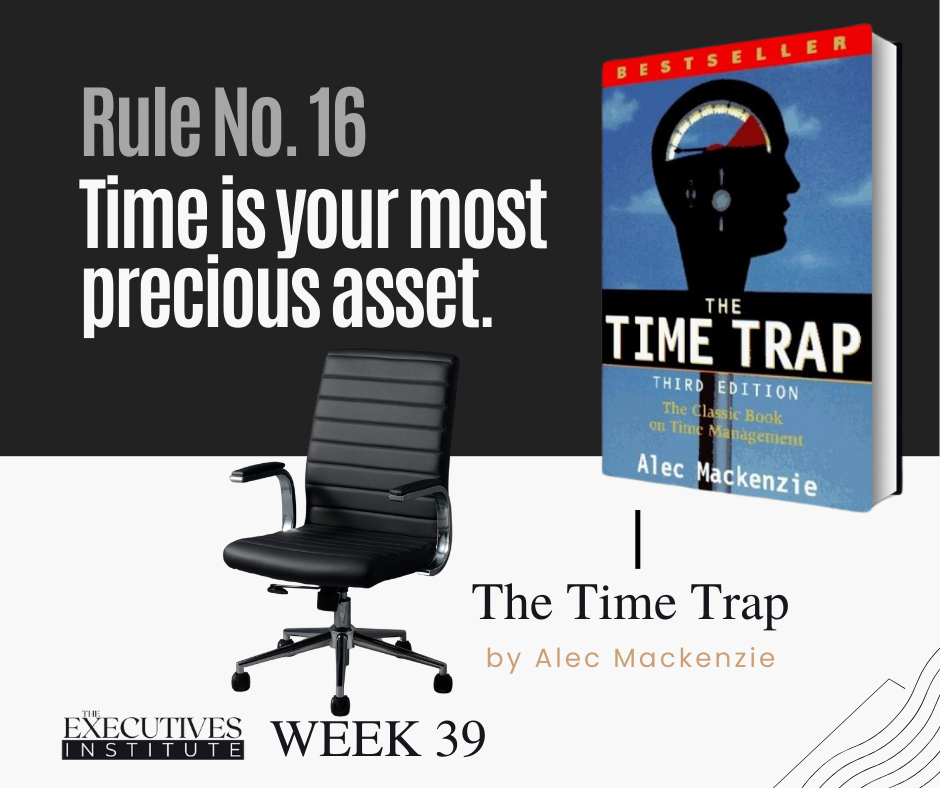
“If you don’t control your time, someone else will.”
— Alec Mackenzie
Here’s My Question: Who is spending your time besides you?
📌 Rule No. 17 —Speed matters.
⚠️ The Hard Truth —The market doesn’t wait for you to be ready. The business that gets something out the door, learns from it, and makes it better can pass the business that is still planning. Move. Learn. Fix it. Keep going. Perfect is the enemy of done, and done beats perfect every time in a competitive market.
Rule Summary: You don’t have to have everything figured out before you act. Make the best decision you can with what you know, then see what happens. If it doesn’t work, change it. A good decision today is often worth more than a perfect decision six months from now. When in doubt, make a move.
Ask yourself: What are we waiting on that we could test or act on right now?

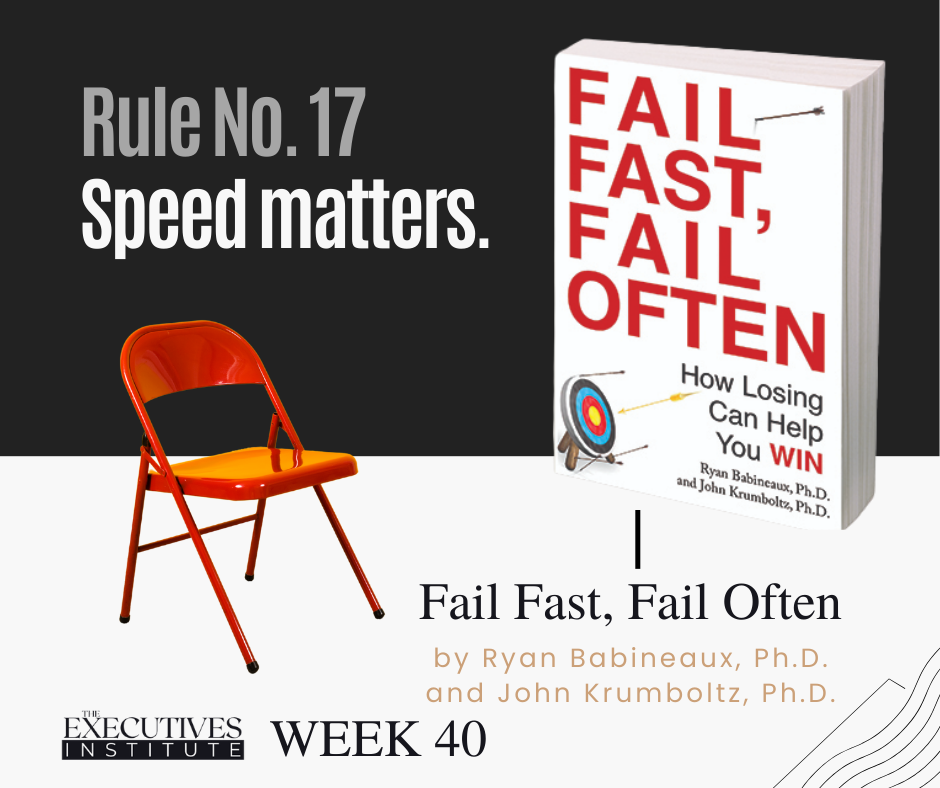
“Speed is the ultimate weapon. The faster you act, the sooner you learn—and the sooner you learn, the sooner you win.”
— Ryan Babineaux
Here’s My Question: What important decision have you delayed long enough?
📌 Rule No. 18 —Your calendar reflects your priorities.
⚠️ The Hard Truth —No one can “make time”. We all have to “protect time”. People lie every day saying “I’m too busy” for whatever. The truth is, they didn’t make it a priority. We make time for what matters most to us. If something is important, put it on the calendar and protect that time. Make room, not time. Your calendar tells the truth about your priorities.
Rule Summary: Don’t tell me what matters to you. Show me your calendar. Where you spend your time is where your priorities really are. Your calendar is either building proximity to your customers, or distance from them. If your calendar doesn’t match what you’re telling people is important to you, that’s a leadership and discipline problem, not a scheduling problem.
Ask yourself: Where am I letting other people’s urgency take time away from what matters most?

“The key is not to prioritize what’s on your schedule, but to schedule your priorities.”
— Stephen R. Covey
Here’s My Question: Would someone believe your priorities by looking at your calendar?
🎓 Master Rule No. 18 —Your calendar reflects your priorities.
📌 Rule No. 19 —Stop doing what doesn’t work.
⚠️ The Hard Truth —Sometimes the best move is to stop. Usually, it’s not some new mistake that tanks the company, it’s repeating the old mistakes over and over again. Some idiots will call it determination when they keep doing the same broken thing over and over, but they’re doing it harder now. The rest of us call that stubbornness, not “grit”. What worked yesterday may not work today. Don’t keep doing something just because it’s familiar or because it worked in the past. Look at what’s actually working, be honest about what’s not, and stop wasting time and money on things that aren’t getting results.
Rule Summary: Success can become its own trap. The habits, strategies, and mindsets that helped you reach your current level often become blind spots as you grow. Knowing when to stop, take a hard look, and change course is one of the toughest jobs you’ll do as a leader. Don’t call it quitting. Call it knowing when enough is enough.
Ask yourself: What are we still doing because it used to work, even though it isn’t working anymore?
“The higher you go in the organization, the more your problems are behavioral. The problems that got you to your current level of success are rarely the ones that will get you to the next level.”
– Marshall Goldsmith
Here’s My Question: What would you never start today if you weren’t already doing it?
📌 Rule No. 20 —Cash flow is king.
⚠️ The Hard Truth —Profitable businesses go broke every year. Not because they weren’t making money, but because they ran out of cash while waiting for the money to show up. Revenue on paper means nothing if the bills are due today. A customer can owe you $100k and you can still be unable to make payroll tomorrow. Profit is important. Cash keeps the doors open. Manage cash flow like your business depends on it —because it does.
Rule Summary: You can have sales. You can have profits. You can have a great business on paper. If you don’t have cash on hand, none of it matters. Know when money is coming in, know when bills are due, and know where your cash is getting tied up or wasted. Keep enough cash on hand to handle a slow month, a bad customer, or a surprise expense. Cash flow isn’t an accounting issue. It’s a survival issue.
Ask yourself: Where are we letting more cash leak —slow invoicing, bad pricing, or uncollected receivables?

“Profit is a theory. Cash is a fact.”
– Greg Crabtree
Here’s My Question: How long could your business survive if revenue stopped today?
📌 Rule No. 21 —Clarity creates confidence.
⚠️ The Hard Truth —If you can’t explain it simply, neither can your team. If your people don’t know where you’re going, what matters most, or what you’re asking them to do, they’ll guess. And when people have to guess, you get confusion, mistakes, and wasted time. Clear leaders make sure everyone knows what needs to be done and why. Confusion inside your organization becomes chaos in your customer’s experience.
Rule Summary: Confusion is expensive. Keep things simple. Your team should know what you do, who you serve, and what matters most. If you can’t explain that in a few simple sentences, you probably aren’t clear on it yourself. Clear direction gives your people the confidence to make decisions, move fast and move together, without waiting for you.
Ask Yourself: If I stepped away for 30 days, would my team know what to do—or would they be waiting for me to tell them?

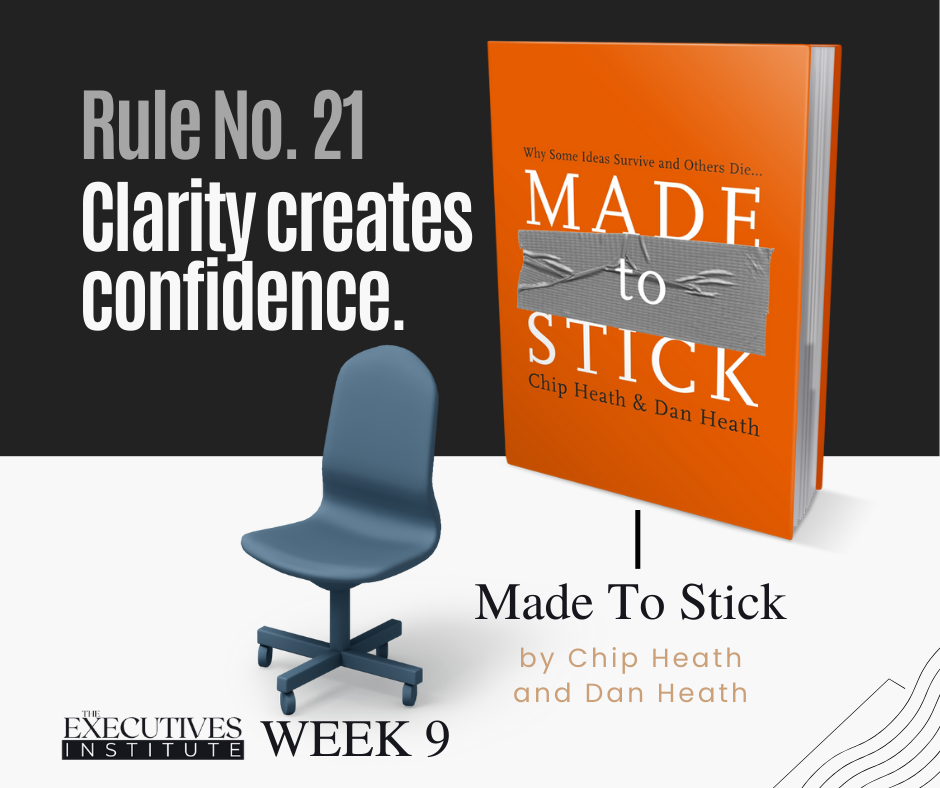
“When you say three things, you say nothing.”
-Made to Stick
Here’s My Question: Could every employee explain your strategy in one minute?
📌 Rule No. 22 —Hire slow, fire fast.
⚠️ The Hard Truth —One bad hire can hurt a business for years. A bad hire costs more than a paycheck. They can hurt your good employees, your customers, and your bottom line. Most owners know when someone isn’t working out. The problem is waiting too long to do something about it.
Rule Summary: Don’t hire someone just because you need a body in the seat. Take your time, check their character, and make sure they can do the job. And when you know you’ve made a bad hire, don’t keep hoping it will get better. Deal with it. The right person can make your business better. The wrong person can drag everyone else down.
Ask Yourself: Am I keeping someone on the team who I already know isn’t working out? If so, what’s stopping me from making the call?

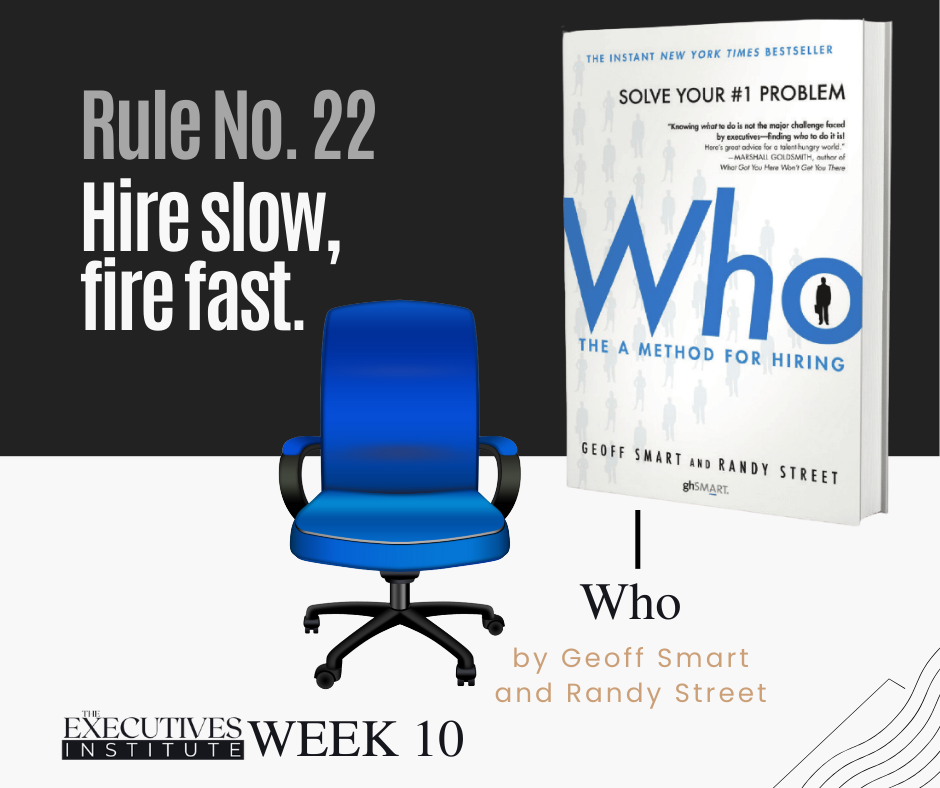
“Nothing will accelerate your success more than getting the right team in place. And nothing will derail it faster than keeping the wrong people too long.”
— Who, The A Method For Hiring
Here’s My Question: Who do you already know isn’t the right fit?
📌 Rule No. 23 —Simplicity scales.
⚠️ The Hard Truth —If it takes a whiteboard and a translator to explain, it won’t scale. Complexity costs money. Every extra step, rule, meeting, product, or layer of management slows you down and gives people more chances to screw things up. The most effective strategies are grounded in a few clear rules that people can understand, remember, and act on. Complexity will grow on its own, but keeping things simple takes work.
Rule Summary: Keep your business as simple as you can. Make things easy to understand, easy to remember, easy to teach and repeat. If a process doesn’t need to be that complicated, simplify it. The simpler the business, the easier it is to run and grow.
Ask Yourself: What have we made harder than it needs to be, and why are we putting up with it?

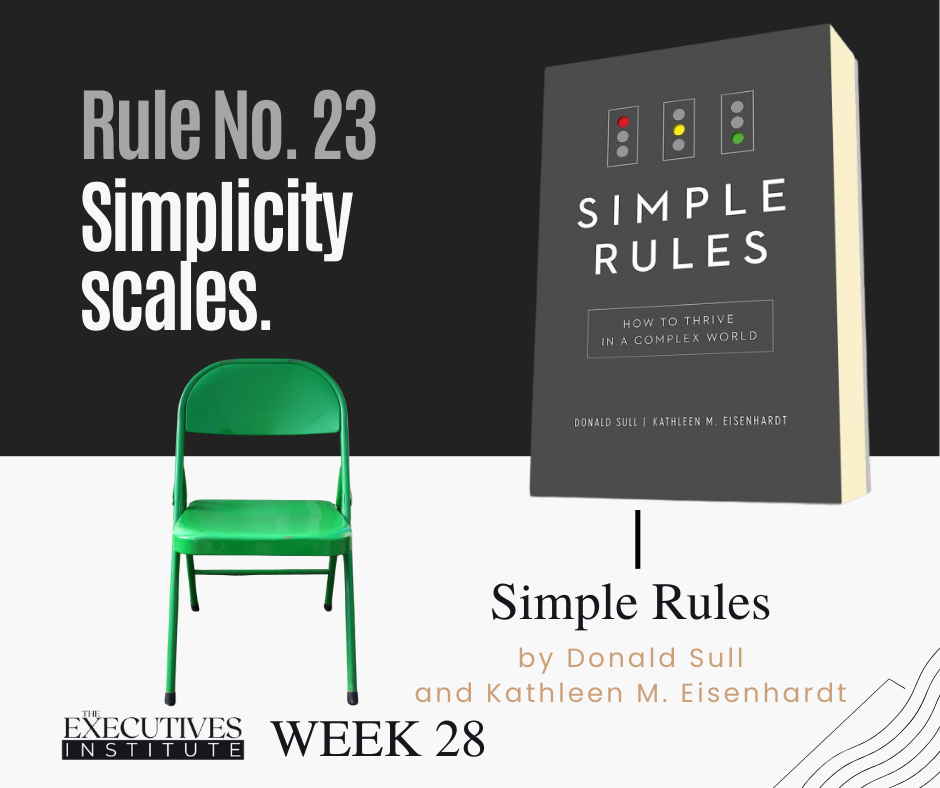
“Too many rules stifle innovation. Too few lead to chaos. Simple rules hit the sweet spot.”
— Simple Rules
Here’s My Question: What have you made harder than it needs to be?
📌 Rule No. 24 —Own your mistakes.
⚠️ The Hard Truth —Leaders who own their mistakes build trust. Leaders who hide them lose it. When you’re wrong, say you’re wrong. Don’t blame someone else. Don’t make excuses. Don’t twist the story to make yourself look better. Say, “I got that wrong. Here’s what I’m going to do about it.” Your team is watching, and they’ll follow your example. In any failure, you either make excuses or you make progress —never both.
Rule Summary: Everyone makes mistakes. Good leaders take responsibility, fix what they can, and learn from what happened. You can’t make excuses and make progress at the same time. If you want your people to own their mistakes, you have to own yours first.
Ask Yourself: If my team handled mistakes the way I do, would this business be stronger or weaker?

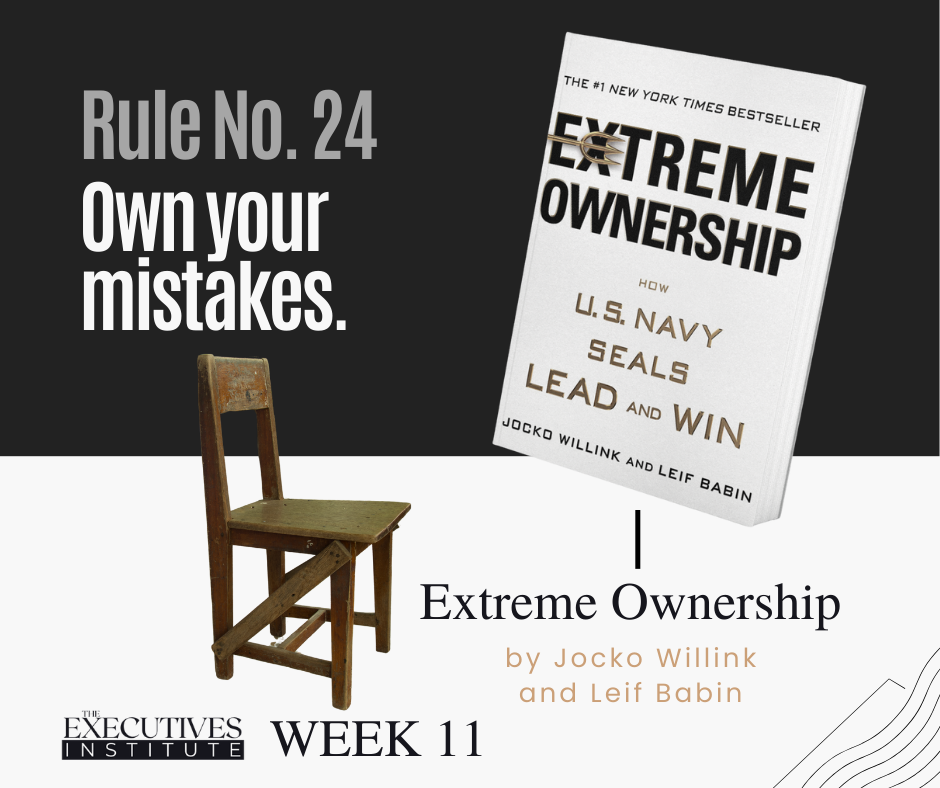
“The leader must own everything in his or her world. There is no one else to blame.”
— Jocko Willink
Here’s My Question: What failure are you still explaining instead of owning?
📌 Rule No. 25 —Ask better questions.
⚠️ The Hard Truth —Most leaders get too busy giving answers to ask the right questions. It’s easy to jump in with an answer, especially when people expect you to have one. Most leaders are trained to answer, not to think. From early in their careers, high performers are rewarded for decisiveness, speed, and having the solution. Over time, that habit becomes a liability. They stop questioning and stop challenging. A quick answer to the wrong question can send the whole company in the wrong direction. Before you solve the problem, make sure you’re solving the right problem.
Rule Summary: Good questions make people think. They uncover problems, challenge bad assumptions, and often lead to better decisions. Don’t be afraid to ask the question nobody else wants to ask. A good question can save you a lot more money than a bad answer.
Ask Yourself: What might change if better questions, not faster answers, became the standard in our organization?

“You don’t learn unless you question.”
—Warren Berger
Here’s My Question: What question are you avoiding because you’re afraid of the answer?
📌 Rule No. 26 —Define it. Measure it. Achieve it.
⚠️ The Hard Truth —What gets measured gets managed. What gets ignored gets worse. A goal without a number is a wish. If you can’t tell me exactly what you’re trying to accomplish and how you’ll know when you get there, you haven’t set a real goal. Get specific, measure it, and keep after it. Clear objectives move an organization forward. Define the outcome. Tie it to measurable results, then hold the line until you’re there.
Rule Summary: Don’t say, “We need more sales,” or “We need to improve customer service.” Say exactly what you want to improve and put a number on it. Then track it and hold yourself and your team accountable. What gets measured gets attention. What gets attention gets done.
Ask Yourself: What exactly are we trying to achieve, and how will we know when we’ve achieved it?

“Ideas are easy. Execution is everything. And it takes a team to win.”
— John Doerr
Here’s My Question: If you can’t measure success, how will you recognize it?
📌 Rule No. 27 —Do the hard things first.
⚠️ The Hard Truth —The hard thing you keep pushing to tomorrow is probably the thing running your business. The problem you keep avoiding doesn’t get smaller because you ignore it. It usually gets bigger. If you spend your mornings knocking out easy tasks while the hard problem sits there, you’re not getting ahead. It’s not about doing more, it’s about doing what matters most, while your mind is sharp and your willpower is high, and…before you fill your time with excuses. Do the hard thing first. Every. Single. Day.
Rule Summary: Do the hard work first. Make the tough call. Have the uncomfortable conversation. Fix the problem you’ve been avoiding. Don’t let easy work fool you into thinking you’re making progress. The hard stuff is often the stuff that moves the business forward.
Ask Yourself: What am I avoiding because it’s uncomfortable, even though I know it needs to be done?

“One of the very worst uses of time is to do something very well that need not be done at all.”
— Brian Tracy
Here’s My Question: What uncomfortable conversation have you been postponing?
📌 Rule No. 28 —Learn by doing.
⚠️ The Hard Truth —The classroom prepares you. The work educates you. You can read every book, take every class, and make the perfect plan. None of it replaces doing the work. At some point, you have to make the call, make the sale, build the product, talk to the customer, and find out what really happens. Learn by doing means getting your hands dirty and embracing failure as part of the process. Live the experience. Do the work.
Rule Summary: We learn things by doing them, that we simply can’t learn by reading about them. You will make mistakes. You will get things wrong. That’s part of it. Get to work, learn from what happens, and get better the next time.
Ask yourself: Is our company rewarding trial and error, or just ideas?

“We have to be able to do something slowly before we can have any hope of doing it correctly with speed.”
— Josh Waitzkin
Here’s My Question: What are you still researching instead of testing?
📌 Rule No. 29 —Protect your downside.
⚠️ The Hard Truth —Starting a business requires optimism. Staying in business requires careful planning of what could go wrong. Every deal looks good when you only look at what you could make. Smart business owners also ask what they could lose. Don’t bet the whole business on one big idea, one customer, one deal, or one good month. Take your swings, but never bet the farm.
Rule Summary: This Rule doesn’t mean that you should avoid risk. It means that you need to know how much you can afford to lose. Protect your cash, limit your losses, and think about what happens if things don’t go as planned. Losses can be more damaging than missed opportunities.
Ask Yourself: What could go wrong here, and how much could we afford to lose if it does?


“Winners are not afraid of losing. But losers are. Failure is part of the process of success.”
– Robert Kiyosaki
Here’s My Question: Is our enthusiasm blinding us to the risk?
📌 Rule No. 30 —Profit is not a dirty word.
⚠️ The Hard Truth —You are allowed to build a business that makes a real profit. In fact, you have to. Profit isn’t greed. It’s what keeps your business alive. Revenue gets attention, but profit pays the bills, gives you room to handle hard times, and lets you keep going. There’s nothing noble about running a business that works hard and never makes money. Growth without profit can just mean you’re getting bigger while losing more. Prioritize it. Protect it. Bake it into your system, not just your spreadsheet.
Rule Summary: Profit shouldn’t be what is left over at the end of the year. Build it into the business from the start. Know what you need to make, price your products accordingly, control your costs, and protect your margin. A business that doesn’t make money isn’t a business for long.
Ask Yourself: What would change if we treated profit as a requirement instead of whatever is left over?

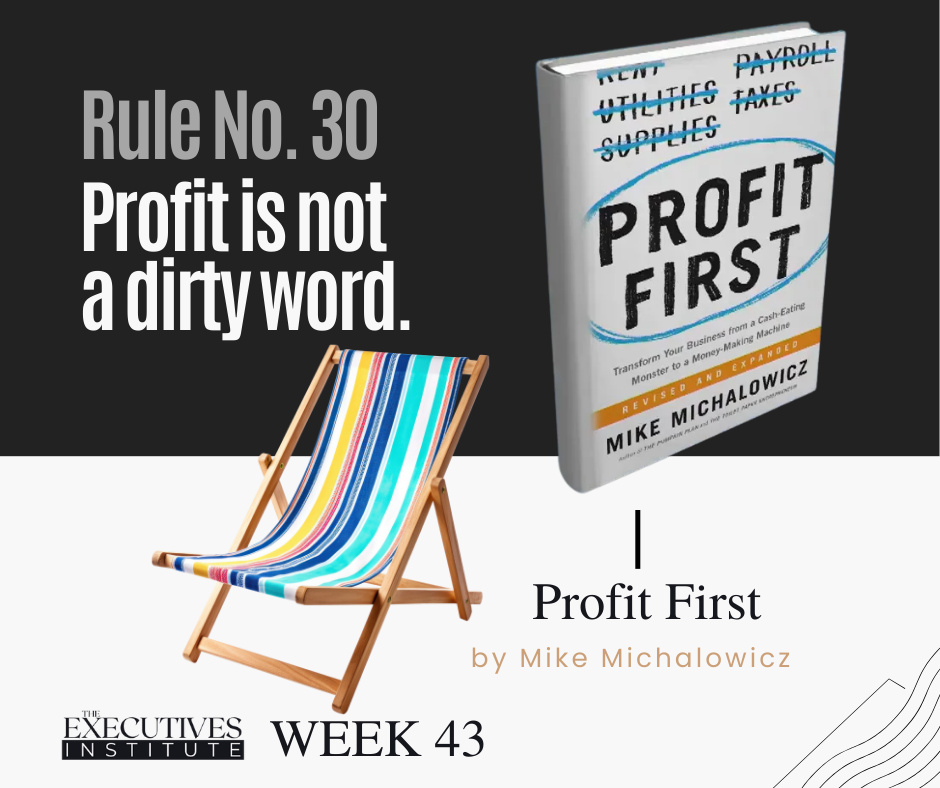
“Your business is supposed to serve you. If it’s not profitable, it’s broken.”
– Mike Michalowicz
Here’s My Question: Are you building a real business, or just buying yourself a job?
August 30, 2026 —we expect to have the rest of the Rules updated this week. Thanks, Kurt
⚠️ The Hard Truth —When people own the outcome, they stop waiting for instructions. If your team consistently comes back to you for the next step, chances are you’re still delegating tasks. If they come back with solutions, you’re delegating outcomes. If you’re delegating tasks, you still own the thinking. You’re just distributing labor. Delegate the outcome, the result you need, and let the person you hired figure out how to get there. That’s not abdication. That’s what developing people actually looks like. ADD YOUR INSIGHT
📌 Rule No. 31 —Delegate outcomes, not tasks.
Don’t just assign to-dos—transfer responsibility. When you delegate outcomes instead of tasks, you empower people to think, act, and lead with ownership. It’s the difference between creating followers and developing leaders. When you delegate outcomes, you create space for ownership, innovation, and decision-making at every level. That’s how you grow leaders, not followers, and how your organization stops depending on you for every answer. Why? Empowered teams outperform micromanaged ones. Ask yourself…Am I giving people responsibility for results, or just instructions for work?
Here’s My Question: What are you still controlling that someone else could own?

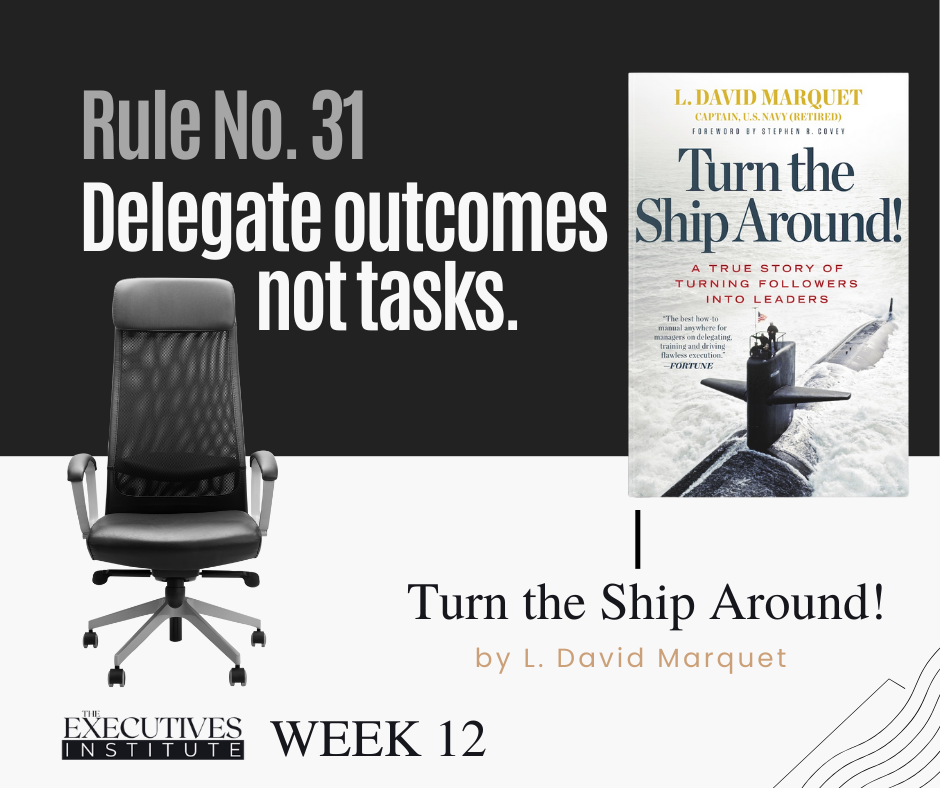
“Don’t move information to authority. Move authority to the information.” — David Marquet
🎓 Master this Rule | Delegate tasks, not outcomes.
⚠️ The Hard Truth —Growth doesn’t fix chaos, it exposes and magnifies it. Whatever is broken in your business right now will not fix itself when you add more people, more money, and more customers. Scaling accelerates everything, including the dysfunction. Fix the foundation before you build higher, or you’re just building a bigger problem. ADD YOUR INSIGHT
📌 Rule No. 32 —Don’t scale chaos.
Growth multiplies whatever system you already have —good or bad. If your business is already straining under broken processes, unclear roles, or duct-tape systems, growth will only amplify the dysfunction. Before you scale, get your house in order. Systems beat hustle. Chaos at a small size becomes a catastrophe at scale. Scaling a business with broken processes, unclear accountability, or misaligned culture only multiplies the dysfunction. Ask yourself…Which of our processes are person-dependent instead of being system-dependent?
Here’s My Question: Are you growing the business, or growing the problems?

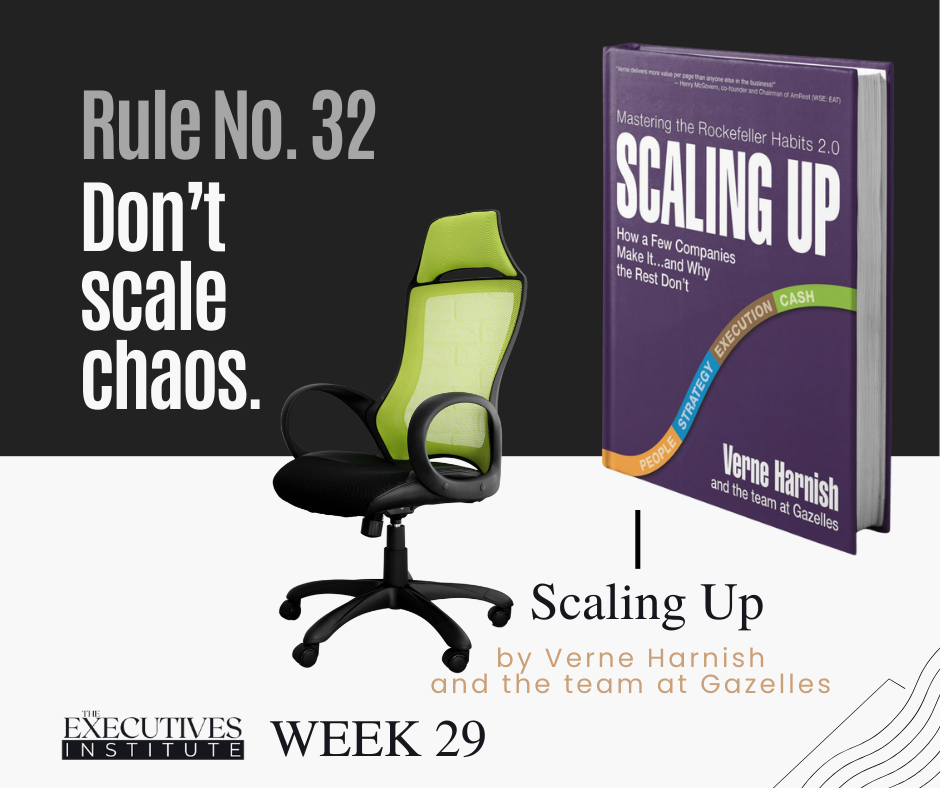
“Don’t try to scale a business that hasn’t nailed the basics. Otherwise, you’ll just get bigger problems.”— Verne Harnish
🎓 Master this Rule | Don’t scale chaos.
⚠️ The Hard Truth —If something happens more than twice, it deserves a process. Every time someone has to ask you how to do something you’ve done before, you’ve failed to build a process. Checklists, systems, and documented workflows aren’t bureaucracy, they’re freedom. Freedom for you to stop being the answer to every question in your own company. ADD YOUR INSIGHT
📌 Rule No. 33 —Processes protect your time.
Too many leaders try to outwork inefficiency instead of eliminating it. When everything depends on memory, hustle, or the right person being in the room, you’re not building a business —you’re juggling one. The truth is, strong processes don’t slow you down; they free you up. They protect your time, reduce errors, and make excellence repeatable. Ignore them, and you’ll spend your best hours fixing avoidable problems. Ask yourself…What recurring issues or delays could a basic checklist prevent?
Here’s My Question: How many problems do you solve repeatedly that should never happen twice?

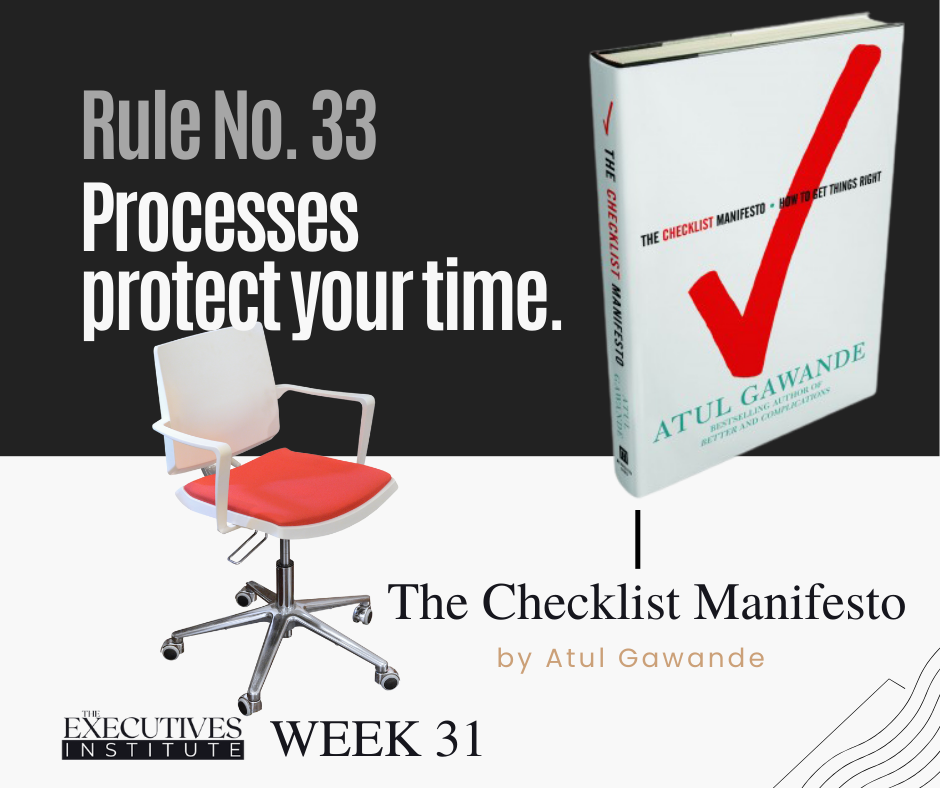
“Checklists turn out to be one of the most effective tools available to improve performance.” —Atul Gawande
🎓 Master this Rule | Processes protect your time.
⚠️ The Hard Truth —If your competitive advantage is the product, you have a shelf life. If it’s the organization, you have a legacy. Products come and go. Great companies learn how to evolve. Products become obsolete. Markets shift. Technology changes everything. What survives is the culture, the values, and the institutional knowledge of a company built to last. ADD YOUR INSIGHT
📌 Rule No. 34 —Great businesses outlive great products.
Legendary companies don’t hinge their future on any single product, service, or trend. They endure because they’re built on purpose, values, and systems that outlast market shifts and category obsolescence. While competitors chase what’s hot, enduring businesses invest in what’s timeless: culture, continuity, and core ideology. In other words —your best product should never be your identity. It’s just a chapter, not the whole story. Ask yourself…What core values or systems do we protect at all costs, regardless of what we’re selling?
Here’s My Question: If your best product disappeared tomorrow, what would remain?

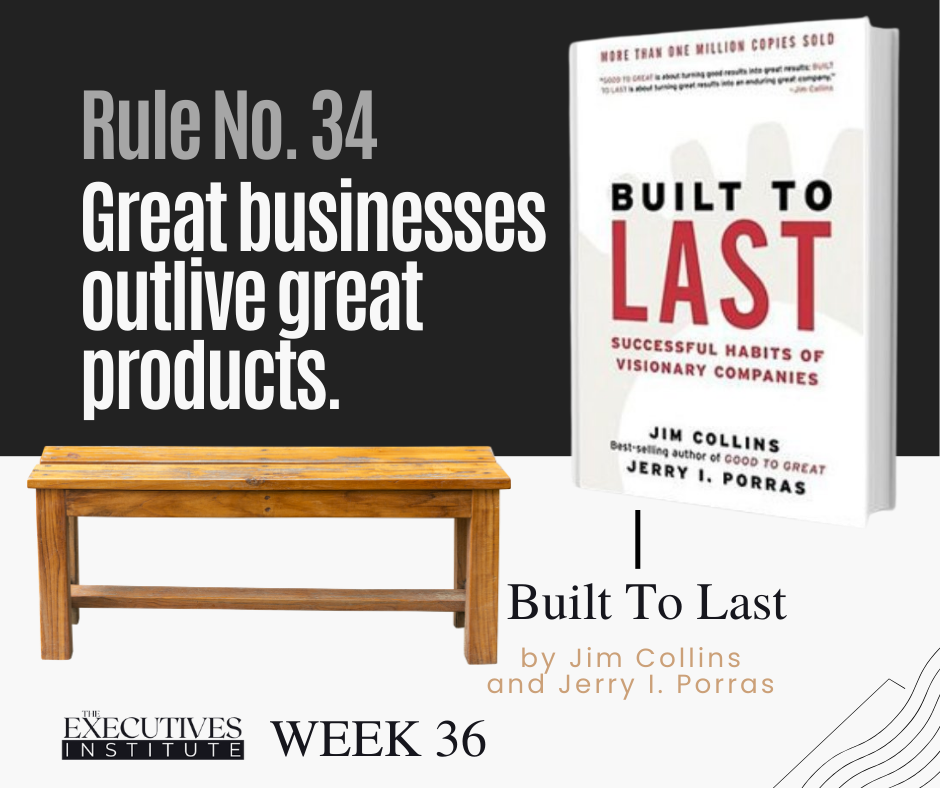
“Enduring great companies preserve their core values and purpose while their business strategies and operating practices endlessly adapt to a changing world.”— Jim Collins
🎓 Master this Rule | Great businesses outlive great products.
⚠️ The Hard Truth —The standard you tolerate becomes the culture you create. Good enough is a ceiling. The companies that become legendary are the ones where ‘we hit our number’ is immediately followed by ‘now what’s the next number?’ Complacency is a slow leak. By the time you notice it, you’ve already lost ground. ADD YOUR INSIGHT
📌 Rule No. 35 —Raise the bar, then raise it again.
Great companies don’t settle. They refuse to be lulled by early wins or fooled by temporary success. They build a culture where good isn’t good enough, and even great becomes the new baseline to surpass. This rule reminds leaders that the bar is never fixed. Raise it, reach it, and then raise it again. Because in enduring businesses, the pursuit of better never ends. The best leaders know that today’s high standards are tomorrow’s average. Ask yourself…If a new competitor started today with zero baggage, how would they beat us?
Here’s My Question: Where have you quietly accepted mediocrity?

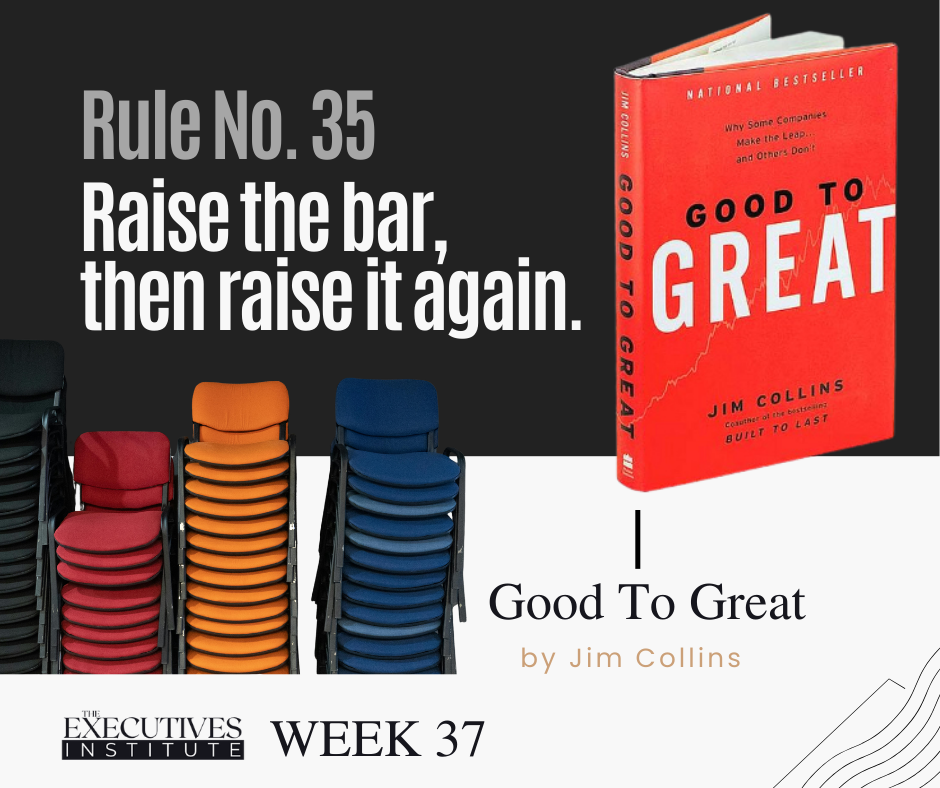
“Good is the enemy of great.”— Jim Collins
🎓 Master this Rule | Raise the bar, then raise it again.
⚠️ The Hard Truth —The true test of leadership is what happens when you’re not in the room. Your goal as a founder is to make yourself unnecessary to daily operations. If you can’t take three weeks off without the wheels coming off, you haven’t built a company, you’ve built a dependency. The most valuable businesses run on systems, not personalities. ADD YOUR INSIGHT
📌 Rule No. 36 —Build a business that runs without you.
A self-reliant business is the ultimate test of leadership, systems, and strategic clarity. Whether you’re looking to sell, scale, or simply breathe, building a company that doesn’t depend on you is a sign of maturity, not detachment. If your business can’t thrive without you, you don’t own a company, you own a job. Period. Ask yourself…Would someone want to buy your business if you were removed from the picture?
Here’s My Question: Are you the greatest asset, or the greatest bottleneck?

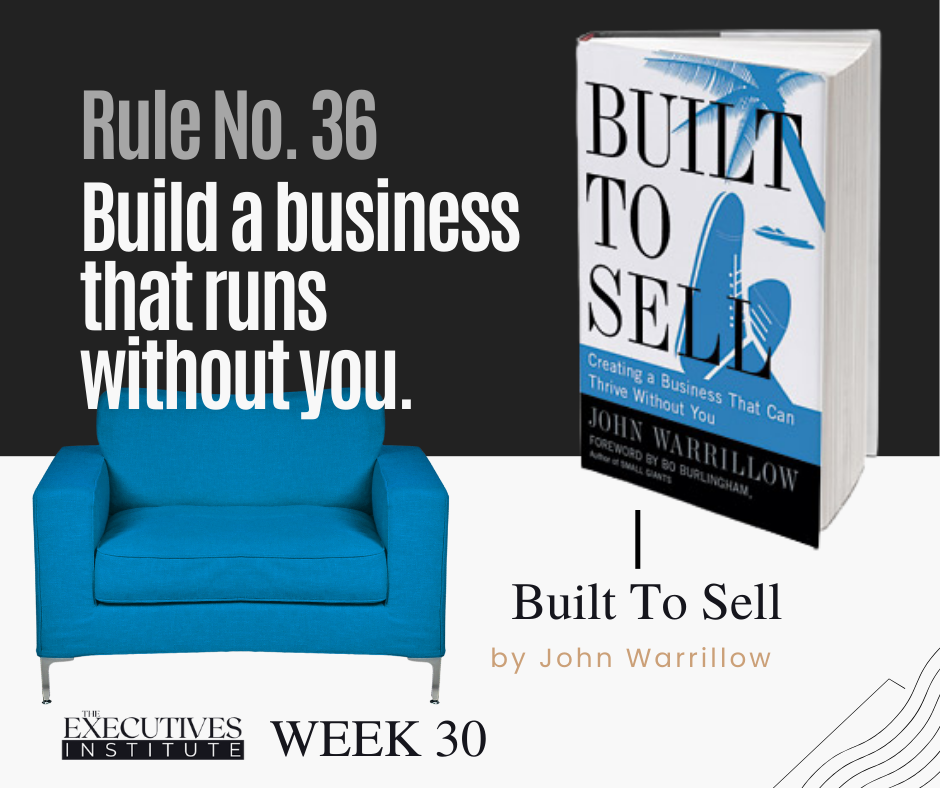
“The more your business relies on you personally, the less valuable it is.” — John Warrillow
🎓 Master this Rule | Build a business that runs without you.
⚠️ The Hard Truth —People buy faster from those they trust and run from those they don’t. The fastest path to no is asking before you’ve earned the right to ask. Trust is the currency that makes every sales conversation easier, every negotiation cleaner, and every partnership stronger. You can’t shortcut it. You can only build it, and most people are too impatient to do that. ADD YOUR INSIGHT
📌 Rule No. 37 —Build trust before selling.
Selling without trust is like planting seed in concrete: no matter how good your pitch is, it won’t grow. When trust is high, decisions happen faster, friction drops, and influence increases. When it’s absent, suspicion rises and every deal drags or dies. This rule reminds us that in any meaningful transaction, whether with customers, employees, or partners, trust must be earned before it can be leveraged. Trust isn’t a “soft” value —it’s a hard business asset. Ask yourself…Are we leading with empathy, clarity, and value, or just a sales agenda?
Here’s My Question: Have you earned the right to ask for the sale?

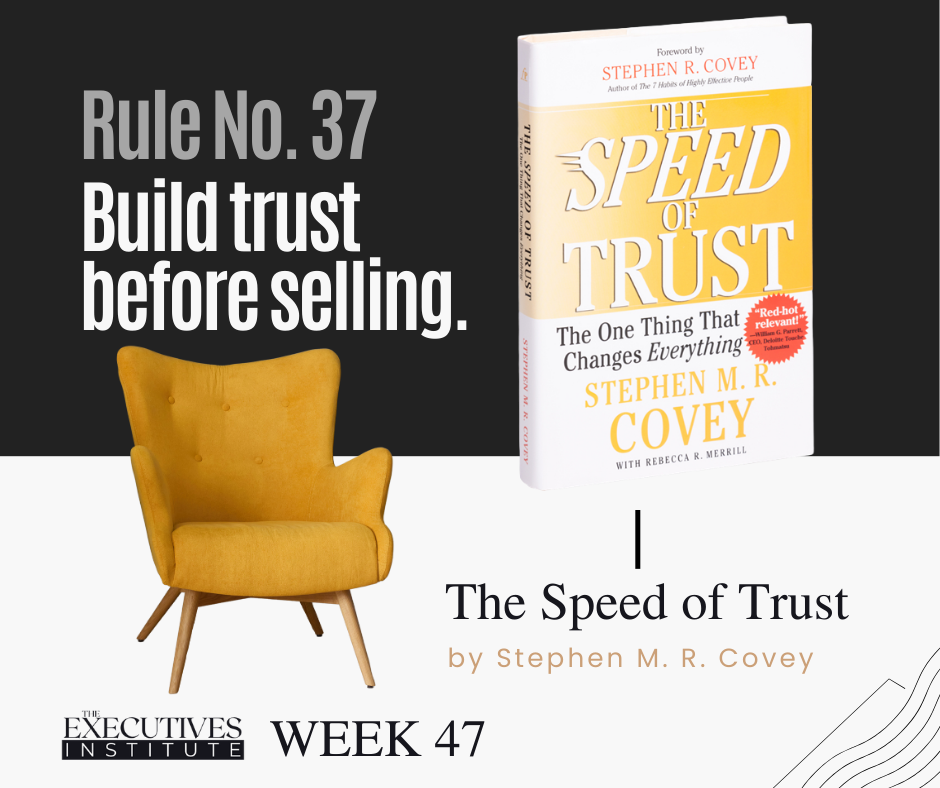
“Trust is equal parts character and competence… You can look at any leadership failure, and it’s always a failure of one or the other.” — Stephen M.R. Covey
🎓 Master this Rule | Build trust before selling.
⚠️ The Hard Truth —Trading time for money has a ceiling…the number of hours in your day. The businesses that build real wealth create something once and sell it repeatedly: subscriptions, licenses, systems, recurring revenue. If your income stops when you stop working, you have a job, not a business. The best businesses earn revenue long after the original work is done. ADD YOUR INSIGHT
📌 Rule No. 38 —Build once, sell forever.
The companies that endure don’t just sell products or services; they build assets that keep delivering value long after the initial effort. This rule is about shifting from transactional thinking to scalable thinking. When you build something once, something repeatable and systematized, you break free from the grind and create lasting momentum. It’s not just about income. It’s about building a business that works even when you’re not. Ask yourself…What value do we provide that could be packaged and sold repeatedly?
Here’s My Question: What are you creating today that will still produce value five years from now?

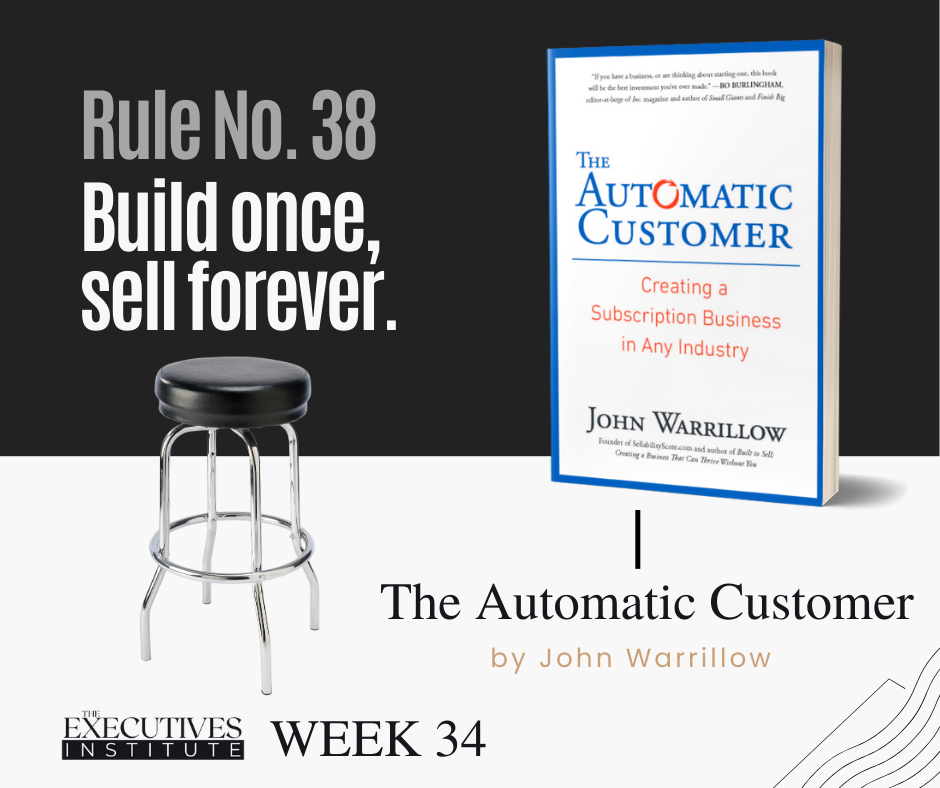
“Recurring revenue is the holy grail of business valuation. It makes your company more predictable, more valuable, and more attractive to investors and buyers.” — John Warrillow
🎓 Master this Rule | Build once, sell forever.
⚠️ The Hard Truth —The most valuable currency in business? Who will take your call. Opportunities usually travel through people before they reach markets. The best opportunities in business rarely come from cold outreach. They come from relationships, the people who already know what you’re capable of, already trust your judgment, and already want you to succeed. Who you know opens doors talent can’t. ADD YOUR INSIGHT
📌 Rule No. 39 —Your network is your net worth.
You don’t rise in business alone, and if you think you can, you’re already at a disadvantage. Your success is tied to the strength and depth of your relationships. No matter how sharp your skills or solid your product, if you’re not connected to the right people, you’re playing small. Business still runs on trust, and trust is built through connection. Ask yourself…Who do I need to know that I don’t know yet?
Here’s My Question: Who knows your name when you’re not in the room?

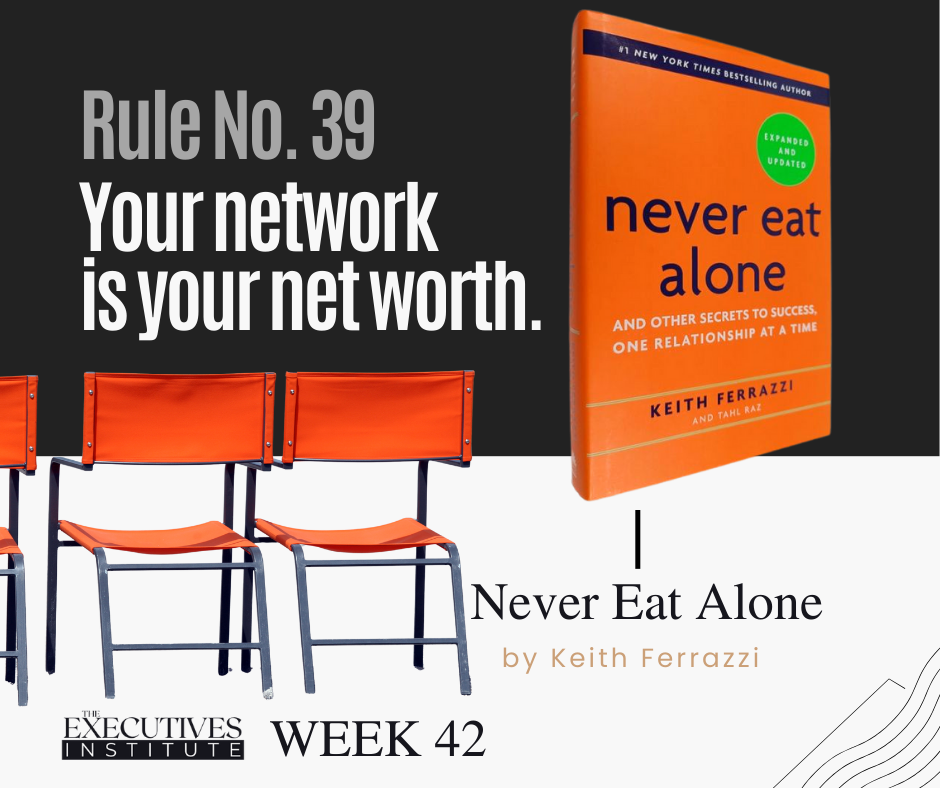
“Success in any field, but especially in business, is about working with people, not against them.”— Keith Ferrazzi
🎓 Master this Rule | Your network is your net worth.
⚠️ The Hard Truth —Features get compared. Visions get followed. People don’t buy what you do, they buy what you stand for and where you’re going. If your pitch leads with specs and pricing instead of the problem you’re solving and why it matters, you’ve already lost the room. People don’t buy products, they buy the future those products promise. ADD YOUR INSIGHT
📌 Rule No. 40 —Sell the vision, not just the product.
Great companies lead with purpose. When you sell the vision behind your product, you attract loyalty, not just transactions. Without a clearly communicated “why,” even the best offerings get lost in the noise. Don’t just push features, inspire belief. Ask yourself…Do our employees and partners buy into our ‘why’, or just our paychecks?
Here’s My Question: Are people buying what you sell, or what they become because of it?

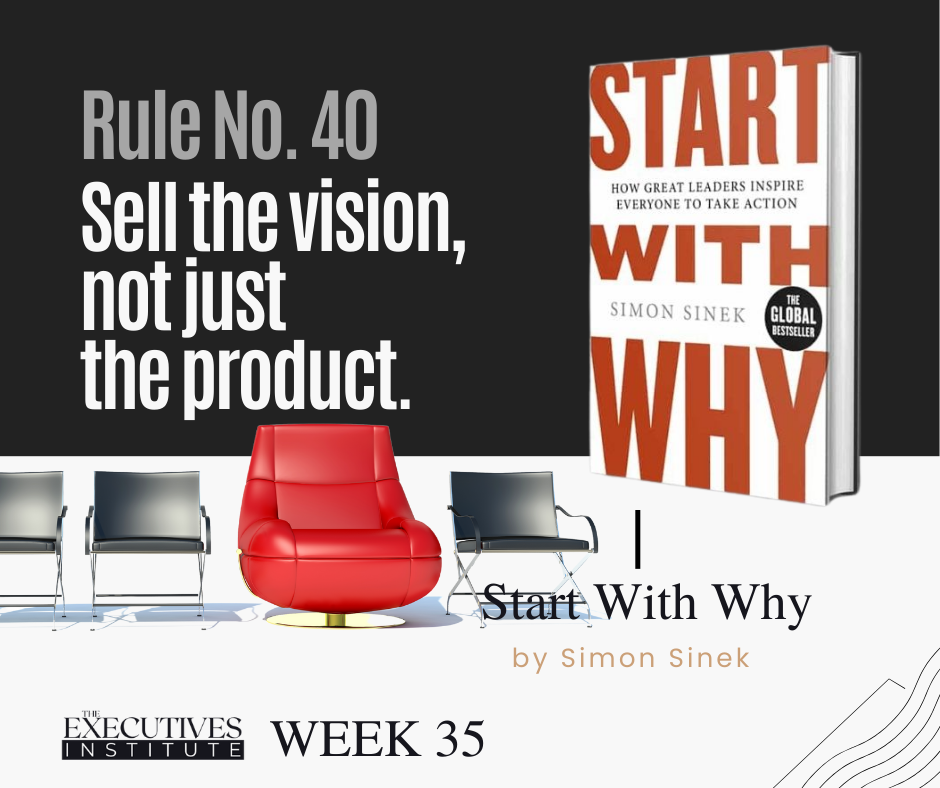
“People don’t buy what you do; they buy why you do it.”— Simon Sinek
🎓 Master this Rule | Sell the vision, not just the product.
⚠️ The Hard Truth —Reputation builds slowly, but it can collapse overnight. Every interaction either deposits into your reputation or withdraws from it. Over time, the interest adds up, in both directions. The business leader who consistently delivers, tells the truth, and does right by people builds something no marketing budget can manufacture. ADD YOUR INSIGHT
📌 Rule No. 41 —Reputation compounds.
You don’t get to decide whether you have a reputation, you already do. The only question is whether it’s working for you or against you. In business, reputation is rarely built in big leaps, it’s forged in small, consistent moments of credibility, integrity, and delivery. Like interest on capital, your reputation accrues or erodes over time based on the decisions you make, the relationships you honor, and the problems you either solve or ignore. Today’s digital transparency amplifies everything, good and bad. If you’re not actively building your reputation, you’re leaving it to chance. Ask yourself…Do we have a deliberate strategy for enhancing our reputation, or are we assuming good work will speak for itself?
Here’s My Question: What are people saying about you when you aren’t listening?

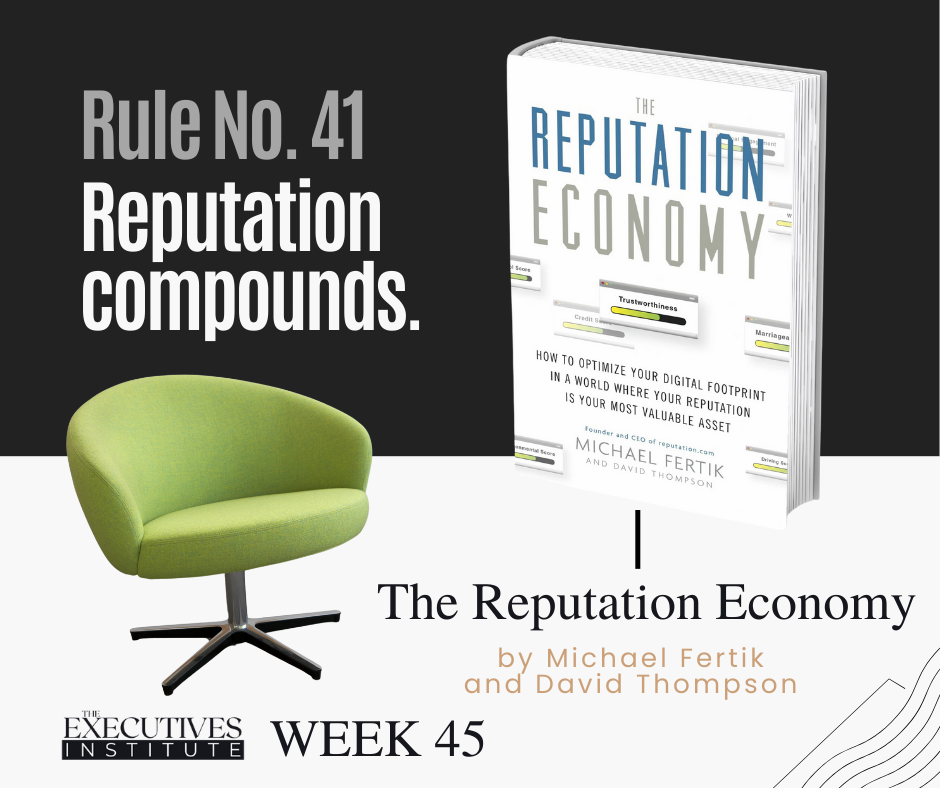
“In the Reputation Economy, your greatest asset is how others see you. Not just what you say you are, but what you prove you are —over and over again.” — Michael Fertik
🎓 Master this Rule | Reputation compounds.
⚠️ The Hard Truth —The feedback you resist the most is often the feedback you need the most. The customer who tells you what’s broken is more valuable than the ten who quietly leave. The employee who tells you hard truths is more valuable than the room that only nods. Stop punishing honesty and start creating environments where it’s the norm. ADD YOUR INSIGHT
📌 Rule No. 42 —Feedback is a gift.
Most people say they want feedback, until they actually get it. The truth is, most leaders aren’t wired to receive feedback well, even when they desperately need it. But feedback, when accepted without defensiveness and viewed as fuel, not fire, is a shortcut to growth, clarity, and leadership maturity. The best leaders do the opposite. They treat feedback like a mirror —not a threat. They don’t wait for perfect timing or sugarcoating. They seek it out, absorb it, and use it to get sharper. Because if no one’s telling you the truth, you’re probably not leading —you’re just coasting.
Ask yourself…What’s one thing I’m doing that I don’t see, but others do?
Here’s My Question: When was the last time someone told you something you didn’t want to hear?

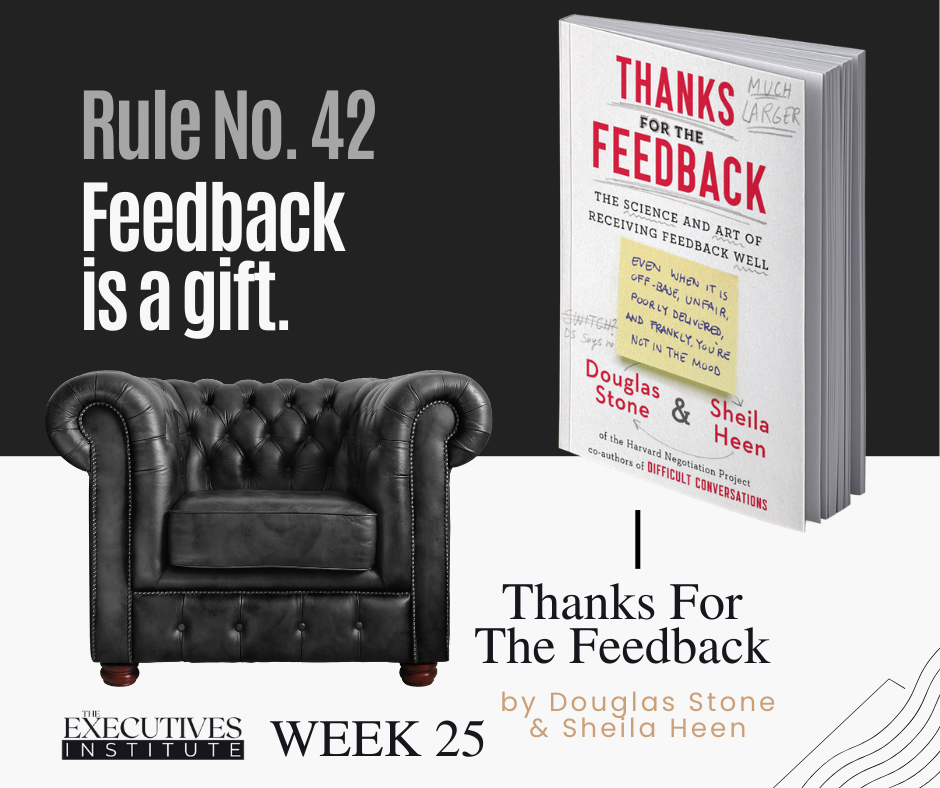
“Receiving feedback sits at the intersection of two needs: our drive to learn and our longing to be accepted. That’s why it’s so hard, and so important.” — Douglas Stone
🎓 Master this Rule | Feedback is a gift.
⚠️ The Hard Truth —Comparison drains energy that should be spent on execution. Comparison is the thief of strategy. When you’re busy watching what your competitor is doing, you’re not building what only you can build. Define what winning looks like for your business, not theirs, and execute against that standard relentlessly. ADD YOUR INSIGHT
📌 Rule No. 43 —Run your race.
Your greatest competition isn’t the business next door — it’s your own untapped potential. Don’t waste energy trying to beat someone else at their game. Discipline, endurance, and grit win in the long run, not comparison. Run your race. Fully. Relentlessly. On your terms. It’s not about being faster than the next company—it’s about being disciplined enough to become who you said you would be. Ask yourself…Have we mirrored a competitor’s product roadmap just because they lead in revenue?
Here’s My Question: Whose scoreboard are you really playing to?


“You are in danger of living a life so comfortable and soft, that you will die without ever realizing your true potential.” — David Goggins
🎓 Master this Rule | Run your race.
⚠️ The Hard Truth —Your greatest advantage is usually the thing competitors refuse to do. There is exactly one sustainable competitive advantage: being remarkably different in a way the market actually values. Trying to be everything to everyone is a guaranteed path to being nothing to nobody. Find the thing that makes you the obvious choice for someone — and own it without apology. ADD YOUR INSIGHT
📌 Rule No. 44 —Own your edge.
The marketplace is flooded with average. If you’re not remarkable, you’re invisible. Own your edge means knowing exactly what sets you apart, and leaning into it with confidence, clarity, and consistency. Your edge isn’t a liability. It’s your leverage. In business, safe is invisible. If you’re not willing to lead with your difference, you’ll die a commodity. Ask yourself…Have we stayed true to what made us distinct in the first place?
Here’s My Question: What can you do better than almost anyone else?


“In a crowded marketplace, fitting in is failing. In a busy marketplace, not standing out is the same as being invisible.” — Seth Godin
🎓 Master this Rule | Own your edge.
⚠️ The Hard Truth —Most leaders aren’t short on time, they’re starved for focus. You cannot make good decisions in a state of chronic distraction. The leaders who think most clearly are the ones who are most ruthless about protecting deep, uninterrupted time. Your best thinking doesn’t happen between notifications. Create the conditions for it or accept shallow results. Mental bandwidth is finite. Protecting it isn’t soft, it’s strategic. The quality of your leadership depends on the clarity of your thought. And that clarity begins with guarding what gets in. ADD YOUR INSIGHT
📌 Rule No. 45 —Protect your mental bandwidth.
Great decisions require space to think, not constant noise. If you’re constantly switching contexts, reacting to every notification, or multitasking under the illusion of productivity, you’re bleeding cognitive energy. In an economy dominated by distractions and shallow work, the ability to consistently carve out deep, uninterrupted thinking time has become a superpower. Protecting your mental bandwidth is not a luxury, it’s a discipline. Ask yourself…What would it look like to protect time like we protect money?
Here’s My Question: What is consuming your attention without earning it?

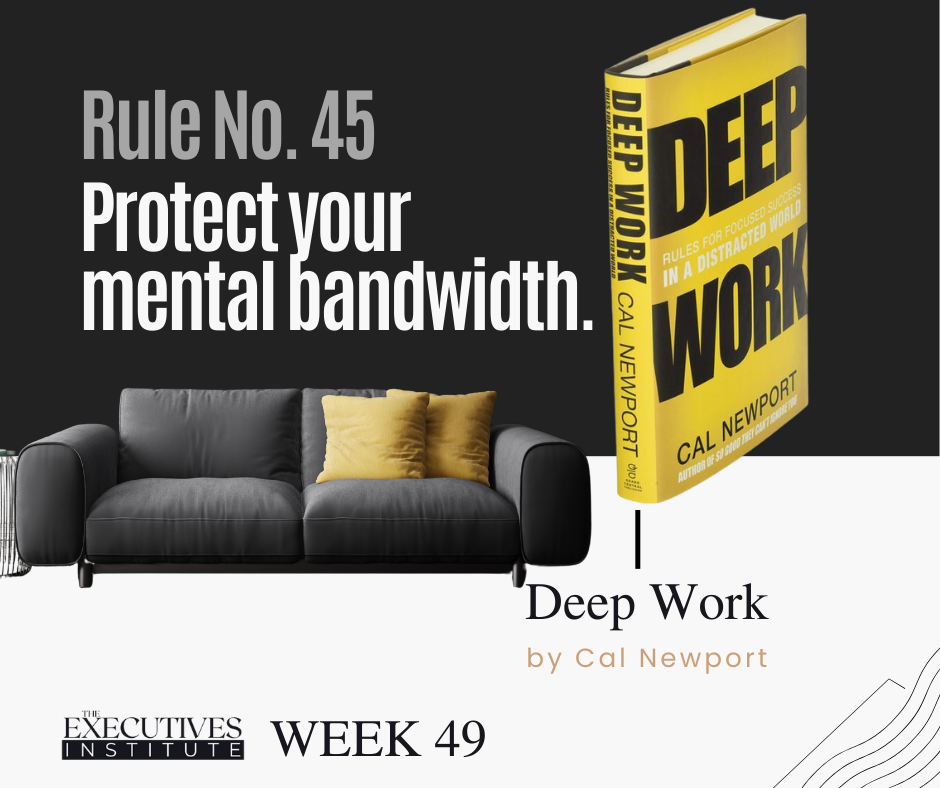
“Clarity about what matters provides clarity about what does not.” — Cal Newport
🎓 Master this Rule | Protect your mental bandwidth.
⚠️ The Hard Truth —Culture is not what you say it is. It’s what you tolerate, what you reward, and what you do when no one is watching. Growth without values eventually destroys the culture that created the growth. More revenue, more headcount, more locations, none of it matters if the values that made you successful in the first place got quietly traded away to get there. ADD YOUR INSIGHT
📌 Rule No. 46 —Don’t outgrow your values.
Growth is good. Scale is exciting. But when an organization gets bigger, faster, or more successful, the first casualty is often its core values. What was once instinctive becomes negotiable. This rule is your reminder that values aren’t a phase, they’re your foundation. Ignore them at your peril. The real test of leadership isn’t what you do when things are easy, but what you protect when pressure hits. If your values aren’t strong enough to survive growth, they were never values to begin with, they were slogans. Ask yourself…Would a new hire know what we stand for without being told?
Here’s My Question: What principle have you compromised in the name of growth?

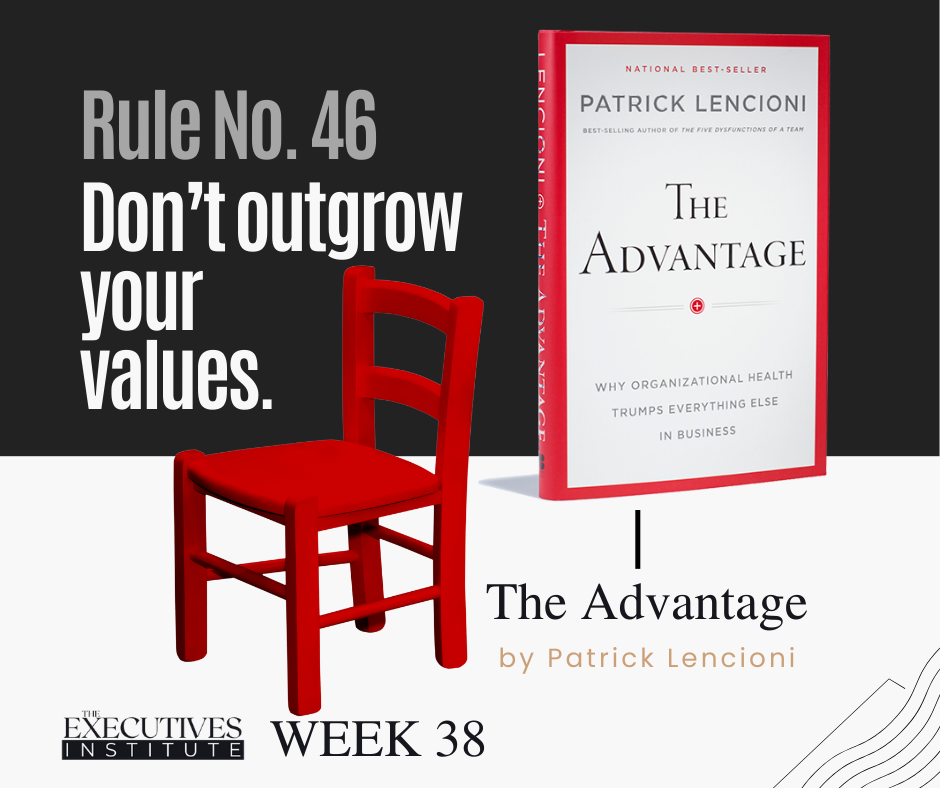
“Companies don’t fail because they grow. They fail because they forget who they were before they grew.” – Patrick Lencioni
🎓 Master this Rule | Don’t outgrow your values.
⚠️ The Hard Truth —Strong leadership fixes dysfunction. Weak leadership fuels it. The real choke point is almost always at the top. Leadership isn’t just a title; it’s the engine that drives, or grinds to a halt, the entire organization. You want accountability? Start by holding yourself accountable. You want alignment? Stop tolerating dysfunction and model clarity. The bottleneck isn’t in the middle or the trenches. It’s right where the buck stops: with you. This rule pulls no punches because leadership demands brutal honesty, starting with yourself. ADD YOUR INSIGHT
📌 Rule No. 47 —The bottleneck is at the top.
If your team is stuck, underperforming, or spinning its wheels, stop looking around for excuses, start looking up. When a team is underperforming, the root cause usually isn’t “down there.” It’s at the top. Culture, clarity, accountability —these flow from leadership. If something’s stuck, stalled, or sideways, odds are high that the real issue starts with the leader. Not the team. Not the market. You. Ask yourself…Do my people lack clarity because I’ve failed to set it?
Here’s My Question: What problem exists today because of your leadership?

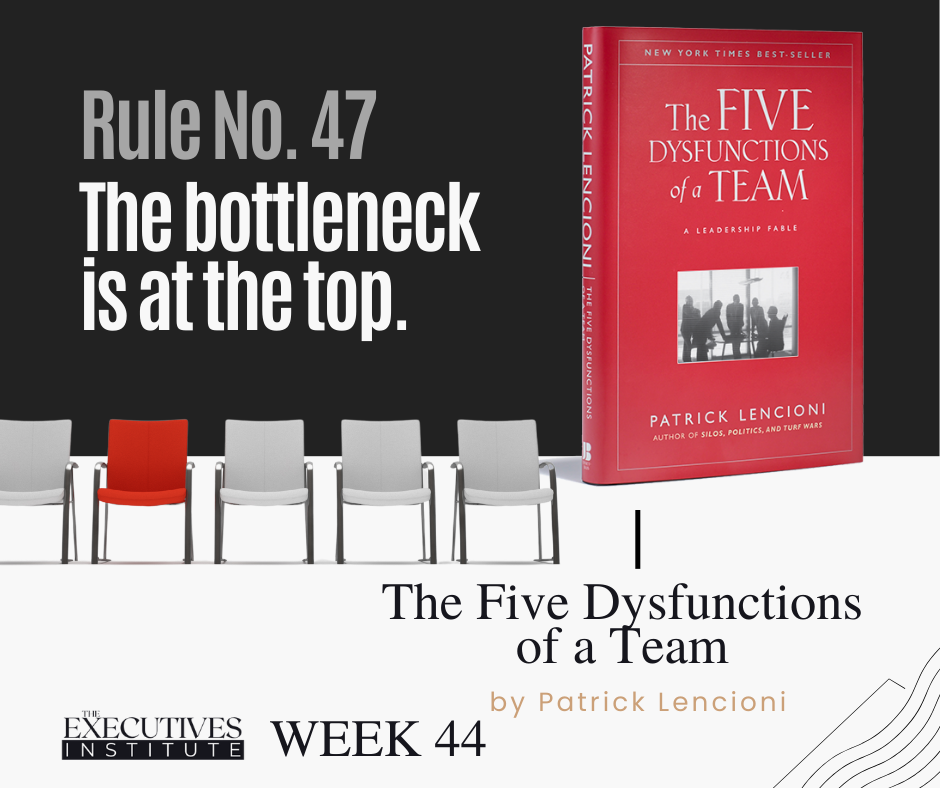
“The leader must confront the dysfunction, or it will never be resolved.” — Patrick Lencioni
🎓 Master this Rule | The bottleneck is at the top.
⚠️ The Hard Truth —The people who create the most value eventually receive the most opportunity. Transactional relationships have a short shelf life. The business leaders who build durable careers, loyal customers, and strong teams are the ones who consistently brought more to the table than they took home. Not because it’s virtuous, because it compounds. ADD YOUR INSIGHT
📌 Rule No. 48 —Give more than you take.
In a world obsessed with getting ahead, the most successful leaders and businesses flip the script. They give; value, time, insight, connection, first and consistently. Not as a tactic, but as a principle. Because when your reputation is built on contribution, trust follows. And trust drives everything. In business, takers might win the quarter, but givers win the decade. Give more than you take. Always. Ask yourself…Who have we quietly benefited from, but never acknowledged or supported in return?
Here’s My Question: Who is better because you showed up?

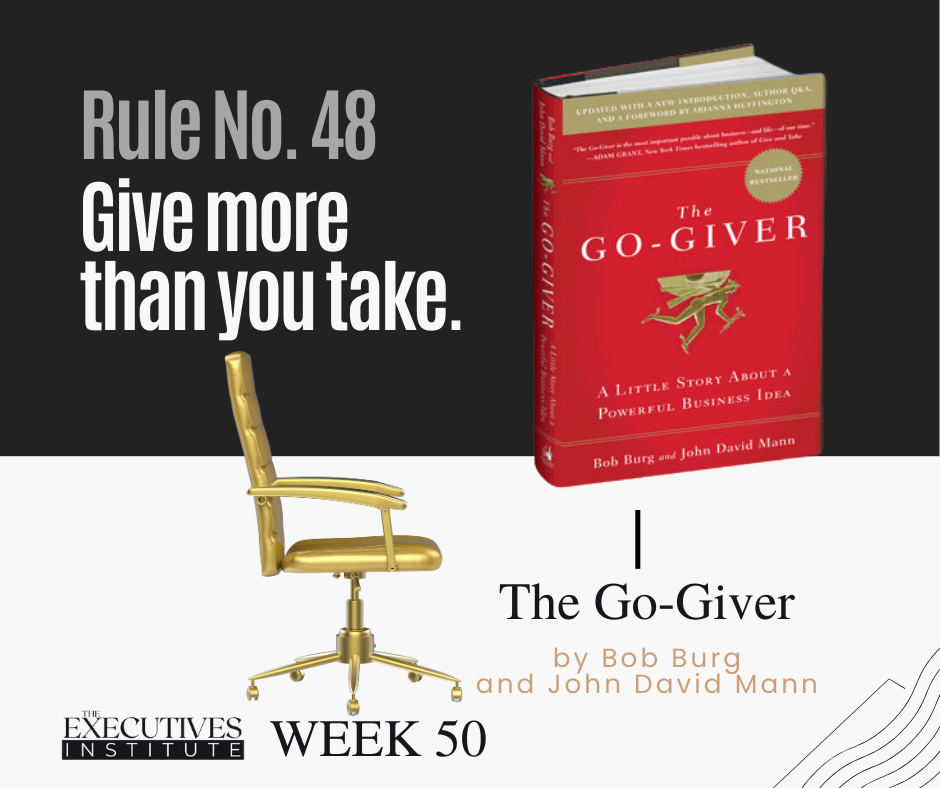
“Your true worth is determined by how much more you give in value than you take in payment.”— Bob Burg
🎓 Master this Rule | Give more than you take.
⚠️ The Hard Truth —Processes are tools. People are the point. Processes guide people, but people ultimately build the business. When your systems exist to protect the business from its own people, you have a culture problem, not a process problem. Hire people worth trusting, build systems that support them, and stop managing for the worst-case employee. ADD YOUR INSIGHT
📌 Rule No. 49 —People over processes.
Processes are important. But people drive results. Too many companies hide behind processes. When something breaks, they add another form, another system, another rule. But no amount of process can make up for poor leadership, or compensate for a lack of trust in people. The truth is, great organizations are built by humans, not handbooks. When you invest in capable people and give them the freedom to think, decide, and act, you outperform the rigid, over-engineered machines every time. Bureaucracy is easy. Leadership is hard. But leadership wins. Every time. Ask yourself…Are our managers hiding behind procedure to avoid making real decisions?
Here’s My Question: Have your systems begun serving themselves instead of your people?

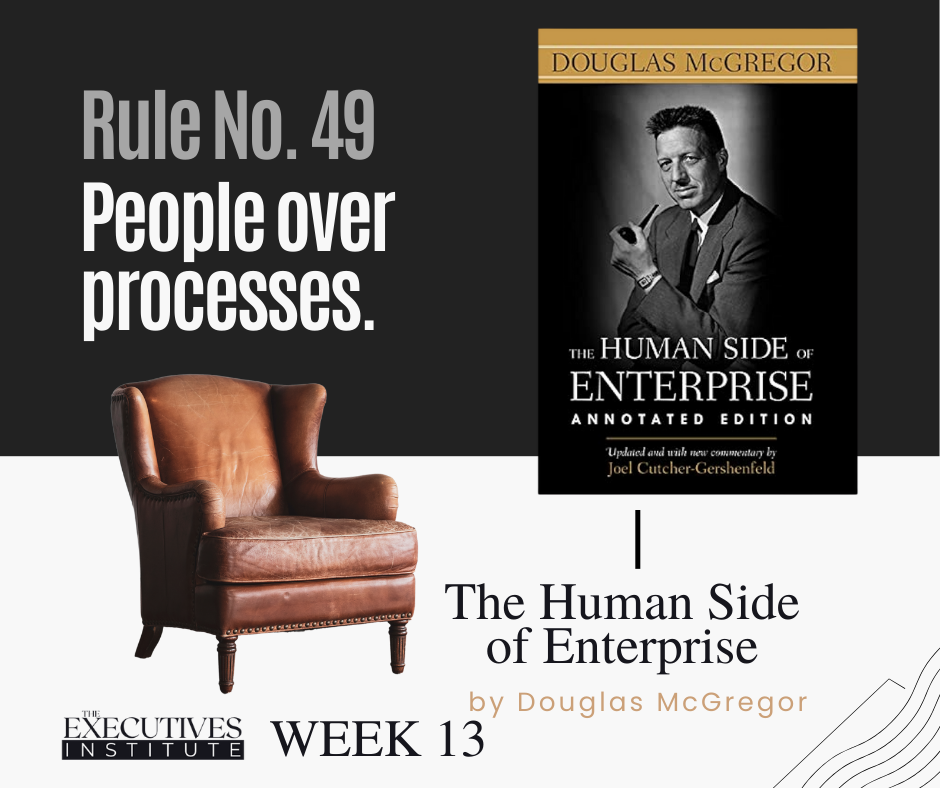
“The ingenuity of people is far more reliable than the ingenuity of systems. Trust in people is not naïve—it’s essential.” — Douglas McGregor
🎓 Master this Rule | People over processes.
⚠️ The Hard Truth —The pain is coming either way. Swallow it whole, take the hit, and move forward. When the hard conversation needs to happen, have it. When the decision needs to be made, make it. When the cut needs to happen, make it clean. Drawn-out approaches to difficult situations don’t spare anyone pain. They just spread it over a longer timeline and make you look indecisive in the process. ADD YOUR INSIGHT
📌 Rule No. 50 —If you’re going to eat shit, don’t nibble.
When the tough decision is inevitable, stop stalling. Stop dressing it up. Go straight at it. Half-measures just prolong the pain and erode your credibility. In business, you’ll occasionally have to do something unpleasant—fire a friend, shut down a product, take a public hit. Dragging it out or sugarcoating it only makes it worse. Swallow hard, take the full bite, and move on. Fast, direct action beats slow, “polite” decay. Ask yourself…What hard call are we quietly avoiding right now?
Here’s My Question: What painful decision will only get worse if you wait another month?

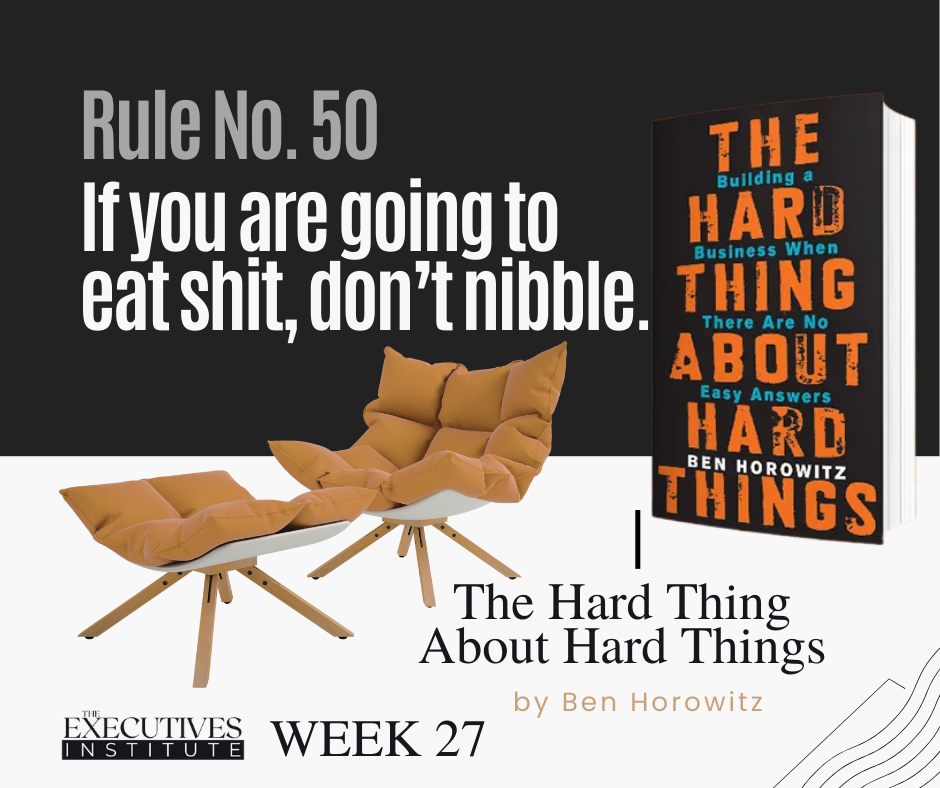
“There are no silver bullets for this, only lead bullets.” — Ben Horowitz
🎓 Master this Rule | If you’re going to eat shit, don’t nibble.
Help Build the Next 50 Rules
The first 50 Rules were built on timeless business principles that have stood the test of time. But there are hundreds of great business books still waiting to be added to America’s Business Library, and we’d like your help.
If a book has shaped the way you lead, build, hire, sell, negotiate, or think, send it to us. Pair it with the one timeless rule you believe every executive should remember, along with a brief summary explaining why it matters. Don’t worry about making it perfect. Our editorial team will review, refine, and format every submission before it becomes part of the Institute.
Your idea could become one of the next 50 Rules that helps thousands of business leaders make better decisions for years to come.