

Rule No. 4 summary:
Success in business isn’t about winning it’s about enduring. Prioritize long-term vision, trust, and adaptability over short-term gains.
Great companies focus on building something that lasts, not just something that performs today.
Play the long game is Rule No. 4 because sustainable advantage requires patience.
Too many leaders treat business like a game to be won — chasing quarterly victories, market share, or momentary headlines. But real leadership isn’t about beating the competition. It’s about building something that lasts. The best companies outlast trends, adapt with purpose, and prioritize trust, resilience, and long-term value. Playing the long game isn’t just a strategy — it’s a mindset.
 Write this down…
Short-term wins impress. Long-term discipline builds empires.
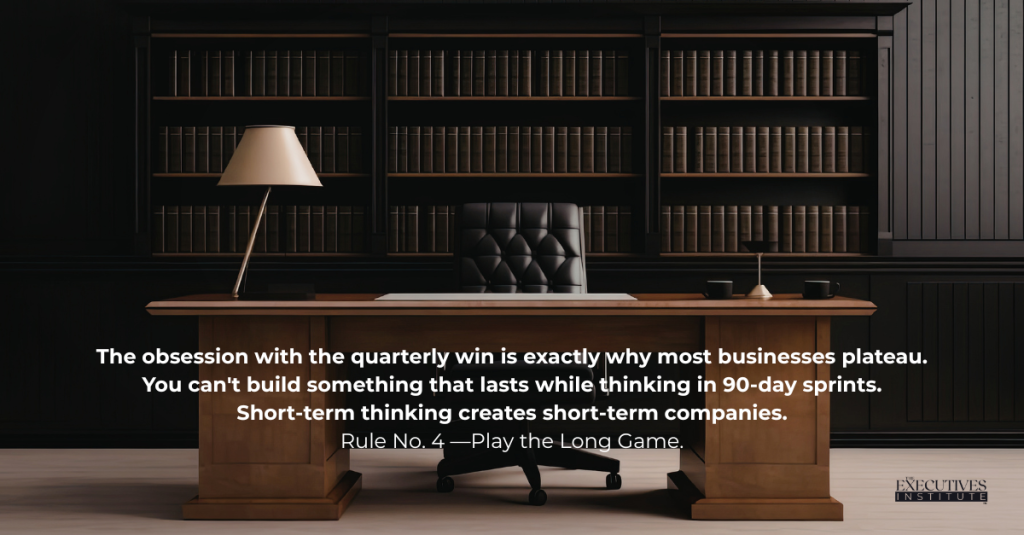
STUDY 📌 Rule No. 4 —Play the Long Game.
— The Decision That Changes Everything
Most of the short-term decisions that hurt businesses look reasonable at the time.
That’s what makes them dangerous. Nobody wakes up and says they’re going to sacrifice the future for a quarterly number. It happens through a series of individually defensible choices that compound in the wrong direction.
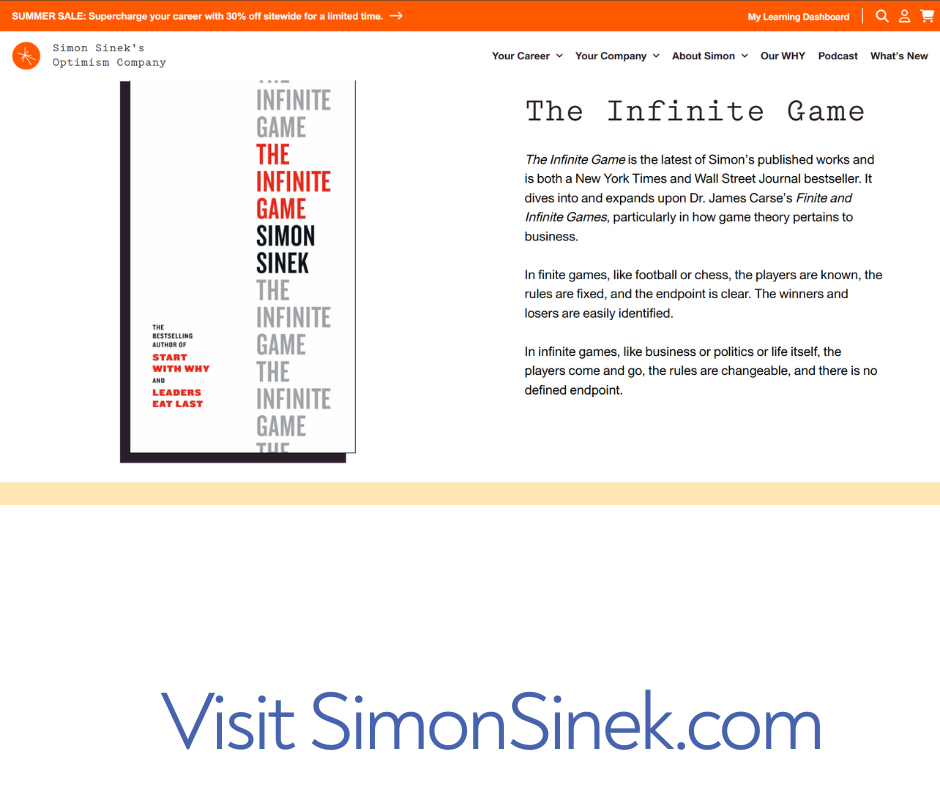
In his book, The Infinite Game, Simon Sinek framed this clearly: there are finite games, where you play to win a defined end, and infinite games, where the objective is simply to keep playing and improve over time. Business, done well, is an infinite game.
“Short-term wins feel great… until they kill the company.”
The leaders I’ve observed who build durable businesses think in decades, not quarters. They make pricing decisions, hiring decisions, and culture decisions based on where they want the company to be in ten years — not on what solves this month’s pressure.
Playing the long game doesn’t mean ignoring urgency. It means understanding which urgencies are real and which are just noise.
This is embedded in one of The Executives Institute’s foundational principles: Play the long game. It’s a simple instruction with profound implications for how you allocate time, capital, and attention.
The business that’s still here in twenty years will be the one that kept that perspective.

Here are five warning signs for Rule No. 4: Play the Long Game — clear signs you’re thinking too short-term:
⚠️ You celebrate outcomes but ignore the foundation behind them
Wins are recognized, but the systems, discipline, and culture that sustain those wins are overlooked or underdeveloped.
⚠️ You’re managing to the quarter, not the mission
Decisions are driven by immediate metrics, while long-term priorities keep getting pushed “to next quarter.”
⚠️ You cut investment the moment pressure hits
Training, R&D, brand-building — the first things sacrificed when numbers tighten are the very things that secure your future.
⚠️ Your team is afraid to think beyond the next win
When people stop proposing bold, long-term ideas, it’s usually because they’ve learned short-term results are all that matter.
⚠️ You’re reacting to competitors instead of defining your path
Constantly chasing what others are doing is a sign you’ve lost your own long-term direction.

💬 Leadership Team Meeting
Short-term pressure is constant — revenue targets, board expectations, market noise. But most organizations don’t fail because they lacked ambition. They fail because they traded long-term strength for short-term relief, one decision at a time.
Use this discussion to confront where that might be happening inside your business right now.
Discuss openly:
- Where are we prioritizing immediate results at the expense of long-term value?
- What investments (people, systems, innovation) have we delayed or reduced that we know matter for our future?
- Are we clear on what we’re actually building over the next 5–10 years — or are we just reacting year to year?
- Where are we following competitors instead of committing to our own path?
- If we continue operating exactly as we are today, where will this company be in 5 years?
Push for honest answers. This isn’t about optics — it’s about trajectory.
🪜Team Task to Carry Forward
Define one long-term commitment you will protect — no matter the short-term pressure.
As a leadership team, identify a single priority (e.g., talent development, product innovation, customer trust, culture) that is critical to your future success. Write it down. Agree on it. Then set a clear standard:
What does it look like to not compromise this — even when it’s inconvenient?
Revisit this commitment monthly. If it starts slipping, you’re not playing the long game — you’re just talking about it.

Contrarian View (For Healthy Team Debate)
“What if playing the long game is just an excuse for avoiding hard, short-term accountability — where are we using ‘long-term thinking’ to justify weak execution today?”
🧠 Individual leadership long-game questions:
What does ‘winning’ mean to me — and is that definition sustainable?
Challenge the metrics and mindsets that drive your leadership. Are they rooted in purpose or pressure?
Am I making decisions that serve the next quarter or the next decade?
Consider where you’re compromising long-term value for short-term results — and whether it’s worth it.
Where am I investing in trust, culture, or innovation — even if the payoff isn’t immediate?
Long games are built on invisible work. Identify where you’re planting seeds that take time to grow.

Here’s a common scenario:
You’re the CEO of a growing company. Your board is pressuring you to cut staff and scale back R&D to hit quarterly earnings. But you know those investments are critical to developing a new platform that could future-proof the business. Do you:
A) Prioritize short-term gains and secure your bonus,
or
B) Take the hit now, communicate your vision clearly, and keep building for long-term strength?
The infinite-minded leader chooses B — understanding that trust, innovation, and culture compound over time.

📚 Recommended Reading
The Infinite Game
by Simon Sinek
“Infinite-minded leaders understand that ‘best’ is not a permanent state. Instead, they strive to be better.” — Simon Sinek
If you run your company like a finite game, you’ll eventually lose. Markets shift, competitors change, and the finish line keeps moving. The leaders who endure are the ones who anchor their decisions in purpose, not quarterly applause. The Infinite Game is a reminder that long-term advantage belongs to the patient, the principled, and the disciplined — not the ones chasing the scoreboard.
📘 Book Summary
Simon Sinek argues that most leaders make a critical mistake: they treat business as a finite game with winners, losers, and an endpoint.
In reality, business is an infinite game — the rules change, the players come and go, and there is no finish line.
Companies that focus on outlasting rather than “winning” build stronger cultures, more loyal customers, and more resilient strategies.
Sinek outlines the pillars of infinite-minded leadership:
- advance a just cause,
- build trusting teams,
- study worthy rivals,
- prepare for existential flexibility,
- have the courage to lead with long-term principles rather than short-term pressure.
The book is a call for leaders to stop chasing immediate validation and instead build organizations that remain durable, relevant, and principled for decades.

This rule helps leaders with:
- Shifting from reactive to strategic leadership
- Building lasting trust with teams, customers, and stakeholders
- Making better investment decisions
- Navigating uncertainty and change
- Preventing burnout and short-sighted growth
 This Rule isn’t finished—and it never will be. Business changes, leaders learn, and our Members keep sharpening the edges with real stories and hard-won lessons. What you see here is today’s version. Tomorrow’s will be better, clearer, and backed by more lived experience.
Thank you for being here and bringing your perspective—add your insight, share a story, or challenge what’s written. Together, we keep these Rules alive and relevant.