
Chapter 2: Know Your Customer | Week 6-9
Before strategy, before scale, before standing out—you need to lock in who you’re truly serving. Clarity around your customer isn’t optional. It’s the bedrock of every smart decision that follows.
Over the next 4 weeks, we will cut through the noise and confront the reality: if your brand is fuzzy inside your walls, it’s invisible outside them. Your brand is not what you say—it’s what your best customers believe. That belief is earned when you understand them deeply, speak their language, and deliver on your promise with focus and discipline.

Knowing your customer isn’t just a marketing effort. It’s an executive-level responsibility. It shows up in your calendar, your conversations, and your culture. Because the businesses that know exactly who they serve are the ones that grow with purpose—and attract loyalty that lasts.
Who you serve—and how clearly you serve them—determines your future.
Let’s begin…
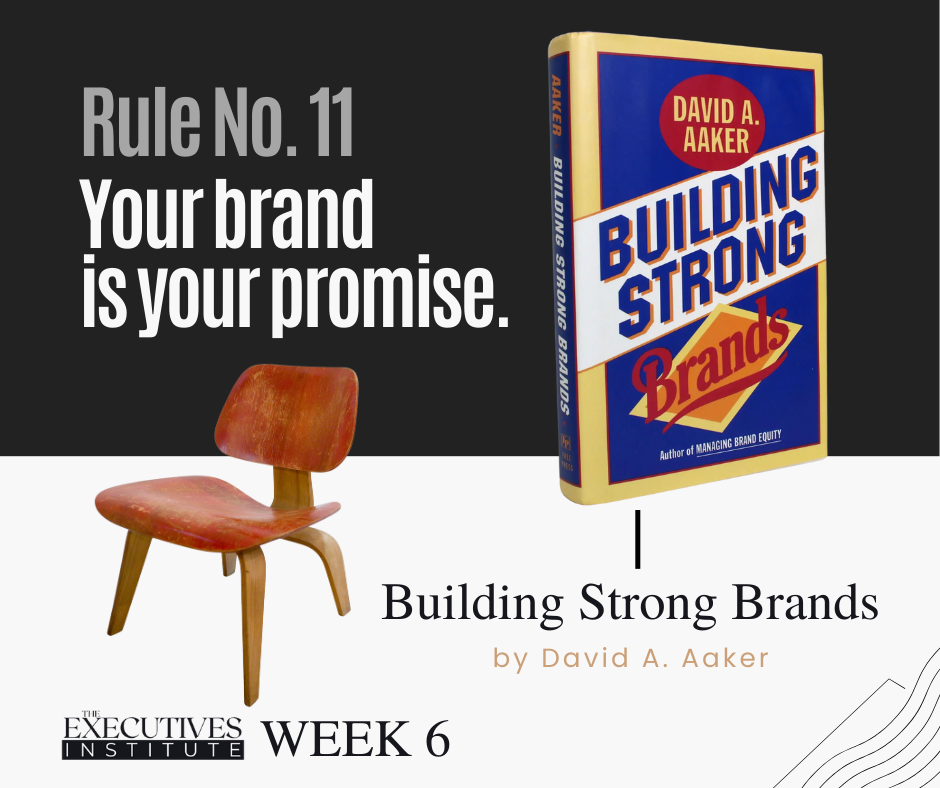
WEEK 6 📅 Rule No. 11 —Your brand is your promise.

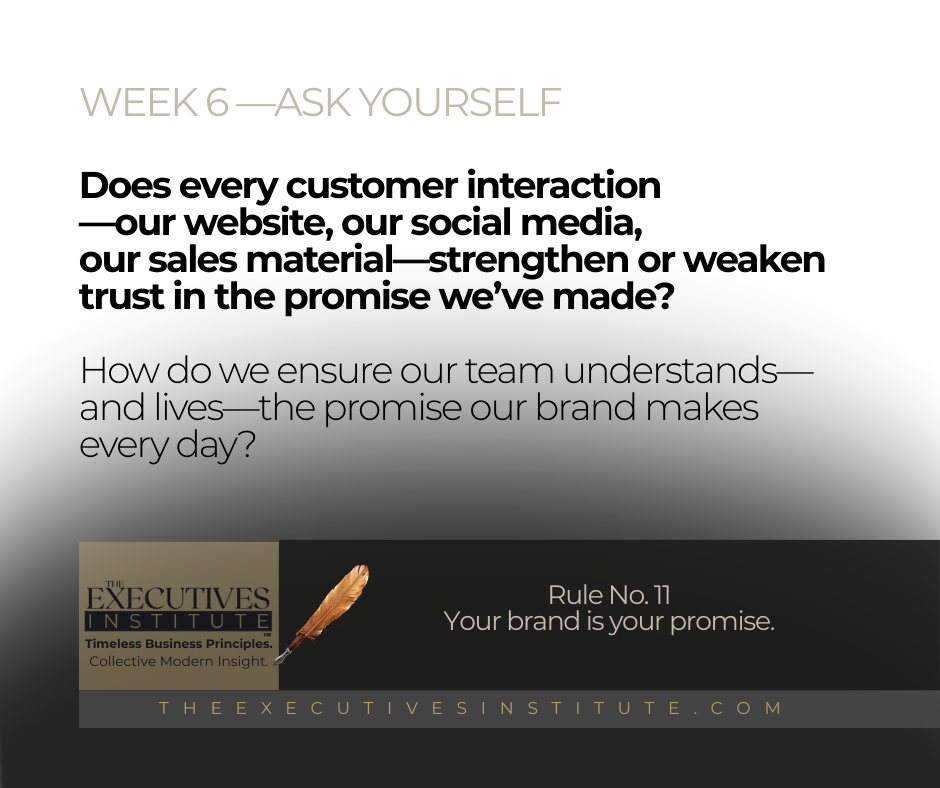
Here’s the bottom line; Every business makes promises—through its words, its actions, and the expectations it sets. But only the best businesses keep them. Rule No. 6 is Your brand is your promise. Ask yourself and you team:
Does every customer interaction—our website, our social media, our sales material—strengthen or weaken trust in the promise we’ve made?
Your brand isn’t what you say it is. It’s what your customers experience when no one from your marketing team is in the room. It’s how quickly you return a call. It’s whether your invoice matches the estimate. It’s whether your team treats people the way you claim to. Every touchpoint either reinforces your promise—or quietly chips away at it. And here’s the part most owners underestimate: trust compounds. The longer you keep your word, the stronger your reputation becomes. Referrals increase. Pricing pressure decreases. Loyalty deepens. But the reverse is just as true. Small inconsistencies, tolerated over time, erode credibility until you’re competing on price instead of principle.
Rule No. 11 summary: Every business makes promises—through its words, its actions, and the expectations it sets. But only the best businesses keep them. Your brand is the trust you build over time by delivering the same values, the same quality, and the same experience—over and over again. The moment that promise is broken, customers don’t complain—they quietly leave.
 Write This Down…Your brand isn’t what you say. It’s what customers repeat about you.
Rule No. 11, your brand is your promise matters because, in business, once your word stops meaning something, everything else gets harder. It takes years to build a reputation and five minutes to destroy it. Protect your brand the same way you protect your capital—patiently, carefully, and without shortcuts. Your name is your brand. If people associate it with winning, quality, and results, they’ll keep coming back. If they don’t, they won’t. It’s that simple.

WEEK 7 📅 Rule No. 12 —Know your customer deeply.

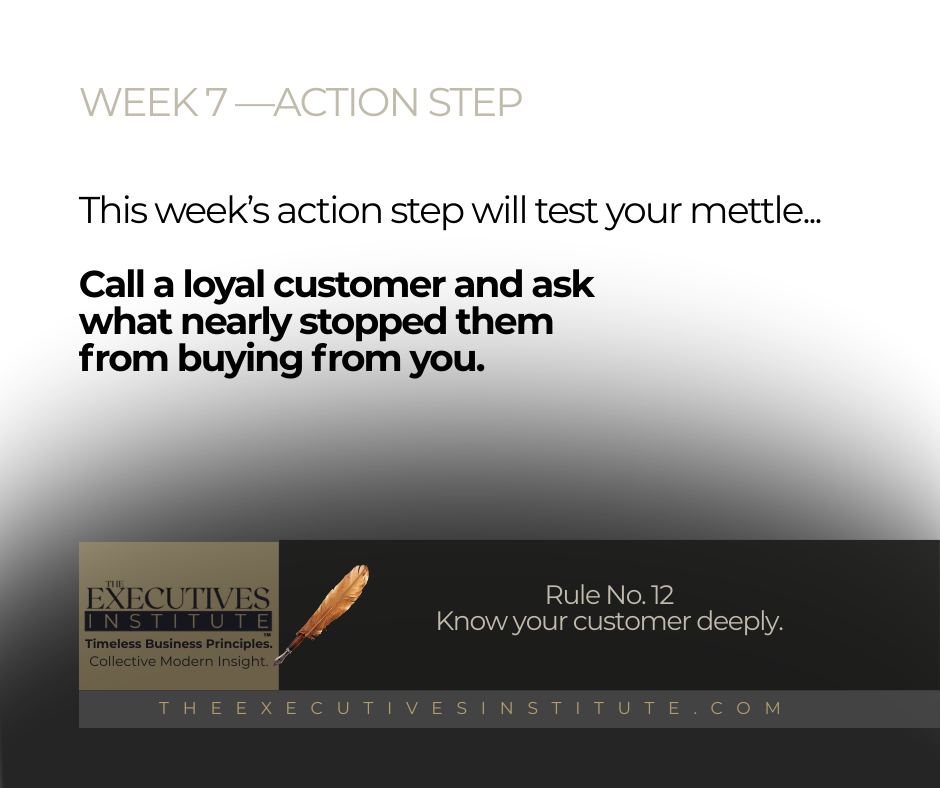
Let be very clear — most business problems aren’t execution problems. They’re understanding problems. I’ve watched good companies struggle not because they lacked effort or intelligence, but because leadership drifted too far from the customer’s real world. That’s why this rule sits where it does. Answer this question with brutal honesty:
How much of my customer’s daily reality do I truly understand?
By this point in the journey, the question isn’t can you run a business — it’s whether you’re still grounded in who you’re actually running it for. Many of the bad decisions I’ve ever made traced back to an assumption about the customer that went untested. We thought we knew. We didn’t. Rule No. 12, Know your customer deeply, exists because clarity here sharpens everything else — strategy, messaging, product, service, growth.
Rule No. 12 summary: When you know your customer deeply, everything changes. You market with clarity. You build with purpose. You sell with relevance. Most important, you stop wasting time solving the wrong problems. This rule demands humility, proximity, and the discipline to listen more than you speak. It’s not flashy — but it is the foundation of every lasting business.
Write this down…The businesses that win know their customer better than the customer knows themselves.
As reinforced in Know Your Customer, real advantage doesn’t come from more data or better dashboards. It comes from staying close enough to the customer to see what others miss — even after success gives you permission to stop paying attention. Ignore this rule, and you’ll work harder than necessary. Live it, and you’ll stop solving the wrong problems.


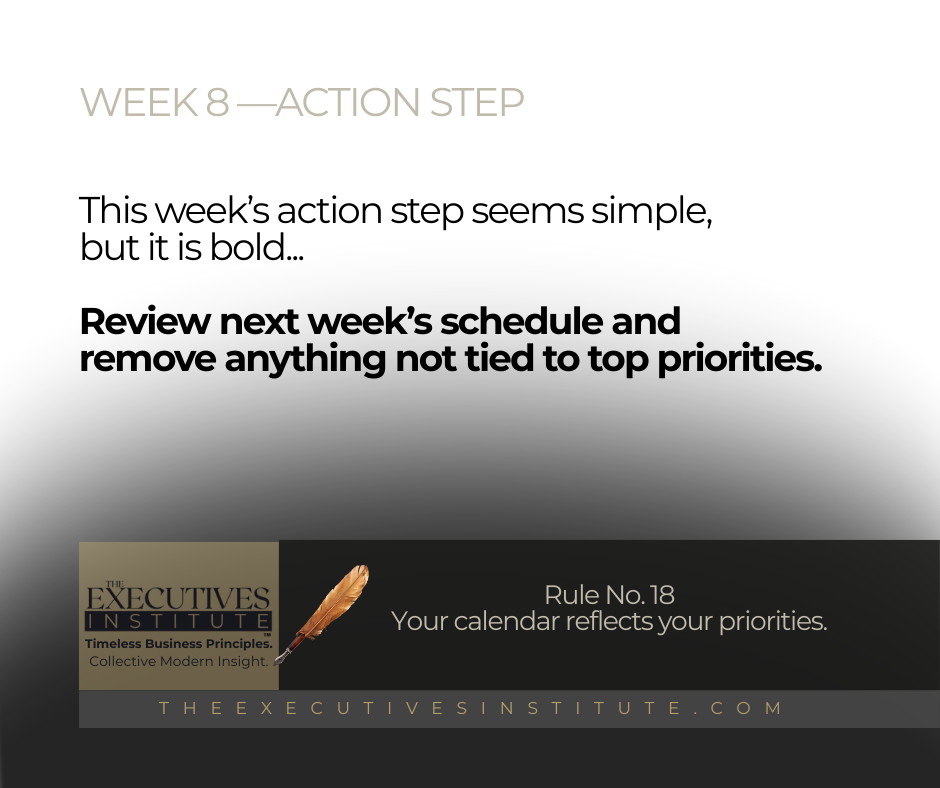
WEEK 8 📅 Rule No. 18 —Your calendar reflects your priorities.

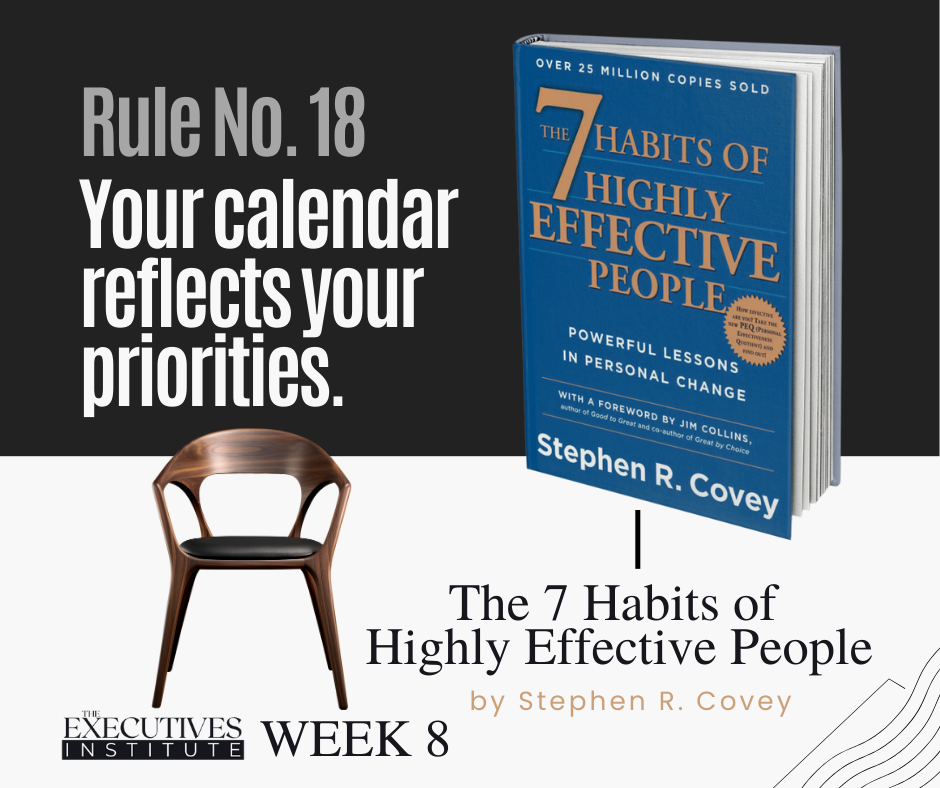
Early in my career, I used to tell people what mattered most to me—satisfied customers, company growth, culture, innovation, etc —it all sounded right. But if someone had quietly studied my calendar, they would have drawn a very different conclusion. Meetings stacked on meetings and firefighting —with very little time spent where value is actually created. Ask Yourself:
Would a stranger know your priorities by looking at your calendar?
That’s when I learned something uncomfortable: your calendar is a confession. Not by listening to you. Not by reading your website. By looking at how you allocate your time. If your schedule becomes consumed entirely by internal operations, you’re drifting inward. Companies that drift inward eventually become irrelevant. Knowing your customer isn’t a slogan. It’s a disciplined allocation of time. And if you don’t intentionally block that time, the urgent will always crowd out the important. Your calendar is either building proximity to the customer—or distance from them.
Rule No. 18 summary: This rule confronts the lie we tell ourselves that “we didn’t have time,” when in reality, we simply didn’t make it a priority. If you want to know what truly matters to a person, don’t ask them —look at their calendar.
Write This Down…Don’t tell people your priorities. Show them your calendar.
This rule is not about time management tools. It’s about discipline and alignment. If your calendar doesn’t reflect your stated priorities, one of them is lying. Most leaders say their customer is the priority. But your calendar tells the truth. This rule is in Chapter 2: Know Your Customer for a reason. Every leader claims to be customer-focused. But when I review a younger owner’s schedule, I often see almost no direct customer interaction. No structured time for market feedback. No strategic sessions dedicated to improving customer experience. Yet they insist the customer comes first. If you truly know your customer, your calendar will show it. Customer visits. Review of feedback. Strategy sessions around value creation. Time invested in understanding their changing reality.

WEEK 9 📅 Rule No. 21 —Clarity creates confidence.

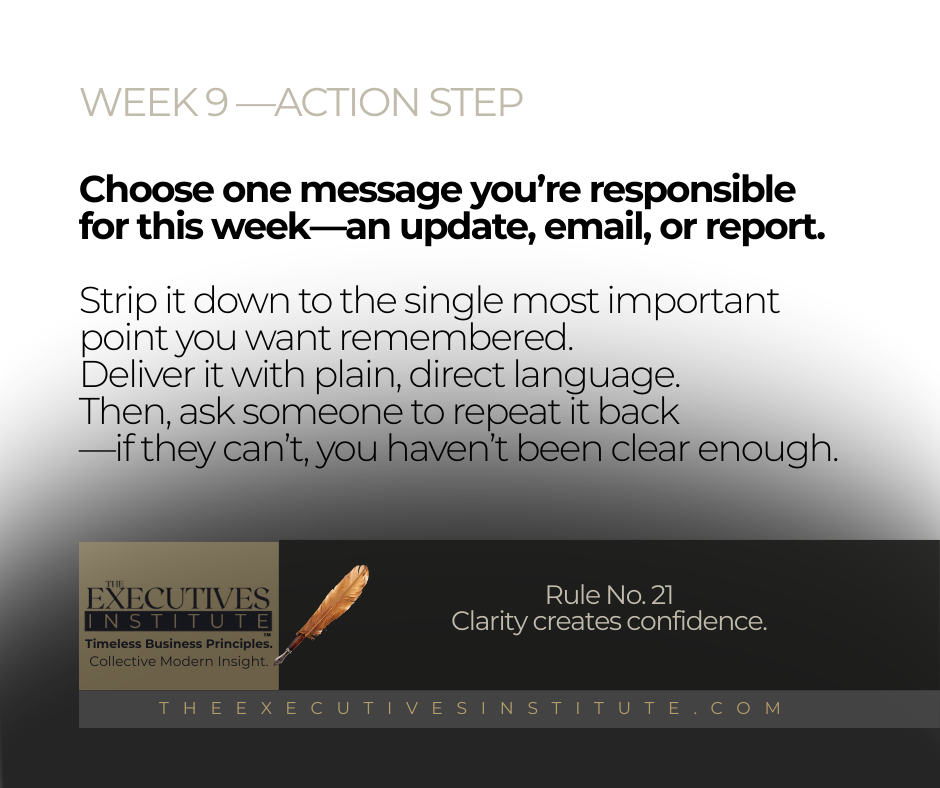
Clarity isn’t about sounding sharp in the conference room. It’s about building an organization that can act without you. If your people hesitate, re-interpret, or wait for approval, that’s not a talent issue. It’s a clarity issue. Here’s the question to ask yourself:
If you stepped away from your business for 30 days, would your team move forward with confidence—or freeze waiting for clarification?
Most communication problems in business aren’t really communication problems—they’re clarity problems. As leaders, we often assume we’ve been clear because we understand what we said. But clarity isn’t measured by how well you spoke—it’s measured by how well others understood. Challenge yourself…take one message you’ve recently delivered—a new initiative, a company update, or a direction for your team. Ask a few people to explain it back to you in their own words. If what you hear doesn’t match what you meant, you’ve just found your next leadership opportunity.
Rule No. 21 summary: In business, confusion is expensive. Teams stall, customers hesitate, and leaders lose credibility—all because the message wasn’t clear. Clarity isn’t just a communication skill—it’s a leadership responsibility. When people know exactly what to do, why it matters, and how to move forward, confidence rises and results follow. If you’re not being understood, you’re not being effective.
Write This Down…Confused teams move slowly. Clear teams move fast.
Clear messaging always wins. Clarity isn’t soft. It’s discipline. When you communicate with precision, people move faster, decisions get easier, and confidence grows across the board. This Rule should be expanded to: Clarity creates confidence—always. The tip…consider where you’re currently losing time, money or momentum. Is is actually due to a lack of clarity?


Congratulations on completing Chapter 2: Know Your Customer. You’ve done the work so many leaders I’ve met over the years skip. You’ve clarified who your business is for, what promise you’re making, and how to align your time and team around that clarity. That’s the foundation of every healthy brand and every loyal customer base.
You’re no longer guessing—you’re grounded. And that puts you ahead of most. But clarity isn’t just about your customer. It’s about the people inside your company, too. In this upcoming set of Rules, we take a look at your team.
Chapter 3: Hiring Without Regret → Page 3
Ask yourself: “Are the people on our team making our business better—or just busier?“