

Chapter 3: Hiring Without Regret
Weeks 10, 11, 12 and 13
Every hire is a bet on your future. Get it right, and your business gains momentum. Get it wrong, and you pay for it—financially, culturally, and emotionally. This chapter isn’t about filling seats. It’s about building a team that makes your business stronger simply by being part of it.
The best leaders hire with intention, delegate with clarity, and take full ownership of the people decisions they make. That means hiring slow, firing fast, and being brutally honest when something (or someone) isn’t working. Culture isn’t built in boardrooms. It’s shaped by who gets promoted, who gets protected, and who gets passed over. Processes matter—but people drive the mission. When you choose the right people and give them the right outcomes to own, you don’t just get things done. You build something that lasts.
No more excuses. No more passing the buck. Build a team you won’t regret. Your company becomes who you hire—and what you tolerate. Over the next 4 weeks, ask yourself…“Are the people on my team making our business better—or just busier?”
Let’s begin…
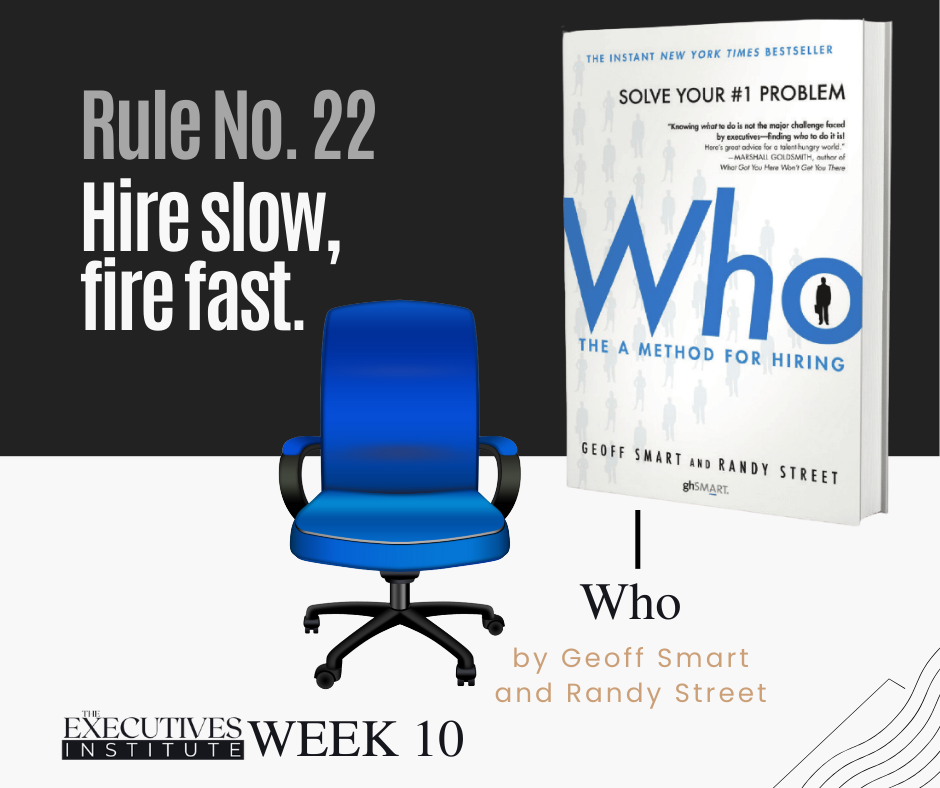
WEEK 10 📅 Rule No. 22 —Hire slow, fire fast.

Most hiring mistakes don’t happen because we lack talent in the market. They happen because we get impatient. The workload piles up, the team is stretched thin, and we convince ourselves the next decent candidate will “probably work out.” Sometimes they do. Often they don’t. And when we know someone isn’t the right fit, we hesitate. We give it more time. We hope things turn around. Meanwhile the rest of the team sees it, feels it, and quietly wonders why the standard isn’t being enforced. Strong companies aren’t built by filling seats quickly. They’re built by raising the bar on who gets one—and having the courage to act when the wrong person is sitting in it. Ask Yourself:
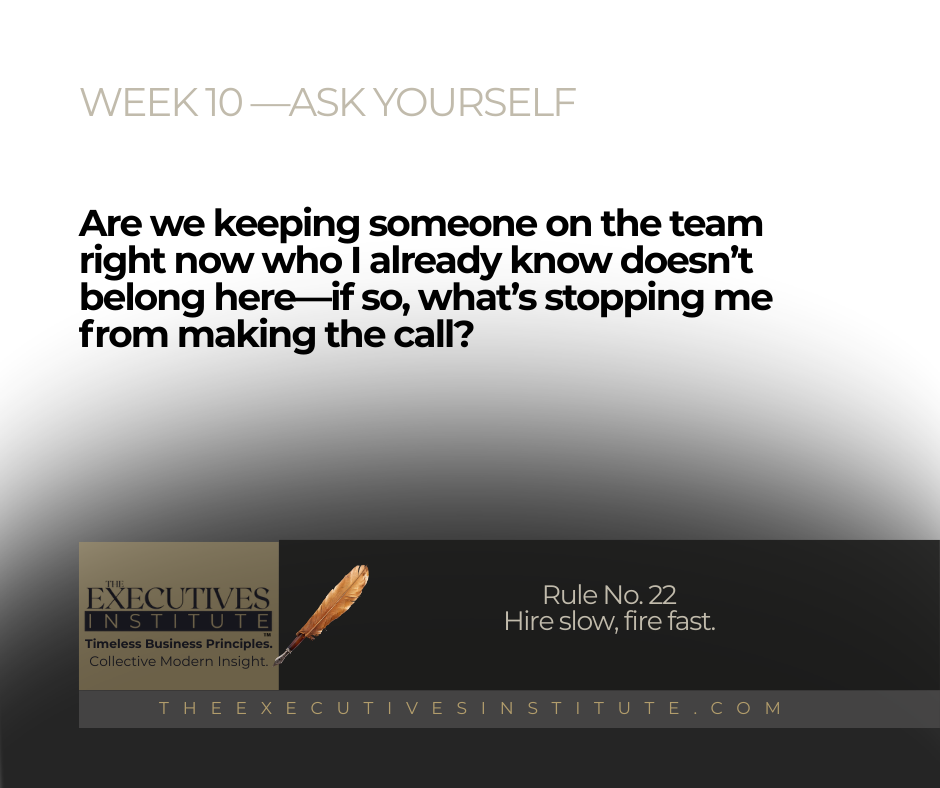
Are we keeping someone on the team right now who I already know doesn’t belong here—if so, what’s stopping me from making the call?
If you’re sure someone needs to go, act immediately. The cost of waiting isn’t kindness—it’s the slow erosion of your standards. Great leaders protect the bar. The moment the team believes the bar is negotiable, performance follows it down.
Rule No. 22 summary: The strength of your team determines the strength of your business. Hiring slow means committing to a disciplined process—one that prioritizes fit, capability, and character over speed or convenience. It means refusing to lower the bar just to fill a seat. Firing fast means addressing misalignment or underperformance decisively before it corrodes culture, morale, or momentum.
 Write this down…One wrong hire tolerated too long can undo ten right ones.
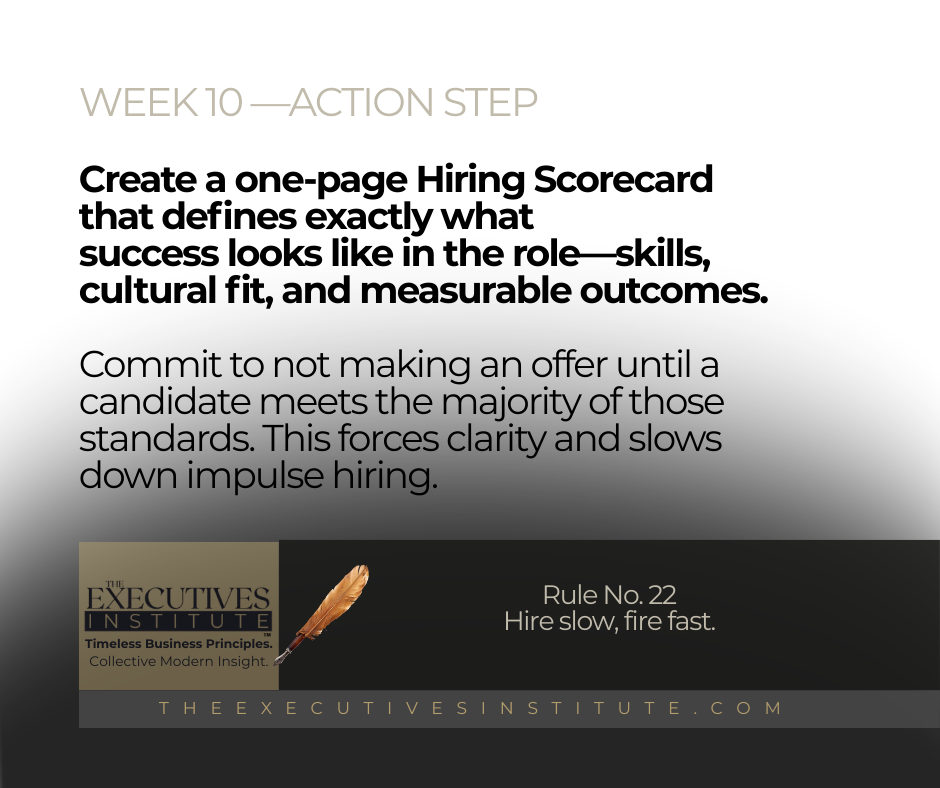
Tolerating the wrong hire too long is more costly than taking the time to hire the right one. Right people, right roles, right now—or nothing.
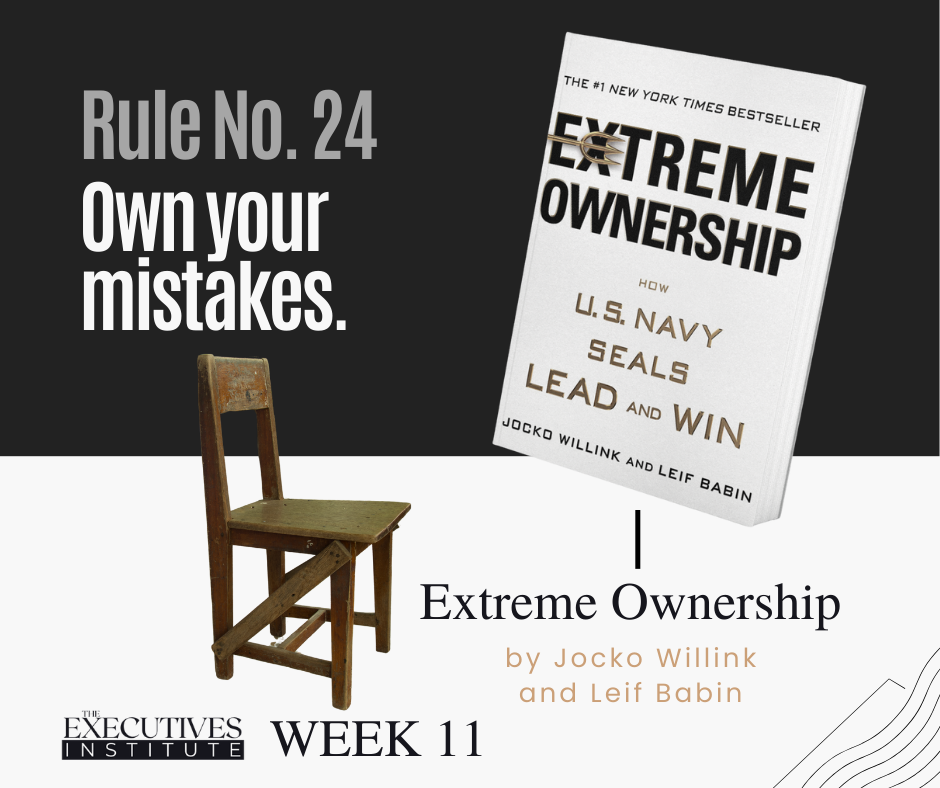
WEEK 11 📅 Rule No. 24 —Own your mistakes.

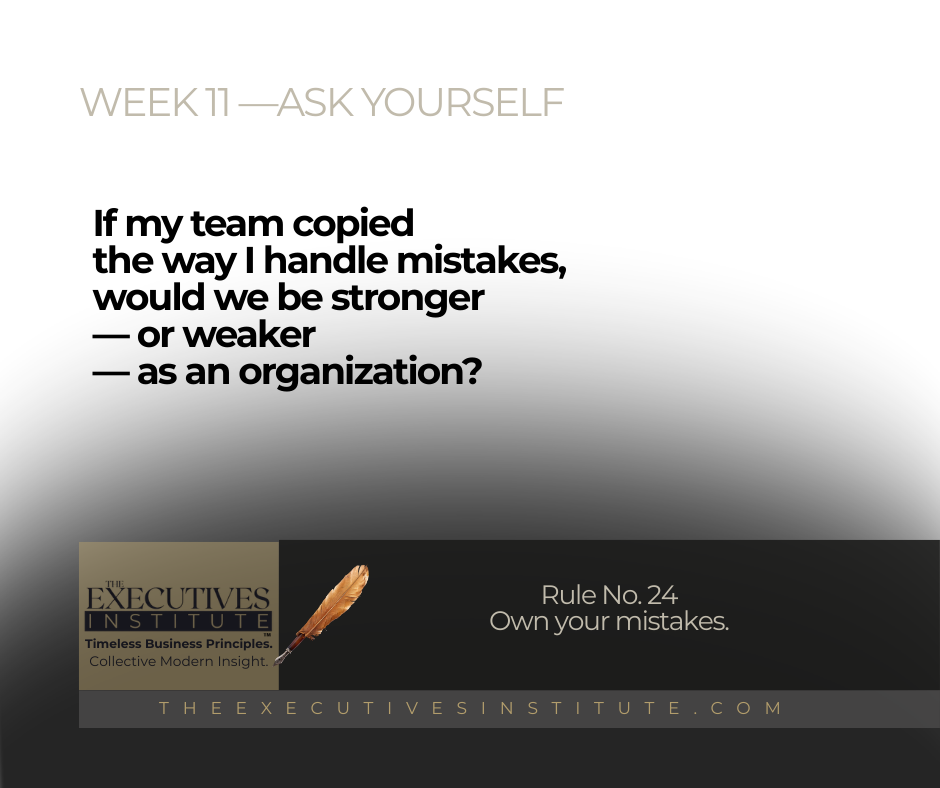
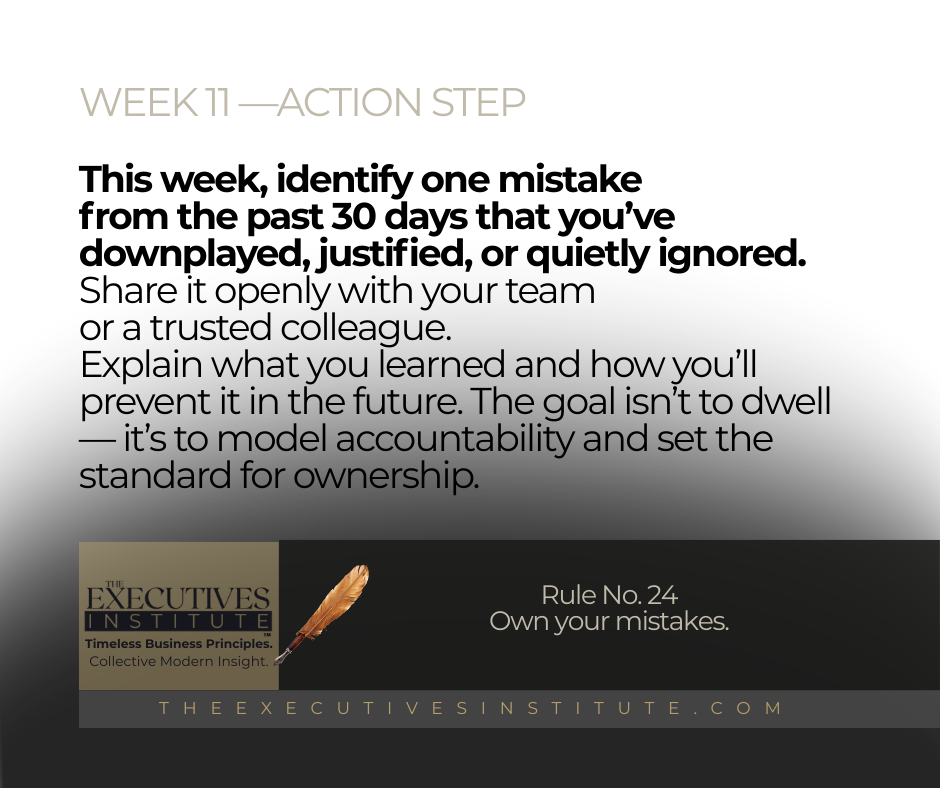
Ask yourself: If my team copied the way I handle mistakes, would we be stronger — or weaker — as an organization?
Great leaders don’t deflect blame — they absorb it, learn from it, and lead forward. Owning your mistakes isn’t weakness; it’s the foundation of credibility, respect, and real accountability. In any failure, you either make excuses or you make progress — never both.
Every leader eventually faces the mirror — and it doesn’t always reflect back a win. Projects go sideways, communication breaks down, results fall short. In those moments, the instinct is to explain, justify, or quietly shift the blame. But real leadership demands the opposite. When you own the mistake — fully, visibly, and without excuses — you don’t lose credibility. You gain it. The strongest leaders don’t hide from failure; they stand in front of it, learn from it, and lead forward. That’s not just responsibility — that’s extreme ownership.
Write This Down…
Leaders who own mistakes build trust. Leaders who hide them lose it.
In leadership circles, we often talk about accountability — but rarely do we confront what it really looks like when the stakes are high, the optics are bad, and the blame could easily fall elsewhere. Owning your mistakes in these moments separates true leaders from those just holding the title. It’s not about being the fall guy — it’s about being the kind of leader who earns the right to lead again tomorrow.
Think back to a recent mistake or failure — one that impacted others. How did you respond publicly and privately? What would “extreme ownership” have looked like in that moment? And how might your team’s perception of you shift if you had owned more — or less — of it?
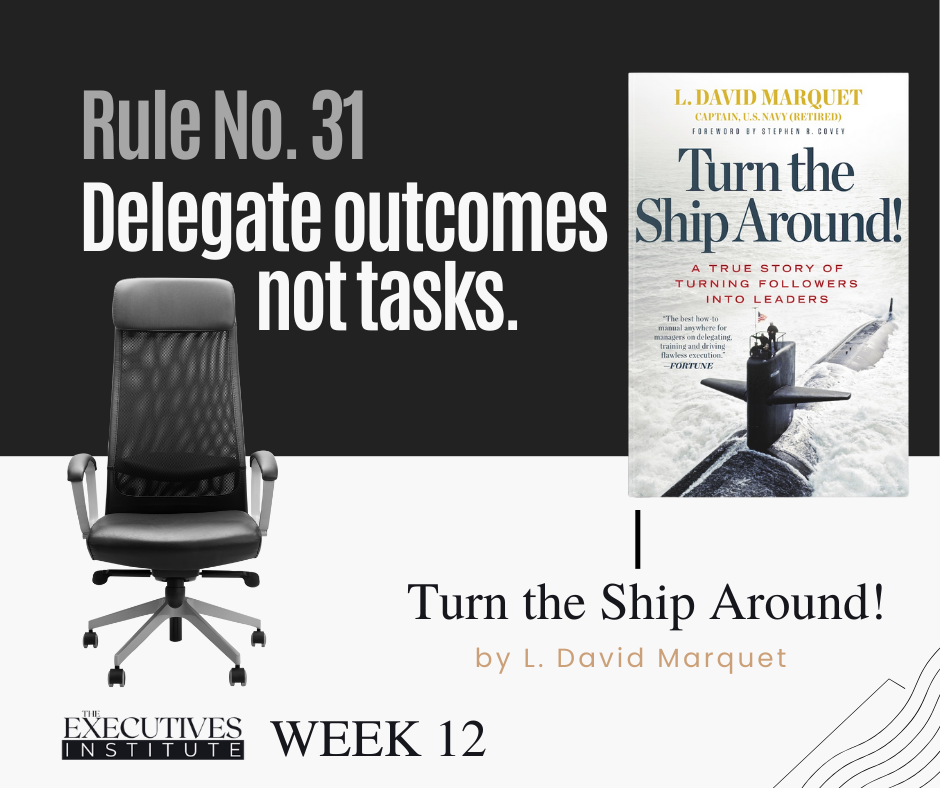
WEEK 12 📅 Rule No. 31 —Delegate outcomes, not tasks.

coming Monday, March 23, 2026
Answer honestly: Am I giving people responsibility for results, or just instructions for work?
If your team consistently comes back to you for the next step, chances are you’re still delegating tasks. If they come back with solutions, you’re delegating outcomes.
Don’t just assign to-dos—transfer responsibility. When you delegate outcomes instead of tasks, you empower people to think, act, and lead with ownership. It’s the difference between creating followers and developing leaders.
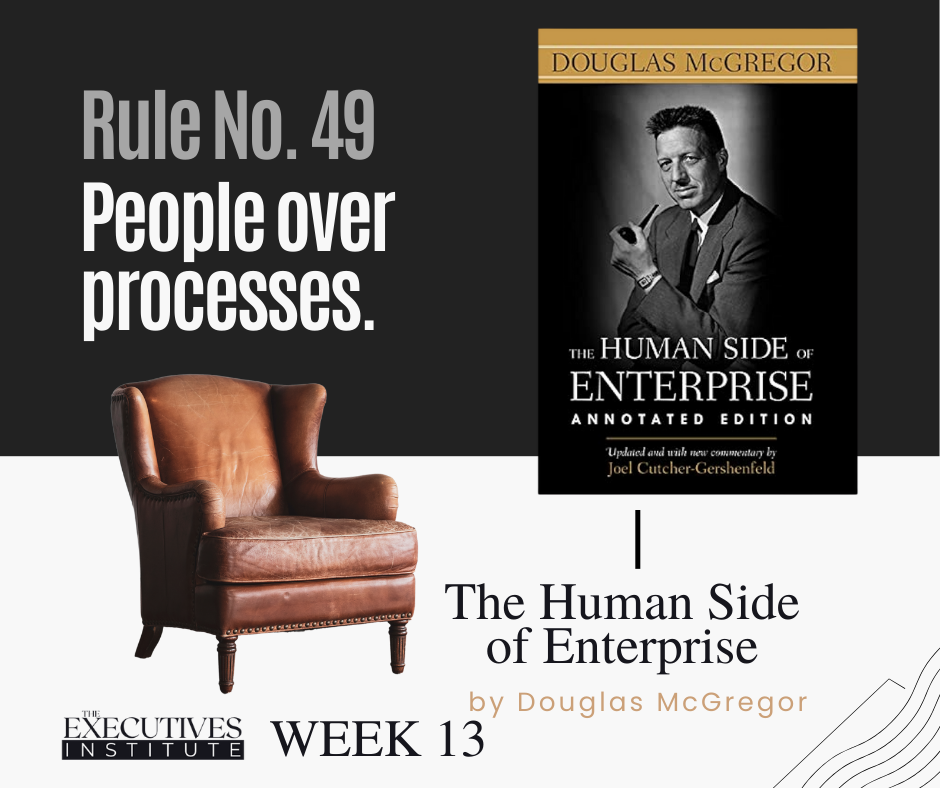
WEEK 13 📅 Rule No. 49 —People over processes.

coming Monday, March 30, 2026
Ask yourself: If I truly trusted my people, what process would I no longer need?
Processes are important. But people drive results. Over-relying on systems, procedures, and checklists at the expense of human judgment, initiative, and ownership is a slow march to mediocrity. Organizations thrive when they trust and invest in people—not just when they refine processes. Processes should serve people, not control them.
Chapter 4: Strategy In the Real World→ Page 4
Ask yourself: “Am I bold enough to make fewer, sharper moves that matter?“